
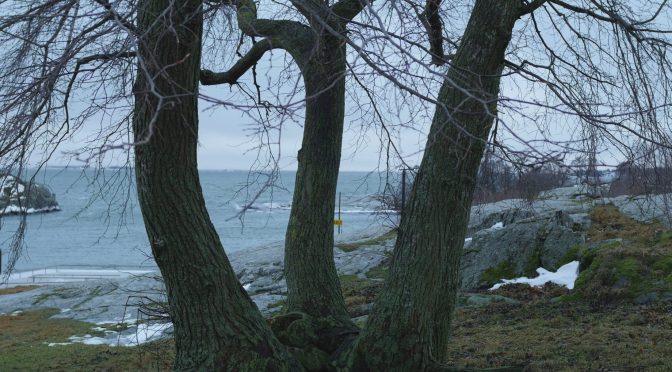
After walking around in the freezing cold last week, looking for suitable tree partners, and working with my two trees in Stockholm during the weekend, I decided on Monday that I finally had to begin somewhere. So I returned to the tree in Kajsaniemi Park, which I remembered had looked promising, although I was too cold to stop and explore when I saw it the first time. But no, the angle was really quite sharp and the tree was uninviting, hard to approach, too much of an effort.
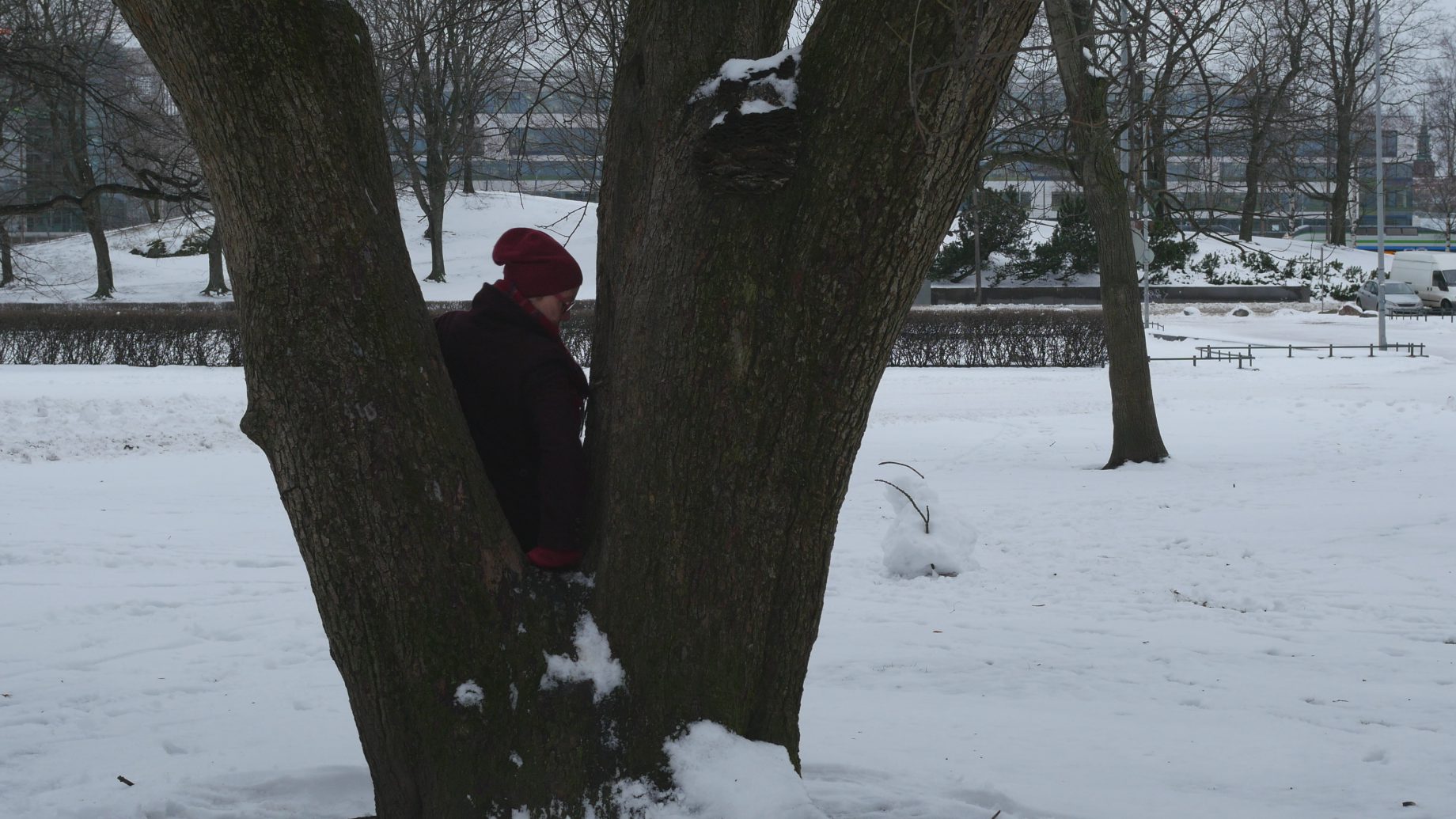
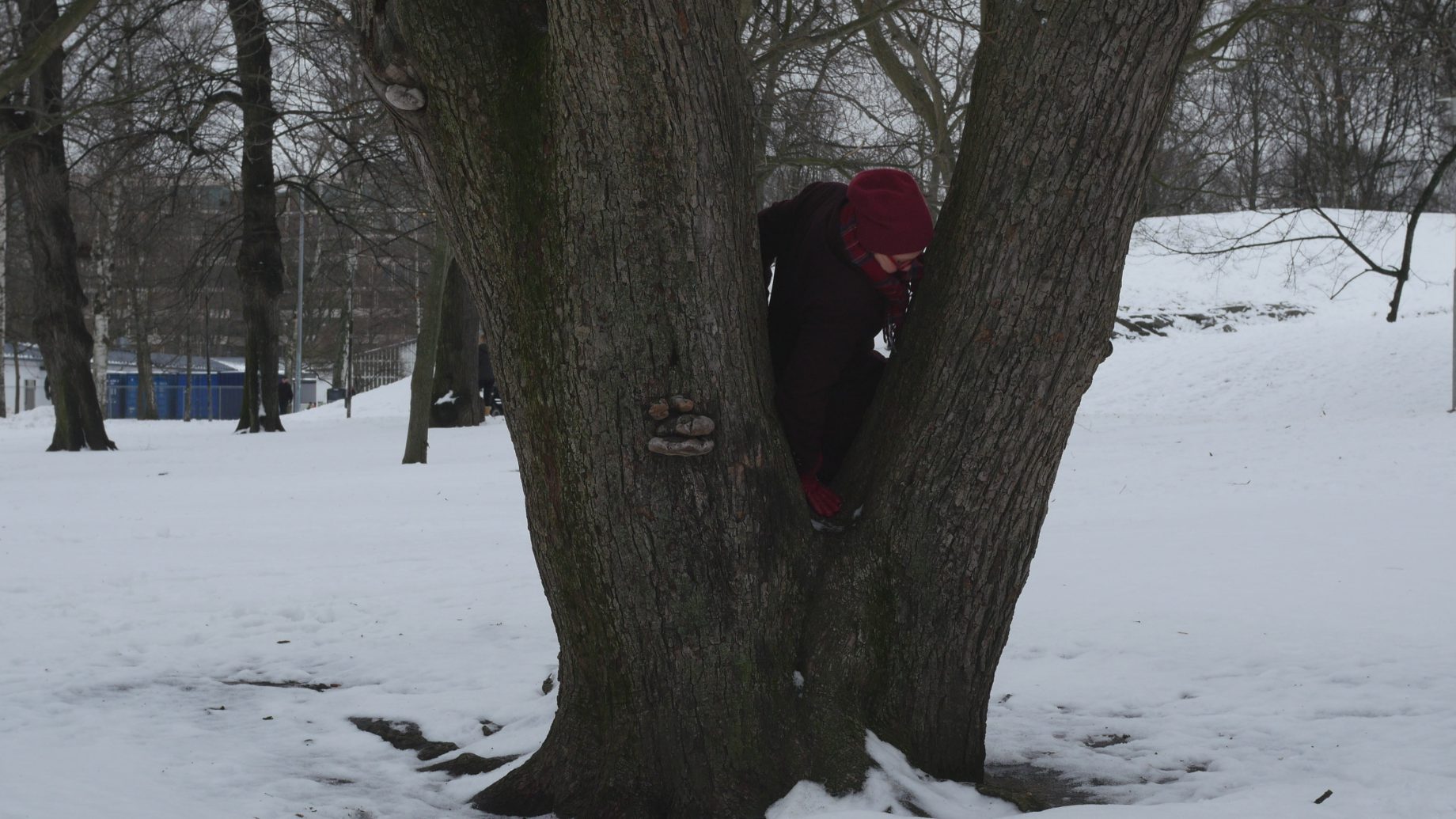
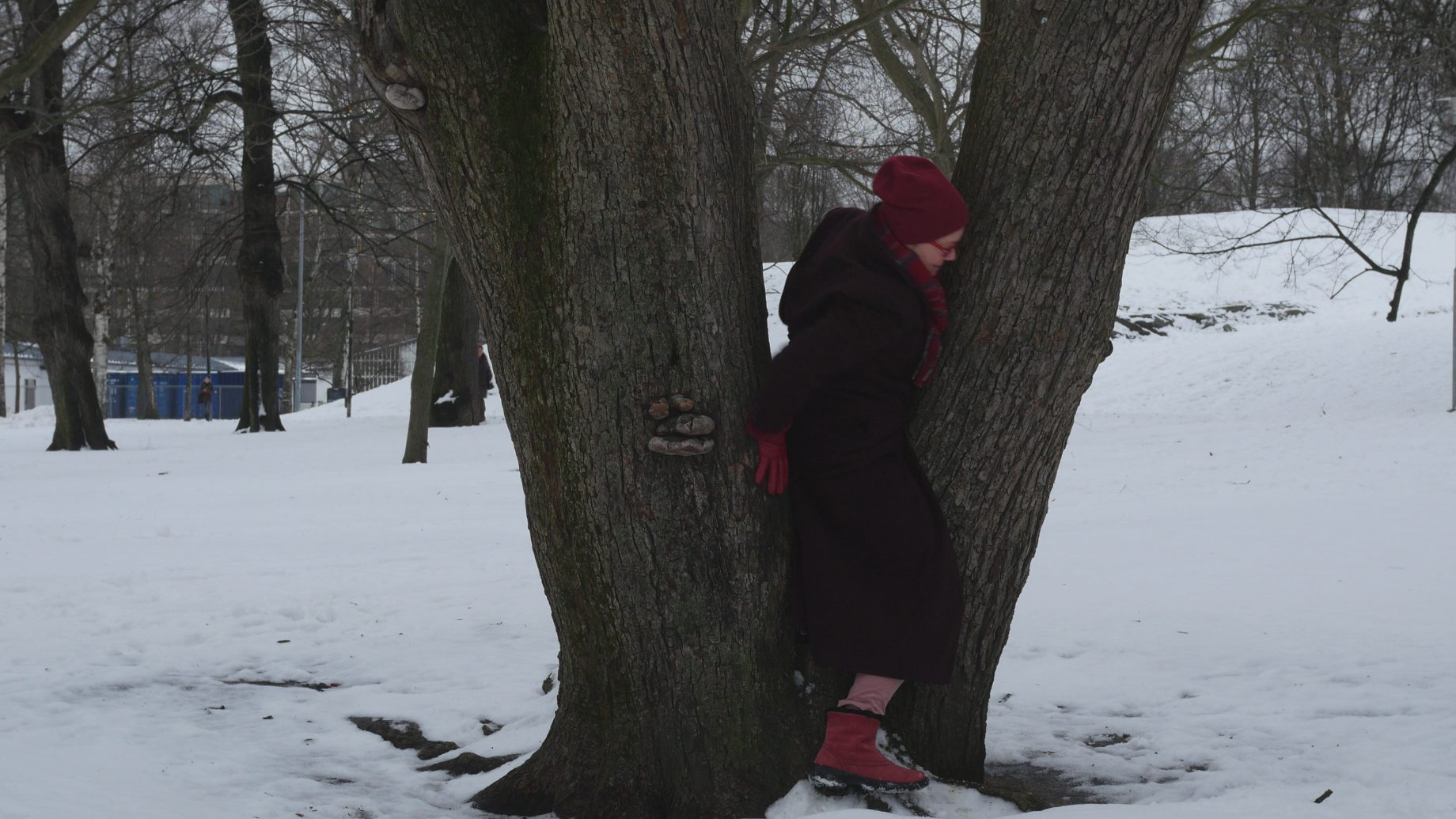
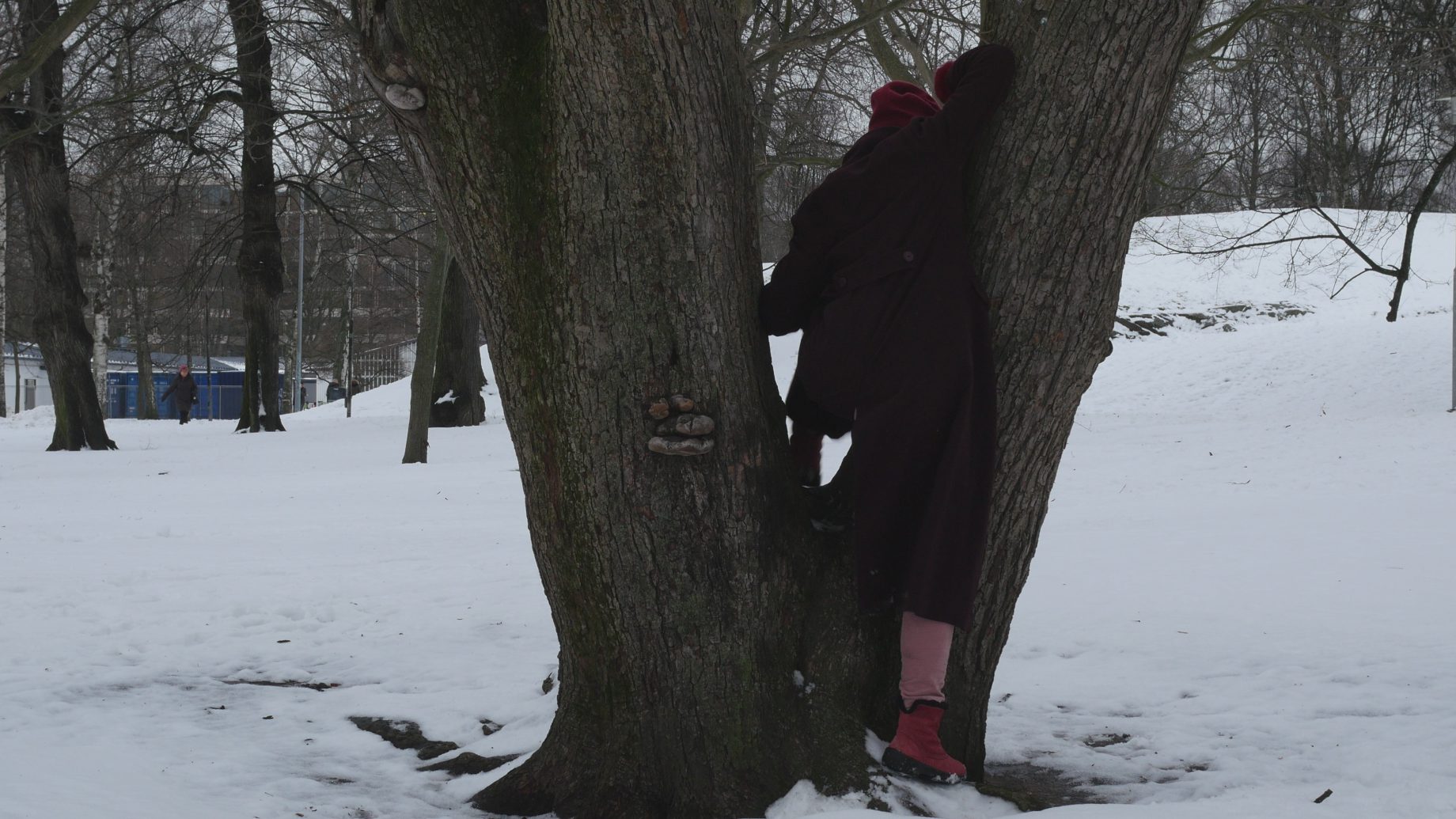
I tried from both directions, but did not feel satisfied, and realised that a practice that did not feel good to begin with would be hard to keep up wit. – On Tuesday morning, as soon as there was some light, I headed for Kaivopuisto Park with the dual purpose of first emptying my small boat of all the melting snow and ice and then of making an attempt with some trees near the shore. I was delighted to see that the sea was open, so my leaving the boat in the ice had been a risk worth taking. With gloves too wet to wear, I walked up into the park, where I remembered looking at a group of trees on the slope. And yes, they would provide an easy place to sit on, and a nice view if the camera was positioned well. Based on the leaves on the ground I could not deduce what tree it was; there were oak leaves and maple leaves and whatever. I vaguely remembered the trees might be silver willows, but was not sure.

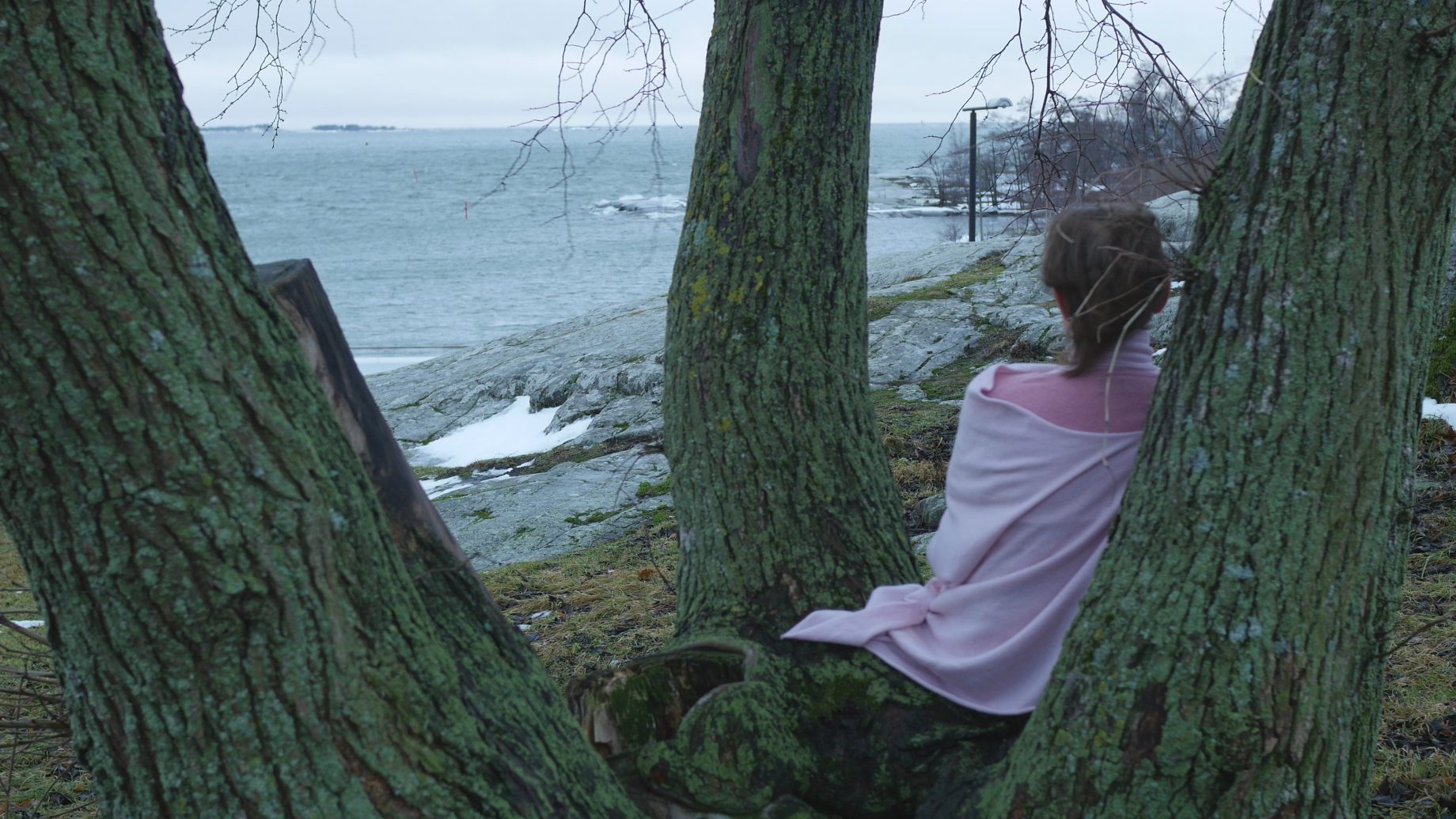
I made two attempts, one with the camera further away, one quite close up. The images do not look that pleasant, but it was quite comfortable to sit on the low trunk, leaning against the one on the right, despite the icy wind. In the larger image I managed to adjust the horizon in the middle, but in the close up I had to lift the horizon up. Only afterwards did I realise that the close up should be taken from a lower angle, with the tripod smaller. Perhaps next time.
All posts by Annette Arlander

At the Beach in Thai Mueang
After a week of illness and rest, and holiday parties, too, I finally decided it was time to take my camera and try to do something. I had brought it with me to my usual lunch shack at the beach once before, and at that time I took some still images of an interesting old tree lying almost horizontally on the beach. I had seen it many times and started to feel affectionate towards it, and marvelled at its strange dead looking trunk, which nevertheless supported the branches with green leaves.
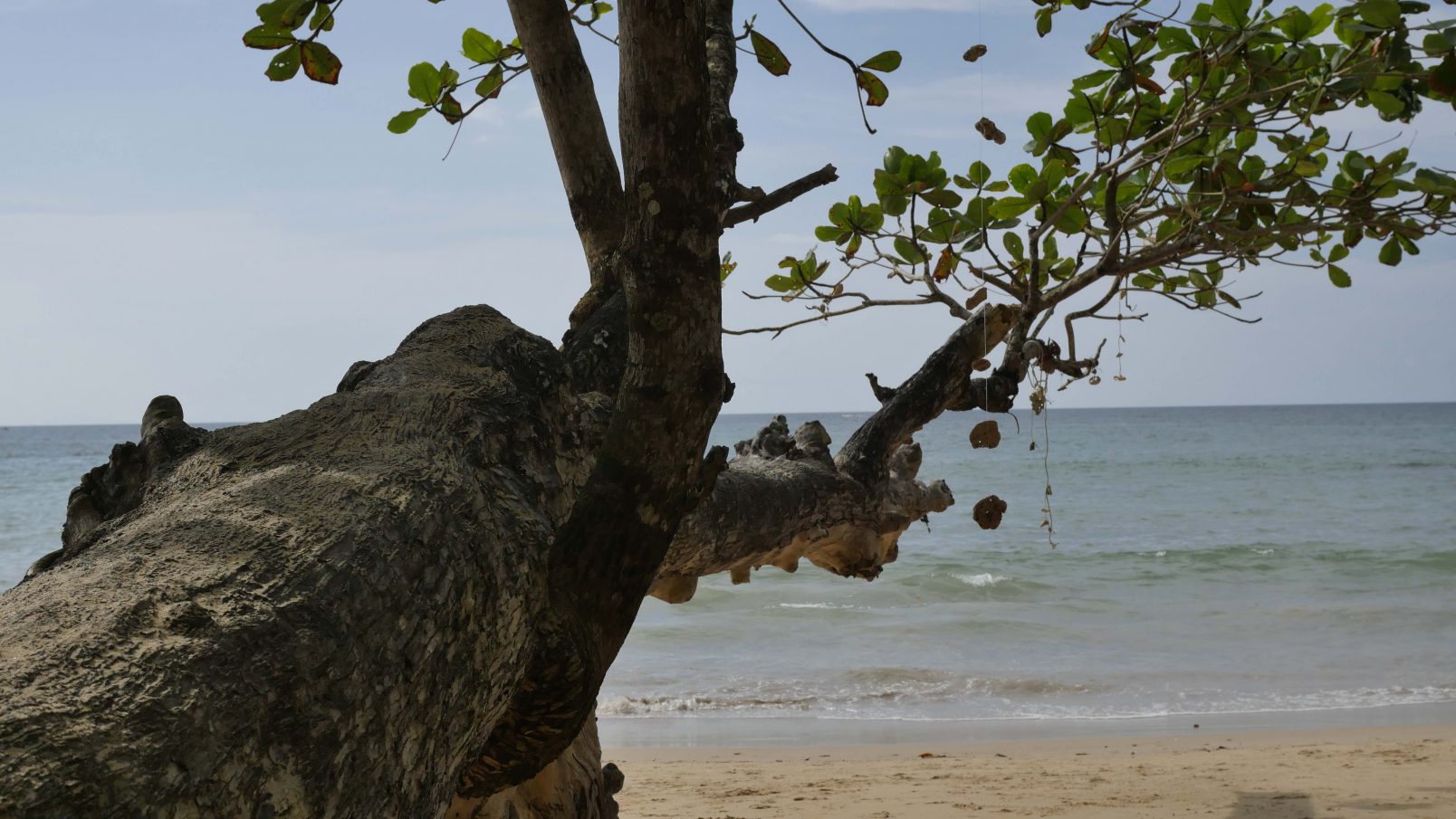
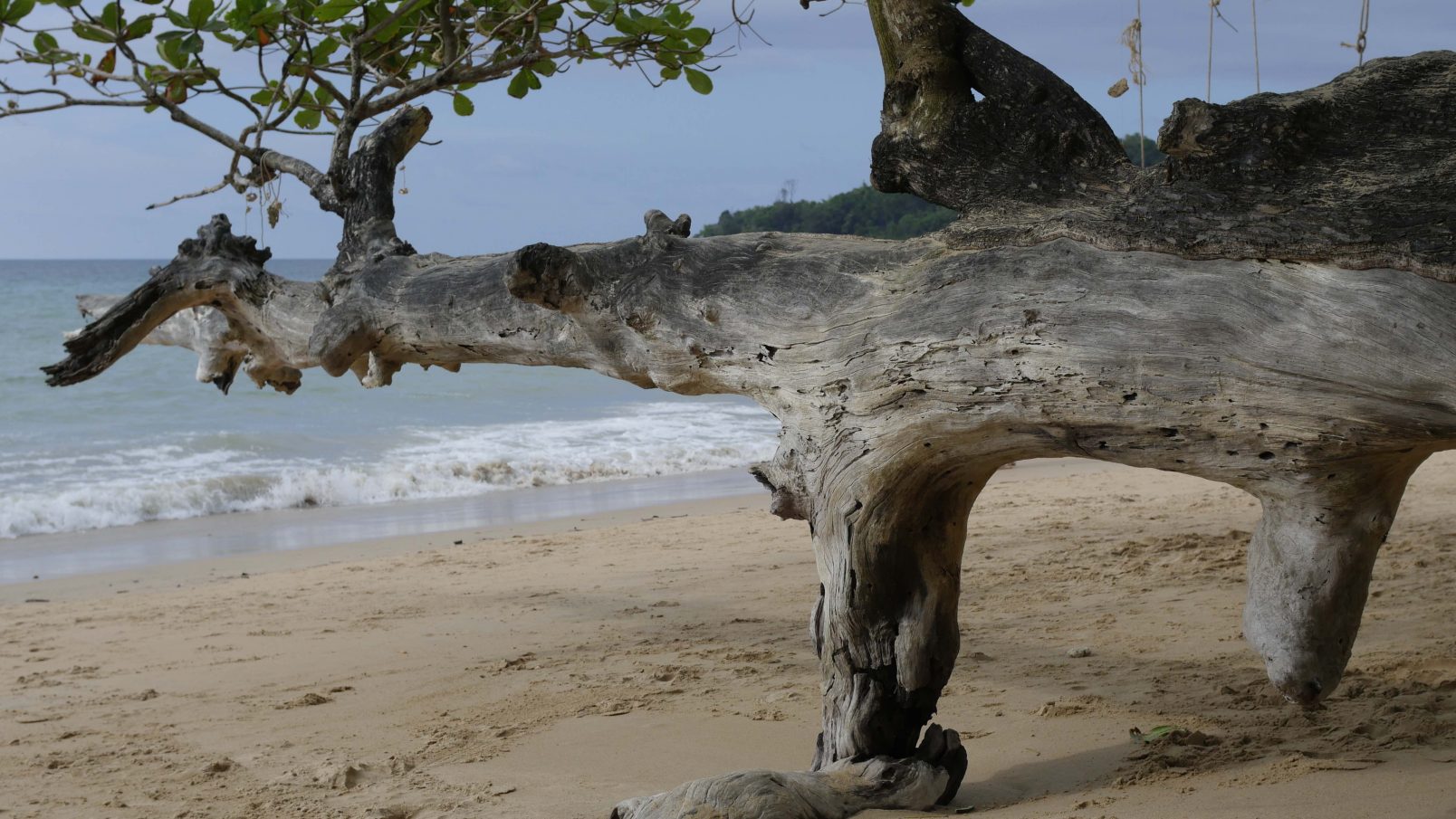
Unfortunately I was not the only one that was fond of the tree. There were always kids climbing on it or people sitting in the two swings hanging from on branch or taking photos of each other against its trunk. At some point I planned to come and record it early in the morning, but finally decided that I should first look further afield.
So today I decided to bring not only my camera but my tripod, too, and continued along the beach, climbed over rocks at low tide, found more beach shacks, some big black rocks and more beach. I turned back after a while and decided to take a few images of the old and dry tree trunks lying on one narrow part of the beach. Just to get started, I guess.
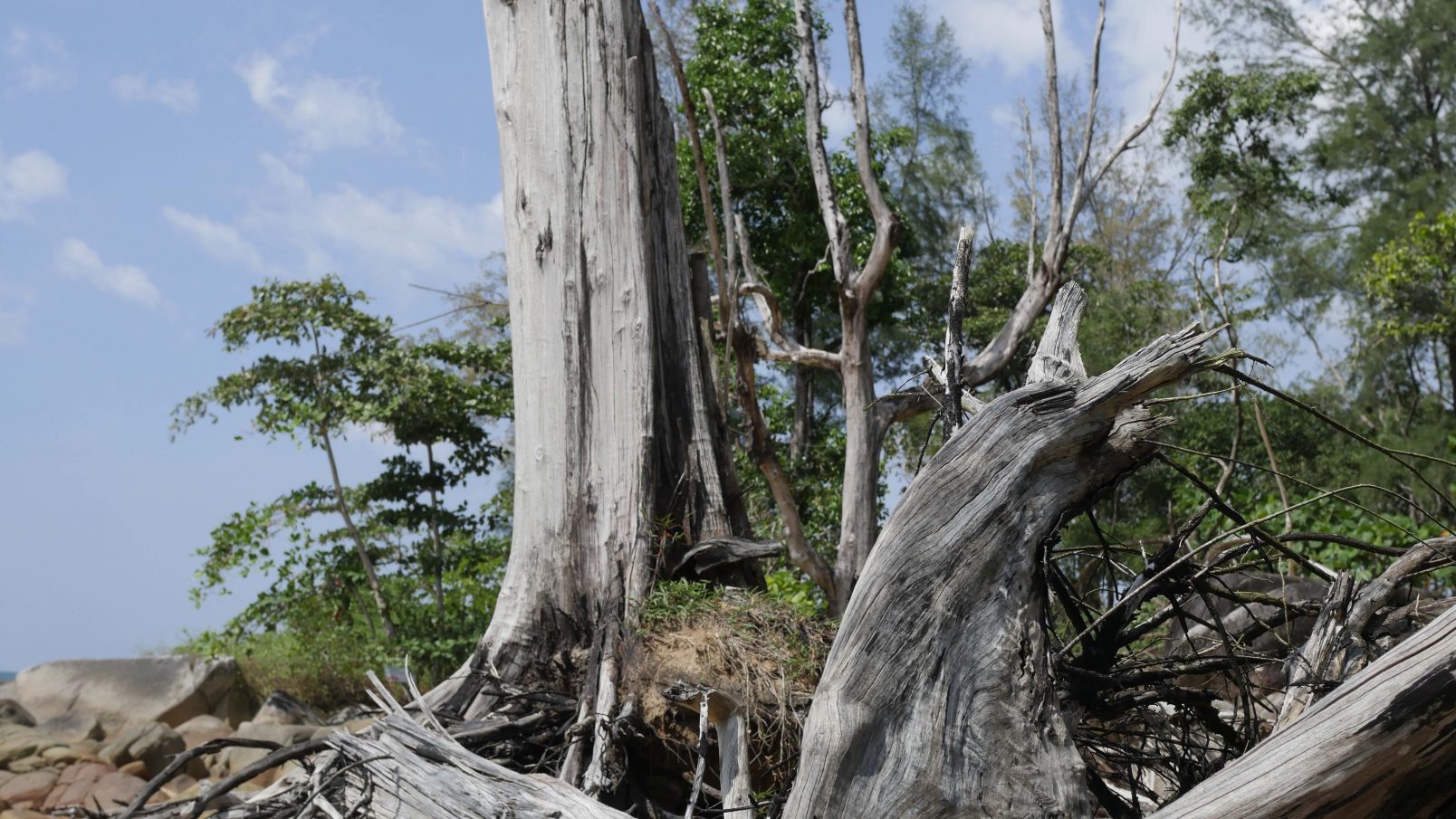
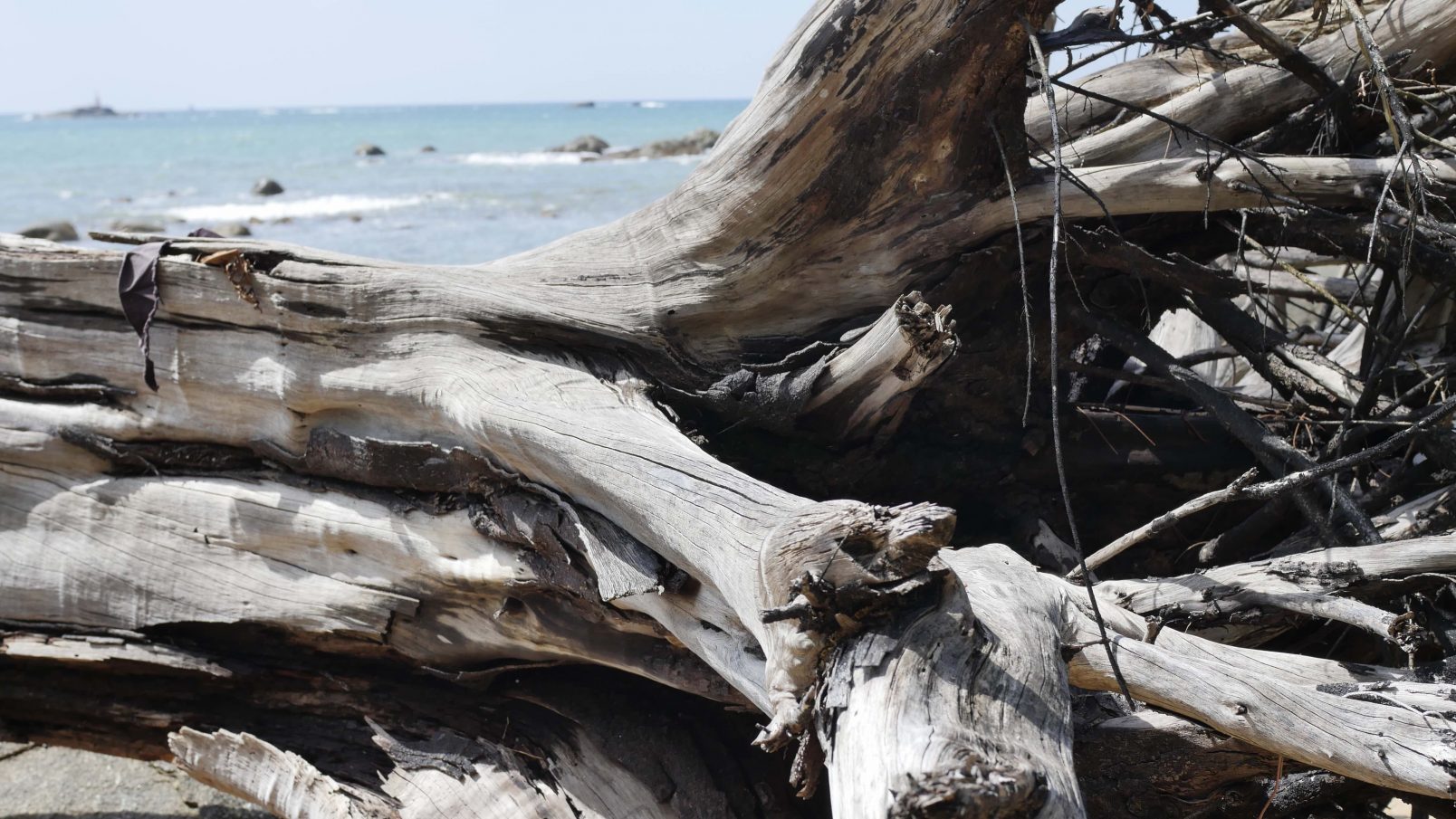
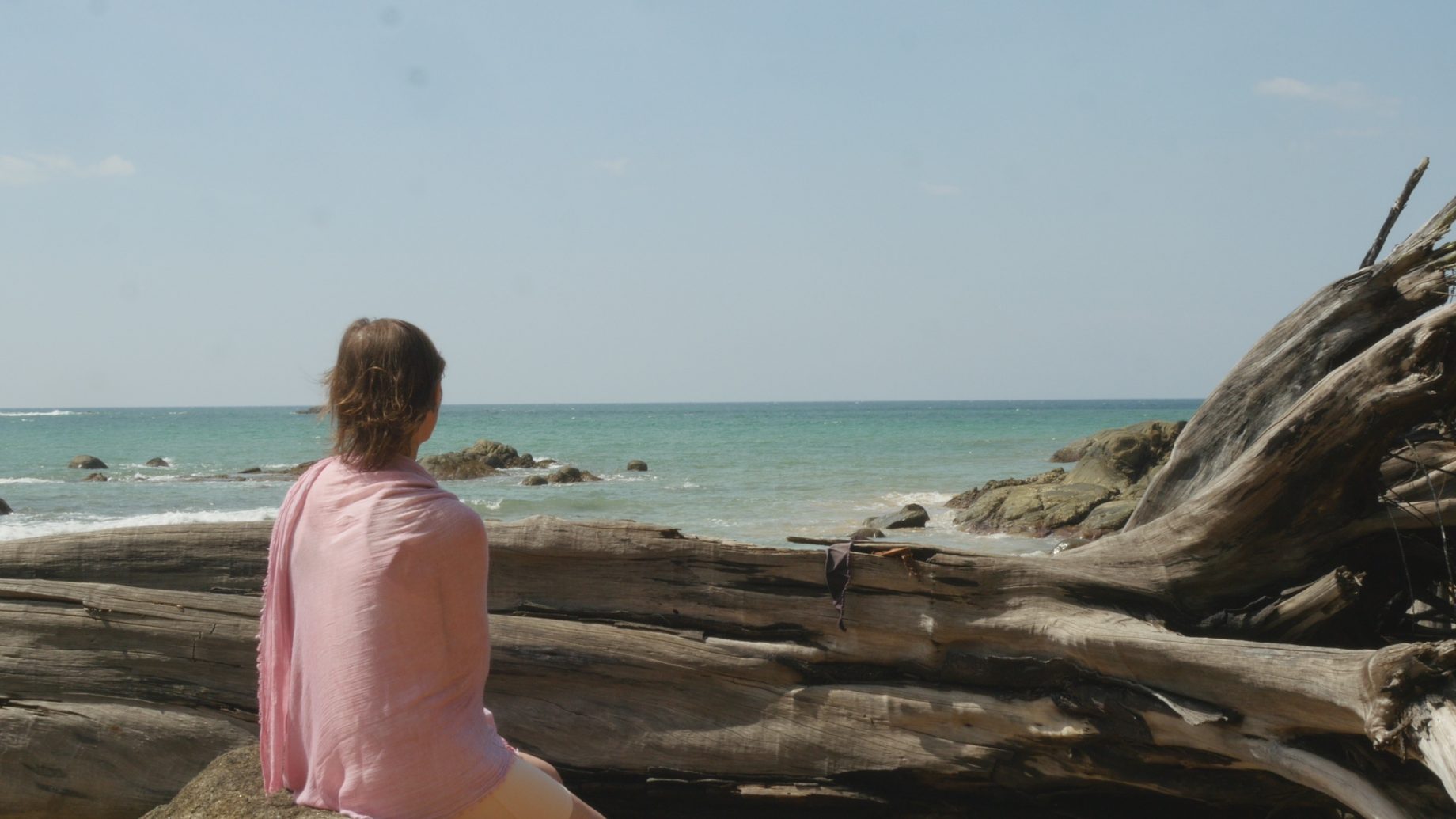
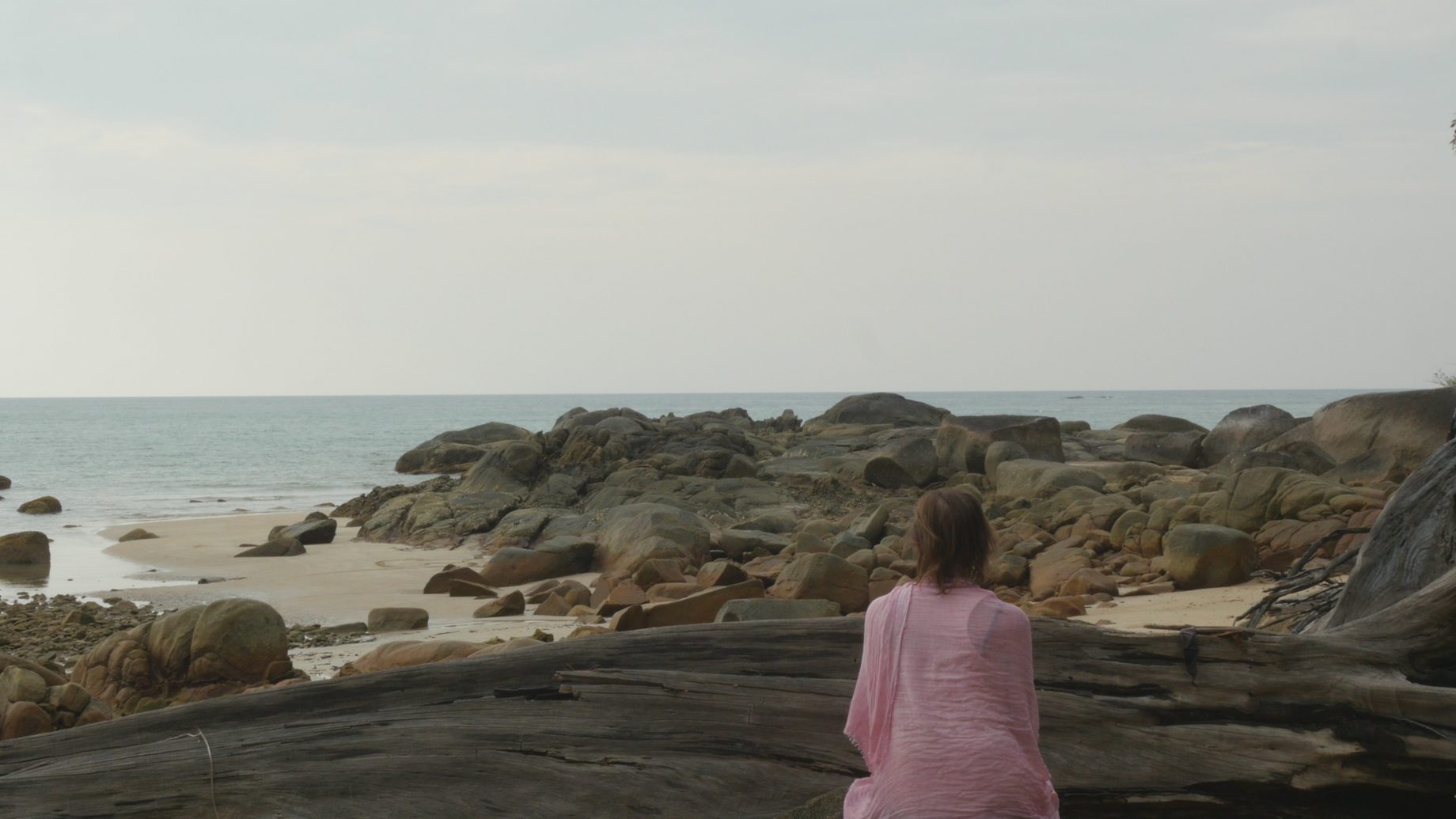
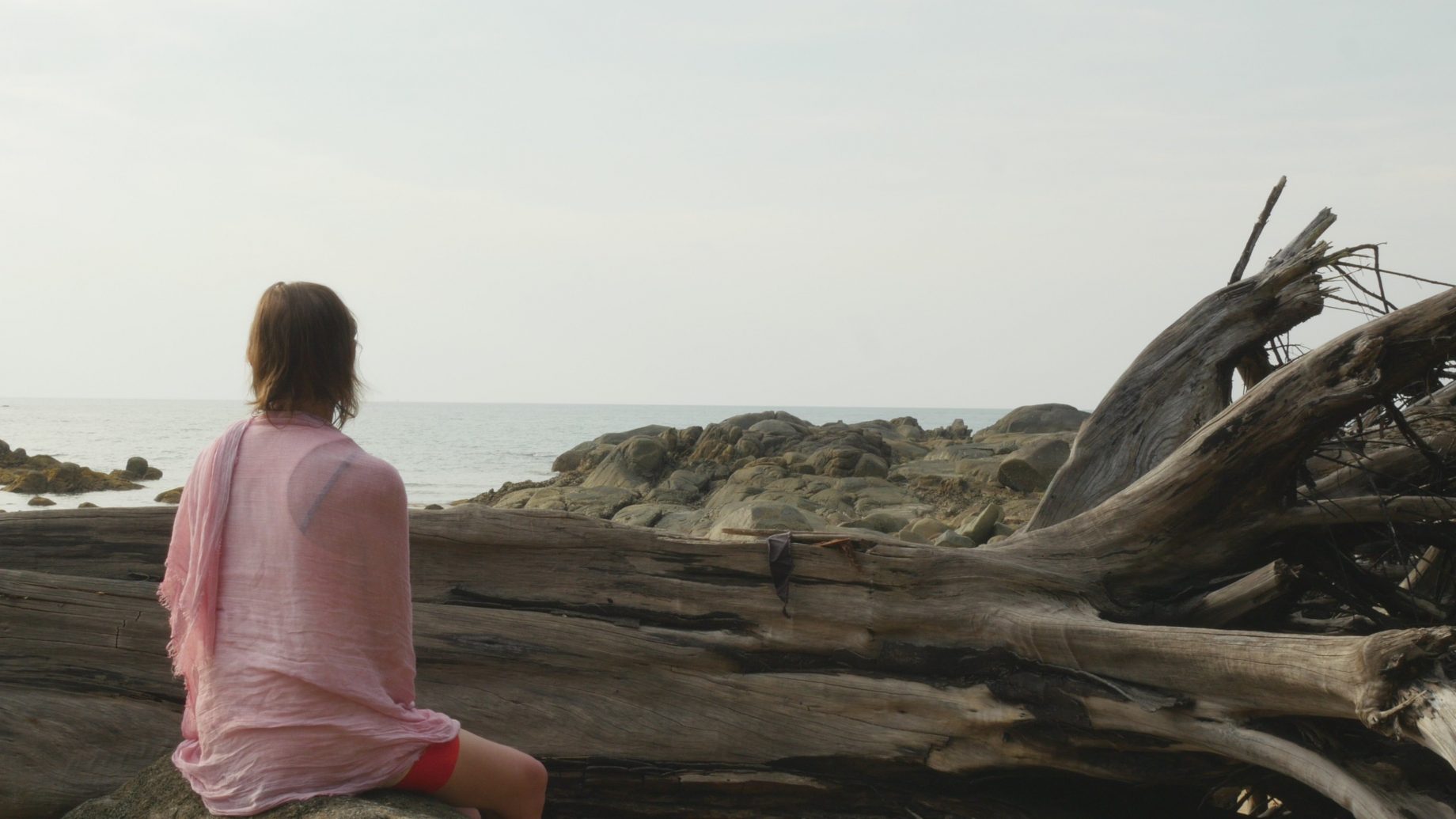
I found a spot to place my camera on tripod in such a way that passers-by would not pass between me and the camera behind me, or so I thought. Of course there were people who did that too, eventually. Anyway, fascinated by the almost rock-like grey wood lying there, like the remains of a giant being, I sat for a while next to the old corpse, despite passers-by moving along and despite the sun burning my skin. Although the image looks a lot like many other images I’ve made, at least I have now started.
Today, the day after, I spent most of the day walking the nature path in the nearby National Park, carrying my camera and tripod, in vain. The environment was great and some of the views on the path were extraordinary, but there was nowhere I wanted to stop to sit for a while. In the afternoon, after returning, I decided to go and visit the tree I saw on the beach yesterday, and it proved easy to sit in. The tree was plagued by some insects, I guess, because most of its leaves were perforated, but otherwise it seemed strong.
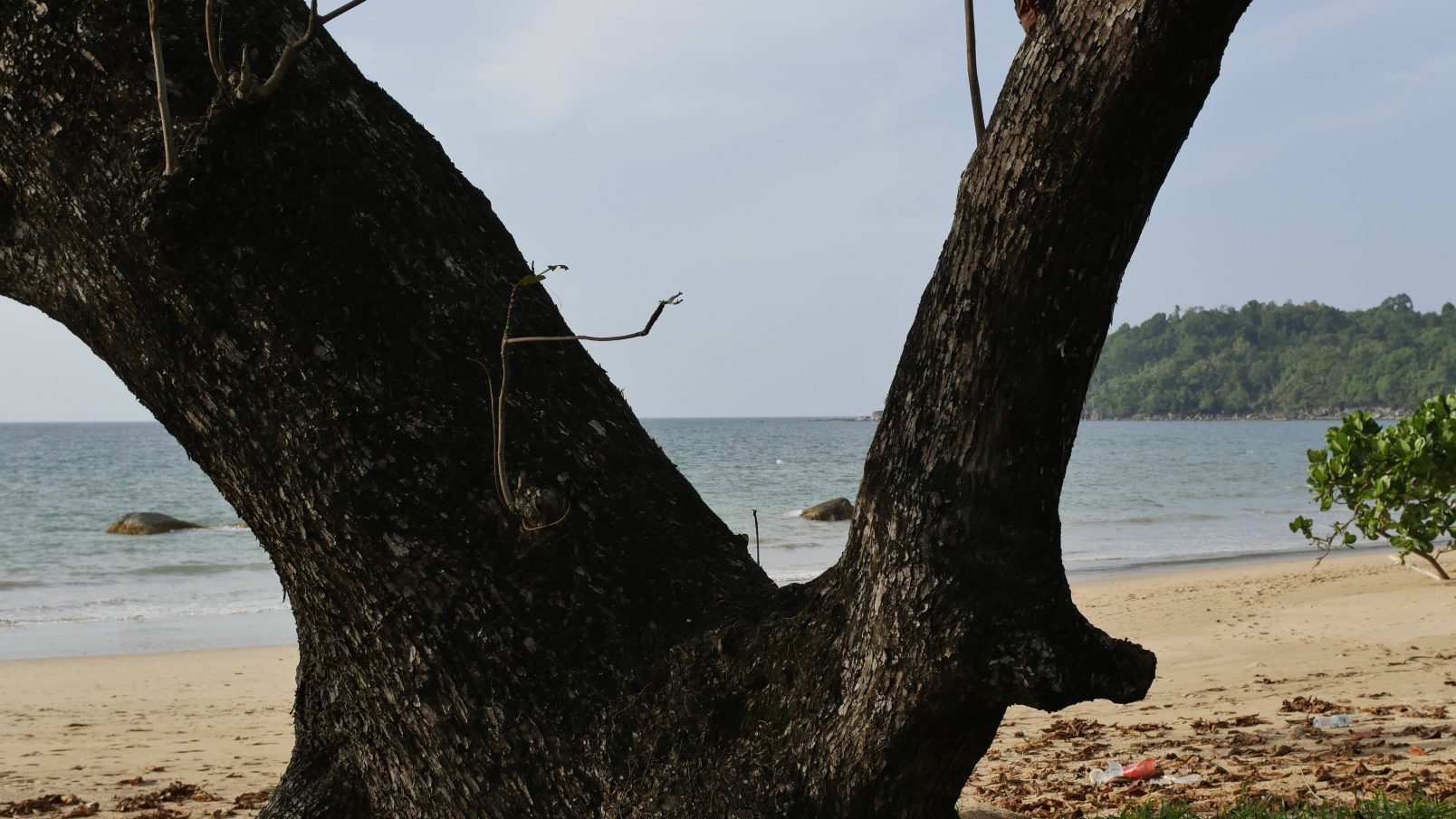
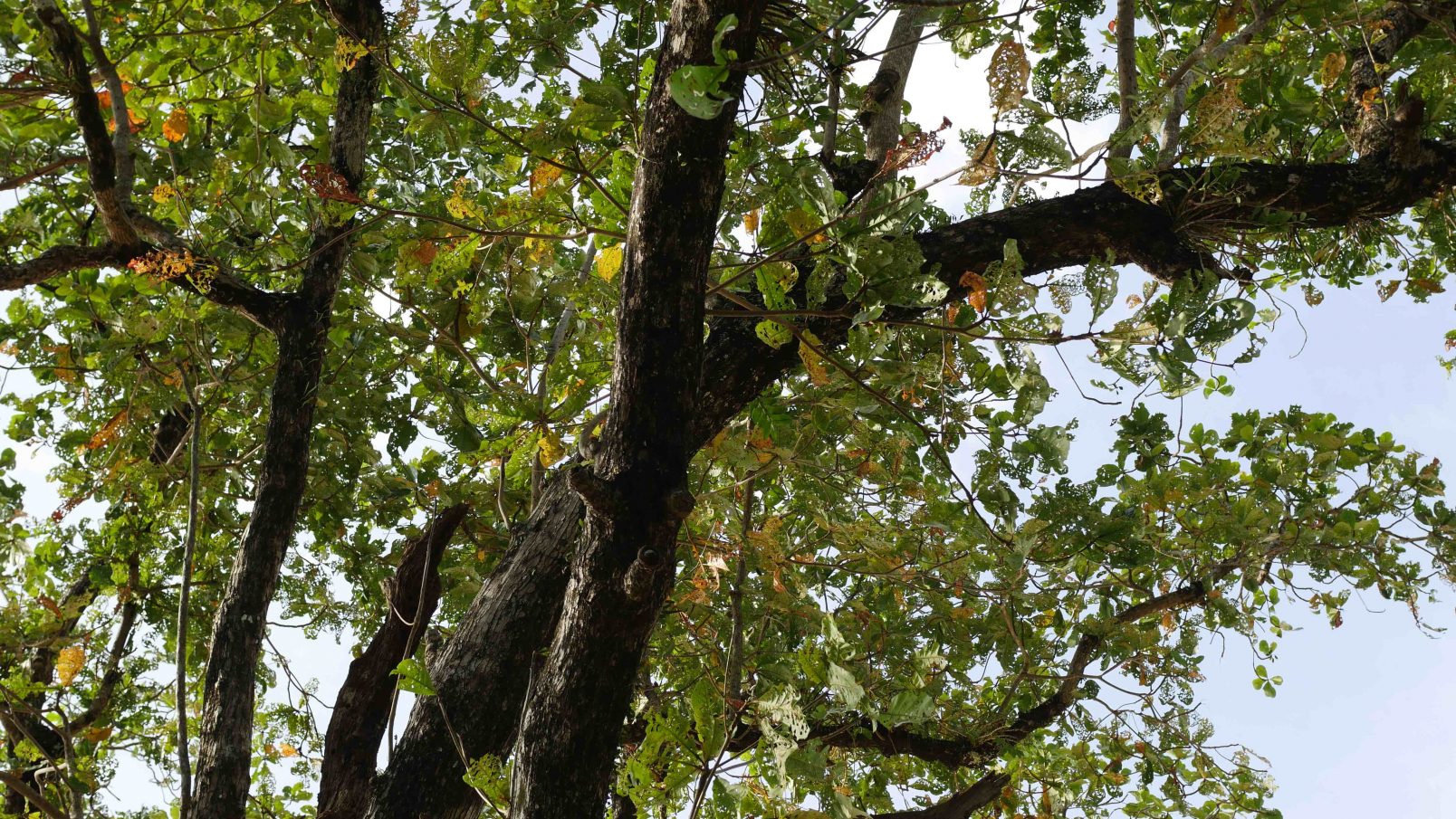
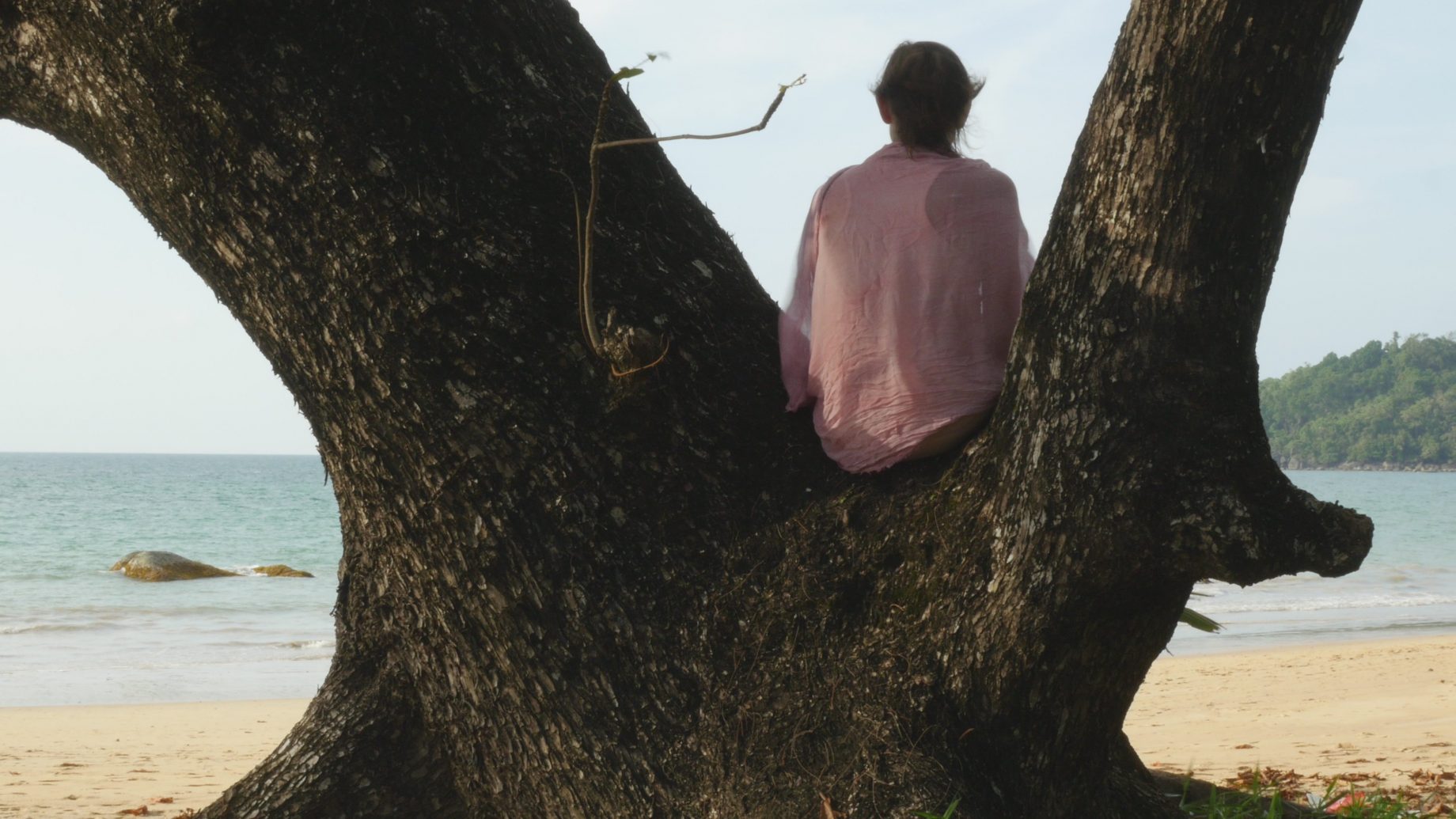
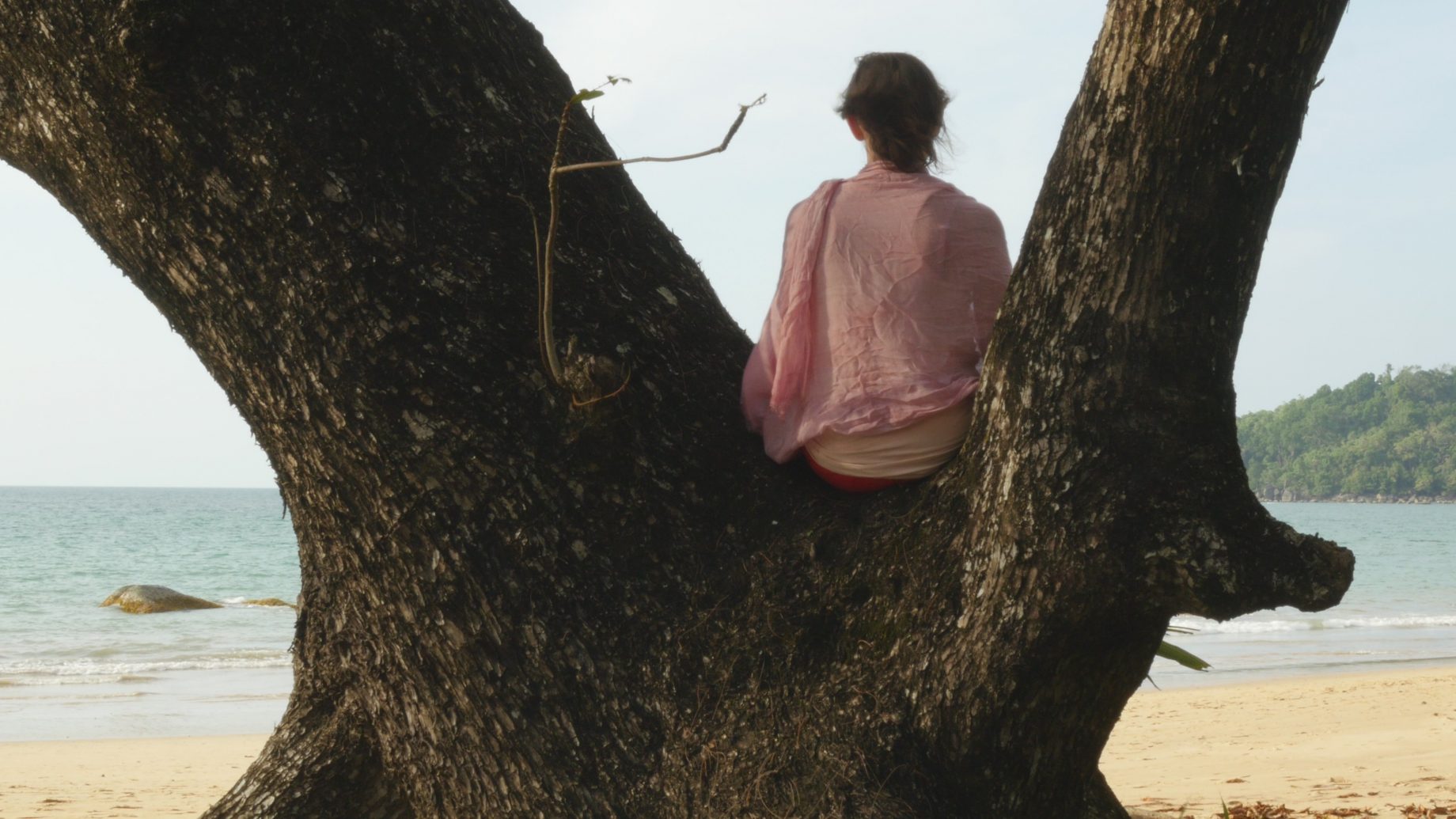
I made two versions, because there were so many passers-by during the first one, and also, because I was not sure about the framing of the image. Nevertheless the first, shorter version might be the better one.
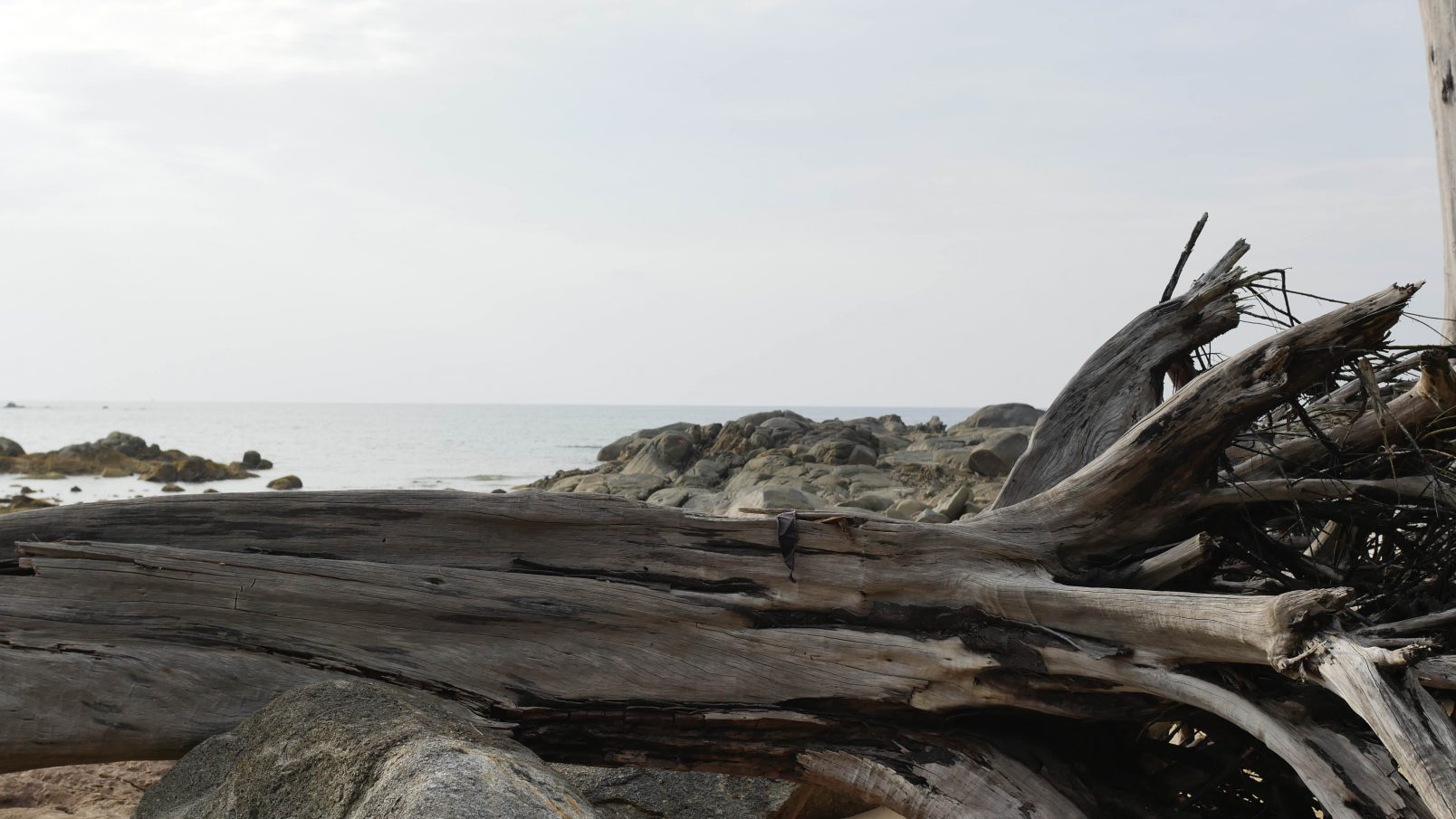
And finally, today, on the last day of 2016, in the afternoon, I made one last attempt by the big dead tree trunk at low tide:

Tonttutädit kuusikossa
Ihanan aurinkoinen päivä, ja juuri sopivan kirpeä ettei maa ollut märkää. Tonttu-tädit (nimitys on keksitty jälkikäteen) tapasivat Tervasaaressa, ja havaitsivat sen erittäin siistityksi puistoksi. Ei pienintäkään pöheikköä missään, hiukan kaislikkoa rannassa, siinä kaikki. Löysimme pienen kuusikon pohjoispuolelta, ja vaikka sekin oli karsittu ja leikelty, se kuitenkin muistutti etäisesti risukkoa. Nuoressa kuusimetsässä kuivat alaoksat yleensä kasvavat melkein läpitunkemattomaksi säleiköksi tai ristikoksi. Näiden kuusten alla ja ympärillä mahtui liikkumaan, vaikka katkotut oksat kyllä helposti tökkäsivät varomatonta tunkeilijaa kasvoihin. Tonttu-assosiaatio syntyi paitsi ajankohdasta, olihan tänään ensimmäinen joulukuuta eli vanhan ajanlaskun mukaan pikkujoulu tai adventti, myös minun kirkkaanpunaisesta asustani kuusikossa, potentiaalisten joulupuiden keskellä. Vietimme kuusten kanssa hyvän tovin, enimmäkseen kumpikin omissa oloissaan.


Kun havahduin tarkistamaan kameran oli kulunut lähes tunti, mutta muistikortti oli täyttynyt jo seitsemän minuutin kuluttua. Niinpä niin, olin varmistanut että akku oli ladattu, mutta muistikorttia en muistanut. Joitakin kuvia ensimmäisistä minuuteista kuitenkin jäi talteen, todisteeksi. Lisäksi otin vielä kuvan Kirsistä risukossa, varmuuden vuoksi.

Päällimmäisenä tästä vierailusta jäi mieleen, että kuusi on aivan erityinen puu. Sen ohuet oksat kasvavat matalalla ja ovat usein kuivia pitkälle ylös runkoa pitkin. Kuusta on usein hankala lähestyä oksien muodostaman ryteikön takia, mutta joskus alimmat oksat ovat pitkiä ja vehreitä ja muodostavat suojaavan majan. Kuuseen on myös hankala kiivetä, kun oksat ovat ohuita ja usein kuivia, mutta ohuetkin oksat kantavat tyvestään yllättävän hyvin. On joka tapauksessa hullua ajatella esiintyvänsä tai tekevänsä yhteistyötä puiden kanssa. Jokainen puulaji on omanlaisensa ja puutkin ovat yksilöitä jo pelkästään koon ja iän ja kasvupaikan myötä.

Toistamiseen pöheikössä
Toinen yrityksemme liikkua ulkona, pöheikössä tai epämääräisessä kaupunkiluontomaisemassa sai uutta hohtoa ja haastetta ensilumen laskeuduttua edellisenä päivänä. Olimme jo viikkoja sitten sopineet tapaavamme talvipuutarhan edustalla, Kirsi Heimonen ja minä, ja tällä kertaa kokeneen maastotanssijan Paula Kramerin oli tarkoitus liittyä seuraamme lyhyellä varoitusajalla, vaikkei hän lopulta päässytkään mukaan – tällä kerralla. Aurinko paistoi, puuterilumi peitti kalliot ja nurmet ja ilma oli riittävän kylmä jotta lumi ei heti sulaisi, muttei kuitenkaan niin kylmä, että varpaat heti jäätyisivät. Melko pian ne kuitenkin palelivat ellei ollut kunnon talvikenkiä.
Ensimmäinen pysähdyspaikkamme oli aivan talvipuutarhan vieressä, tai paremminkin oli kyse liikkumispaikasta, ehkä kameran paikasta, jopa epäpaikasta, epämääräisestä ei-maisemasta eli pöheiköstä, joka lumessa ja talven valossa silti oli kaunis. Sopiva yhdistelmä heinikkoa Kirsille ja taustalla pieni mänty minulle. Sen oksat olivat yllättävän vahvat, vaikka ne olivat melko ohuet ja matalalla, juuri sopivat kieppuilla, vaikkei sitä kuvissa oikein erota.


Toinen pysähdyspaikka oli ylhäällä kalliolla radanvarressa, jossa törrötti pieni kelo täynnä lintuja. Yritimme lähestyä vaivihkaa, mutta yksitellen ne tietysti kaikkosivat kaikki. Yritin asetella kameran niin kauas että edes pääosa kelosta pääsisi mukaan kuvaan, pöheikköä unohtamatta. Pian kuitenkin tuli kylmä, ja muistikorttikin tuli täyteen harmillisesti juuri siinä vaiheessa, ettei Kirsin villi tanssi kelon kanssa tullut tallennetuksi.


Att sam-agera med träd i Helsingfors
Att uppträda eller samarbeta med växter, i synnerhet träd, är ett projekt som jag utvecklade för Stockholm och som kommer att förverkligas som ett VR-projekt i konstnärlig forskning, det vill säga ett två-årigt projekt finansierat av Vetenskapsrådets utskott för konstnärlig forskning. En del av projektet består av att välja några träd som jag besöker regelbundet med en kamera, i samma stil som jag gjort under många år i Helsingfors och som blivit till Animal Years, en serie som jag uppfört och spelat in på Harakka, eller ön Stora Räntan, som den heter officiellt på svenska. Men den här gången är det inte tiden som är det viktiga, utan träden, så upprepningen blir kanske mindre regelbunden.
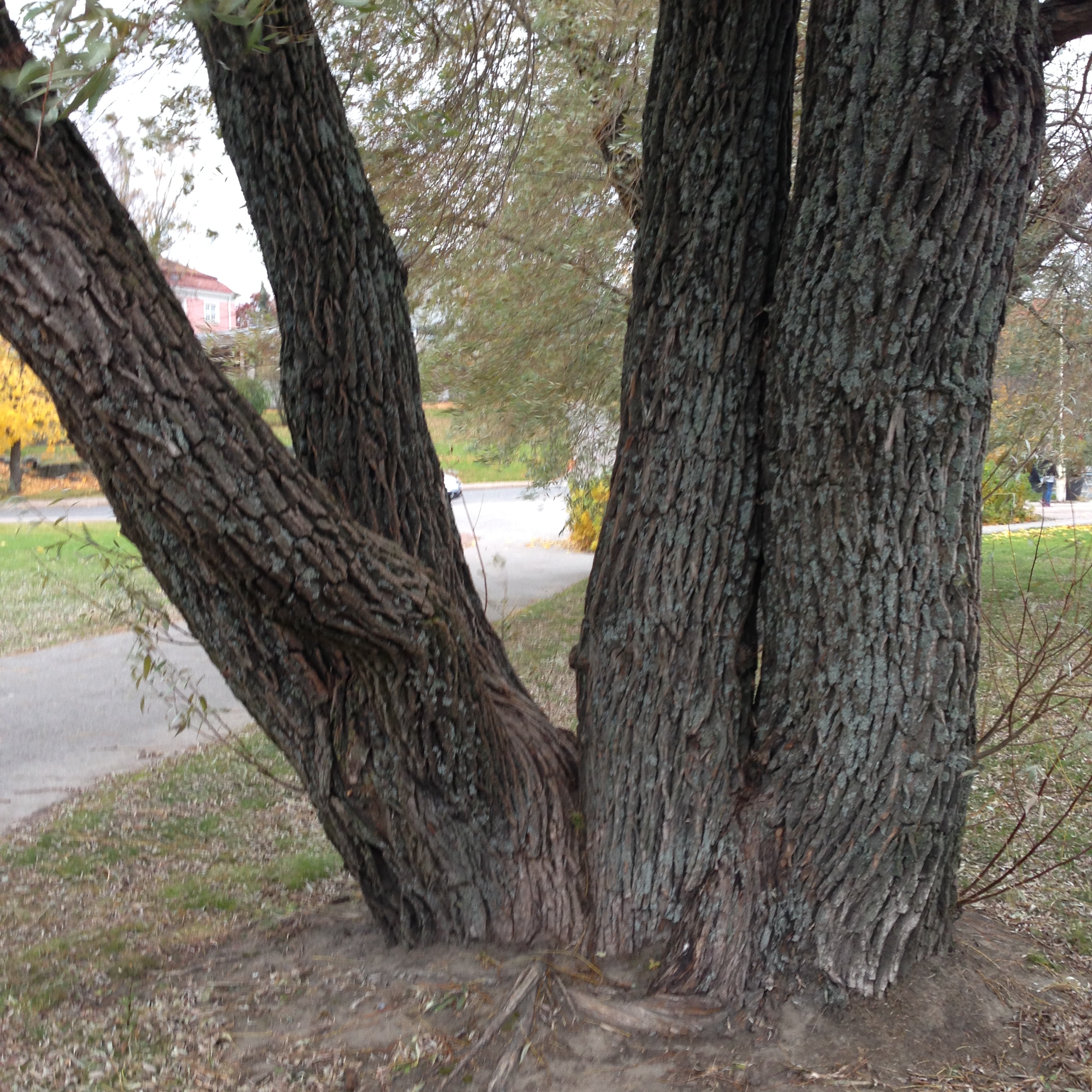
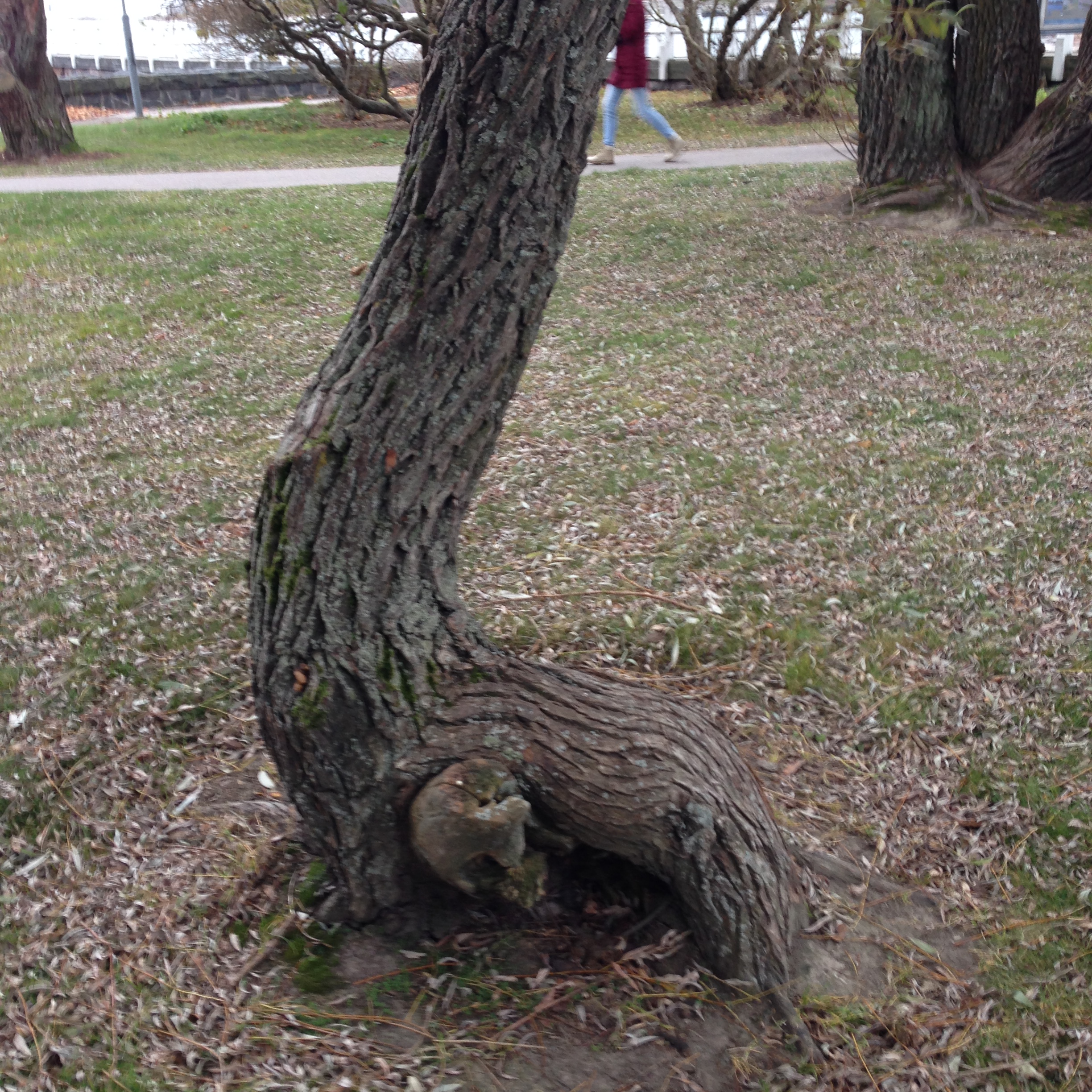
När jag väntade på båten till ön i den kalla blåsten på lördagen, och sökte skydd för vinden bakom några gamla silverpilar på stranden, slog det mig att jag gott och väl kunde välja några träd att besöka i Helsingfors också, isynnerhet som jag kommer att sätt igång med projektet här, tack vare ett stipendium av Kone Stiftelsen. Istället för att starta i Stockholm, anknuten till Stockholms Konstnärliga Högskola i januari som planerat, kommer jag att börja på Helsinki Collegium for Advanced Studies och inleda mitt arbete i Stockholm officiellt först i januari 2018. Men det är klart att jag börjar så smått redan tidigare. Så trots att jag redan valt mitt första träd i Humlegården i Stockholm, en gammal lönn som det är lätt att sitta i, skall jag nog välja ut några samarbetspartners i Helsingfors också. Jag gick alltså runt på ön för att se ifall jag kunde hitta någon trädkumpan där – som kanske kunde hjälpa mig att ta mig dit oftare. Jag har ju samarbetat med rätt många av träden där, dels i serien Talking Trees, då en björk, en rönn, en al, en ask och den enda lönnen fick ett par hörlurar på sina grenar och en cd spelare (med en monolog skriven och inspelad av mig) i en plastburk kamouflerad vid sin stam. Dels har uppträtt för kamera med vissa träd under några av åren i Animal Years. Under hundens år satt jag i en tall och låg på klippan brevid en annan tall, under oxens år satt jag under öns enda gran och under harens år stod jag och höll i en enrisbuske. Men jag ville ju hitta nya samarbetspartners nu.
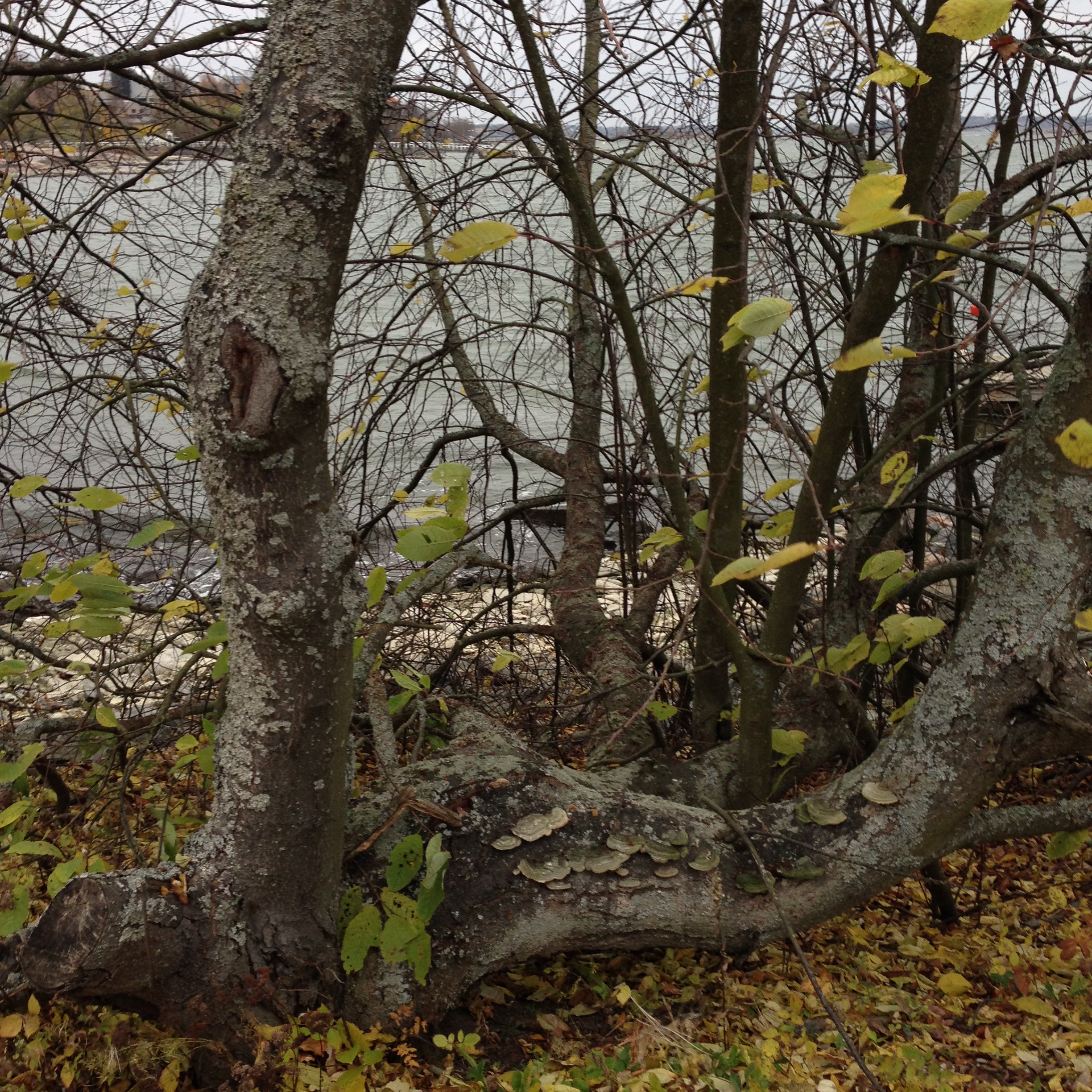
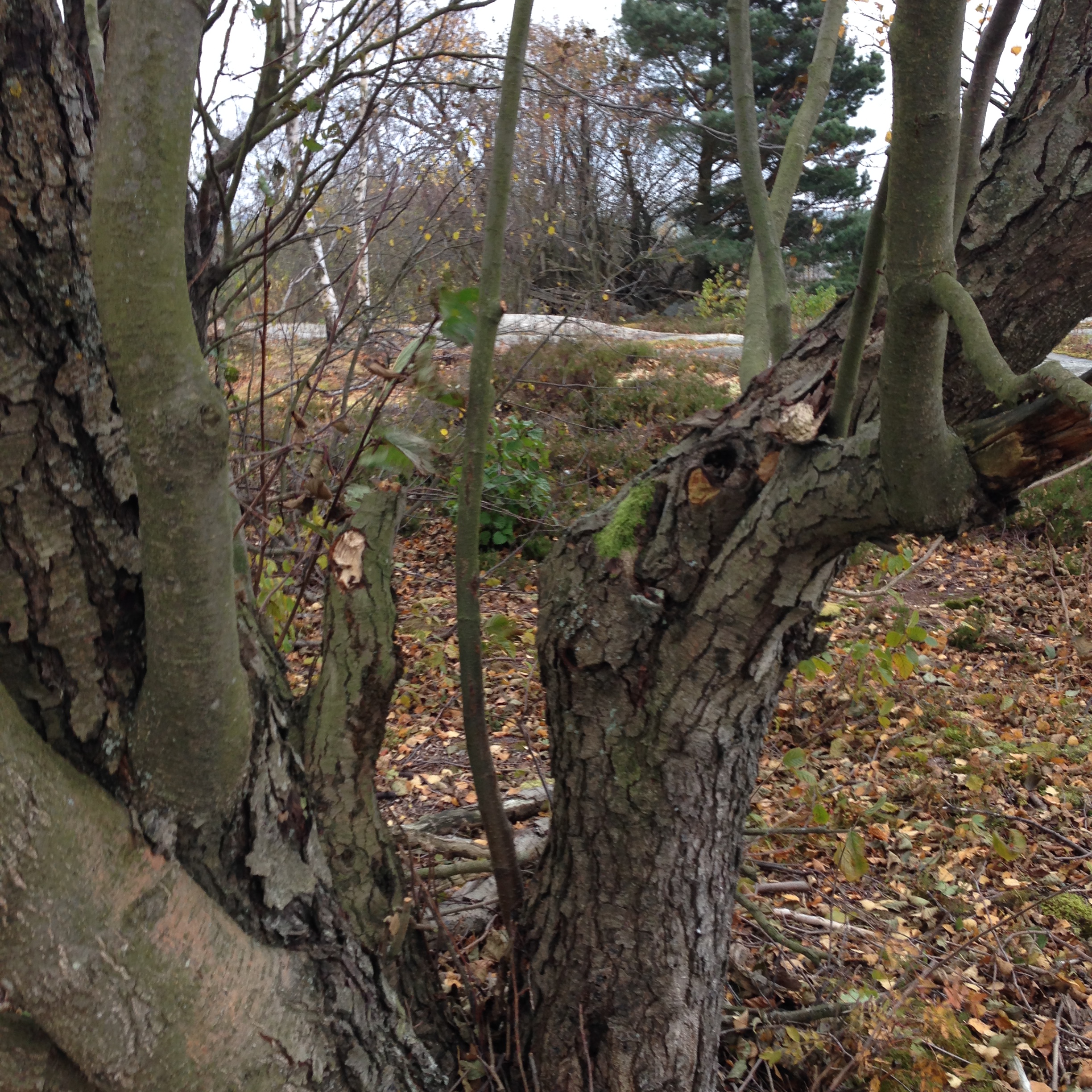

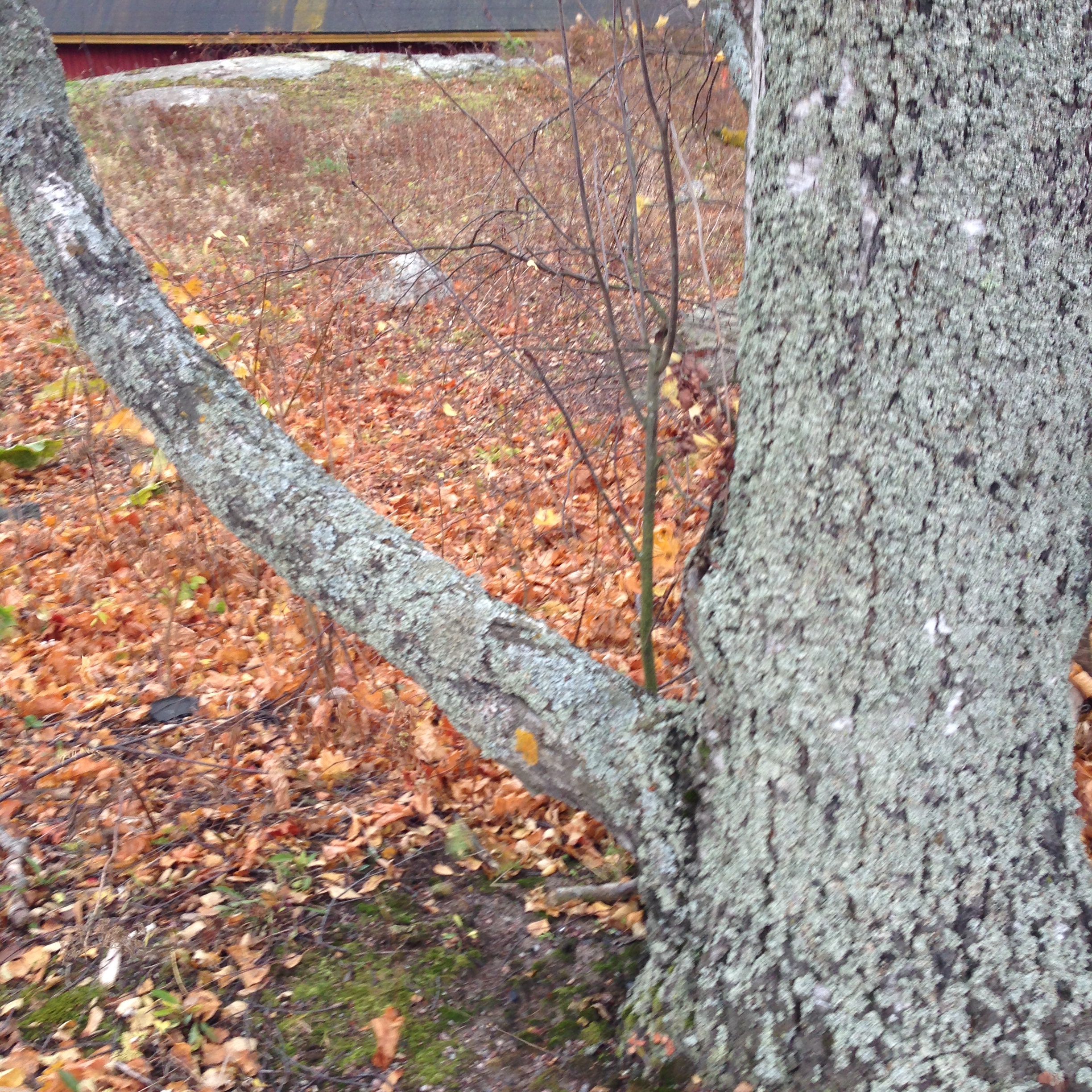
De enklaste träden att samarbeta med är antagligen lönnen och björken mitt på backen. Men jag försökte också sätta mig på en hägg vid stranden och en gammal al mitt på klipporna, men de kändes inte riktigt rätt. Den gamla björken nära ingången till ammunitionskällaren nummer 3 skulle vara fin, men den stora lågt liggande grenen väder aningen för högt, trots allt, för att det skall gå lätt att kliva upp på den.

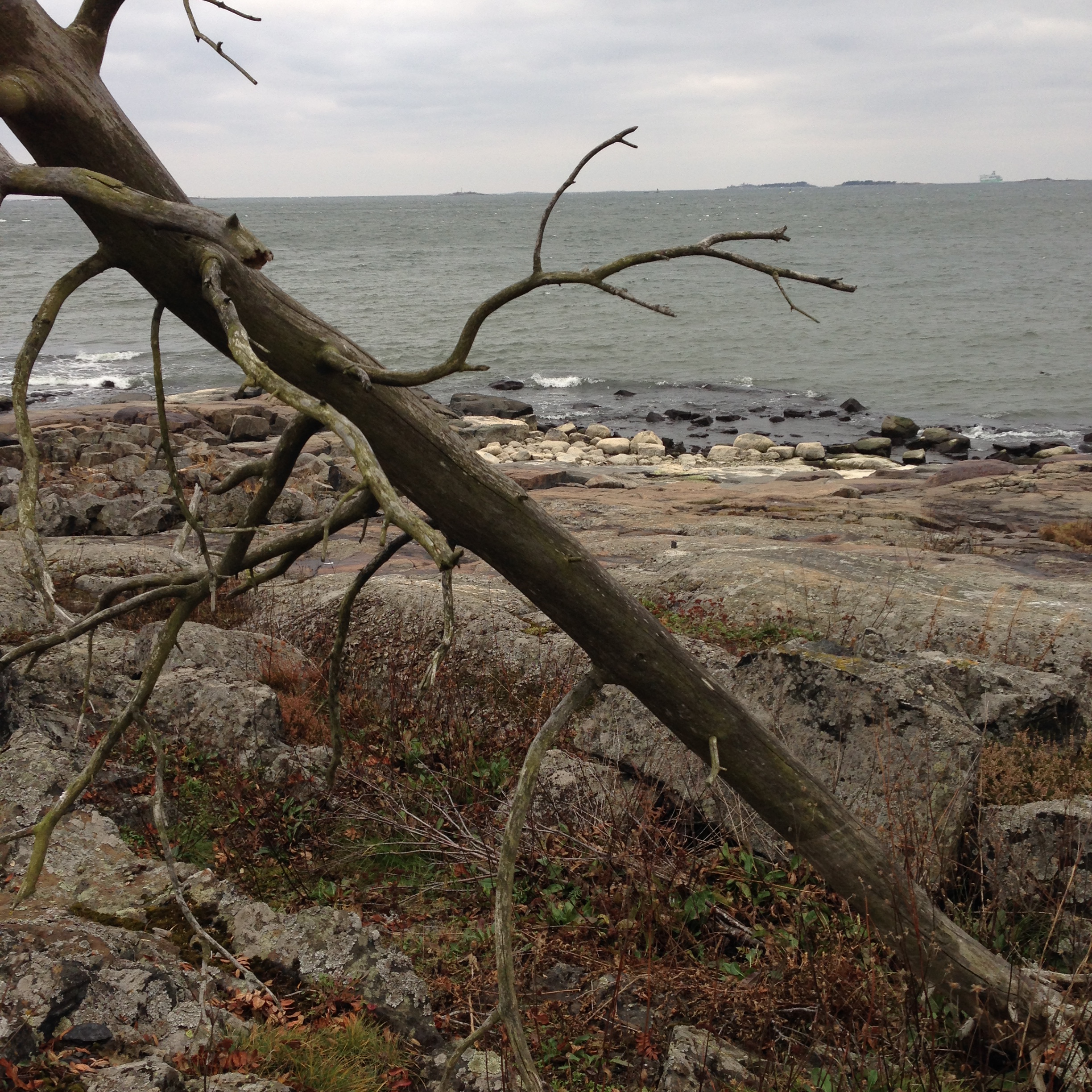
Det som egentligen fascinerade mig mest var en gammal död tall – eller är det kanske en björk – på klipporna mot havet. Den kan jag inte sitta på, eller strängt taget samarbeta med, för den är nog stendöd. Men jag kan kanske besöka den och stå nära den på något sätt…
Ensimmäiset kokeilut pöpelikössä
Kaksi puista kiinnostunutta, kaikenlaista kokenutta naisihmistä päätti lähteä yhdessä pöpelikköön, kokeeksi, tekemään taiteellista tutkimusta käytännössä. Kirsi Heimonen ja minä sovimme syyskuun alussa päivämäärän ja katsoimme kartalta sopivan puiston molempien työpaikkojen lähistöltä, sovimme tapaavamme Hangonkadun ja Vironkadun kulmassa iltapäivällä klo 14 ja minä lupasin ottaa myös kameran mukaan. Ja sen kummemmitta alkuvalmisteluitta näin myös tehtiin. Kuljimme puistossa jyrkän mäenrinteen viertä kiertävää polkua ja pysähdyimme ihastelemaan valtavaa tammea notkelmaan jyrkänteen alla. Siihen pystytimme leirin ja lähdimme tunnustelemaan maastoa.
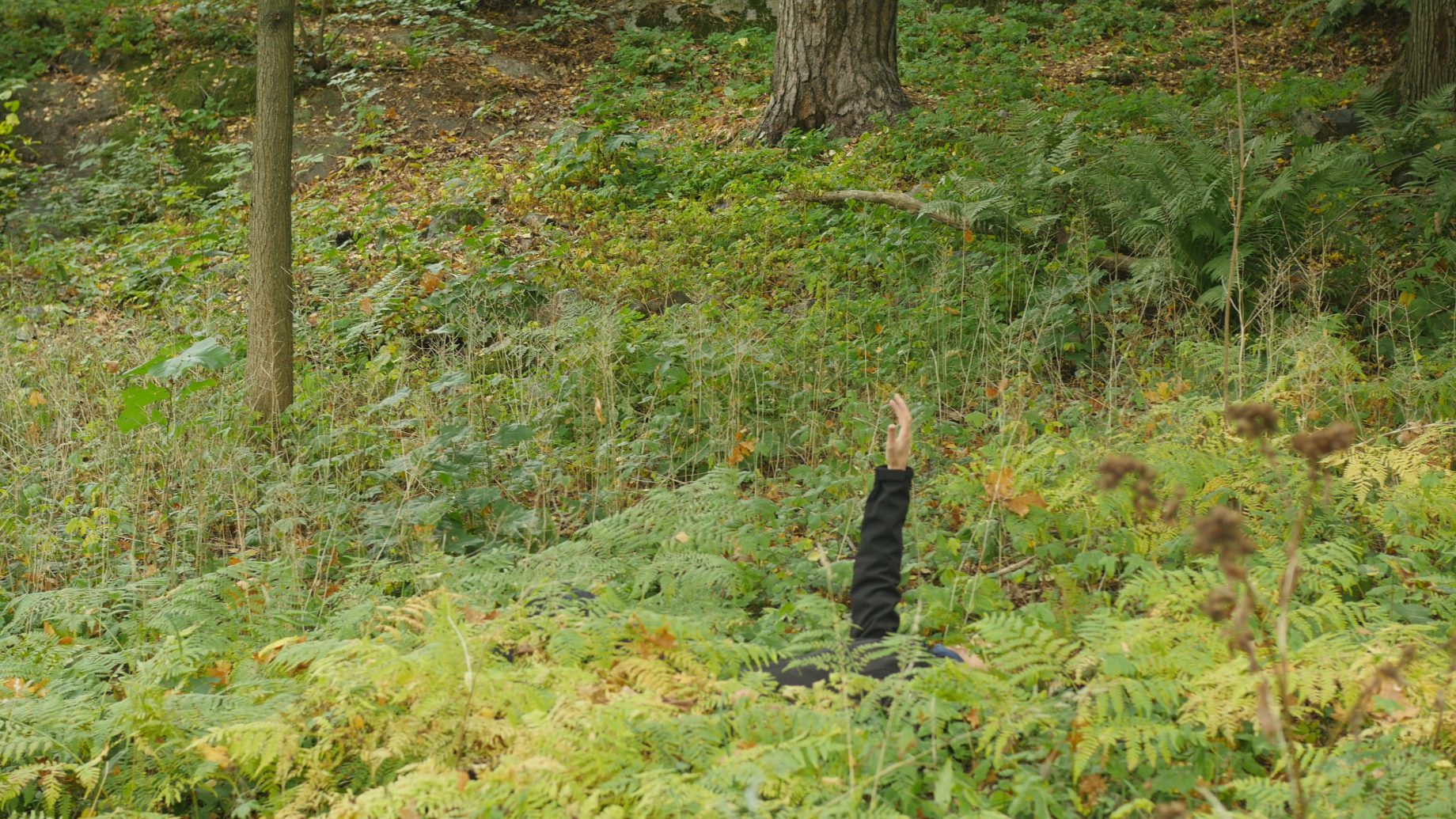
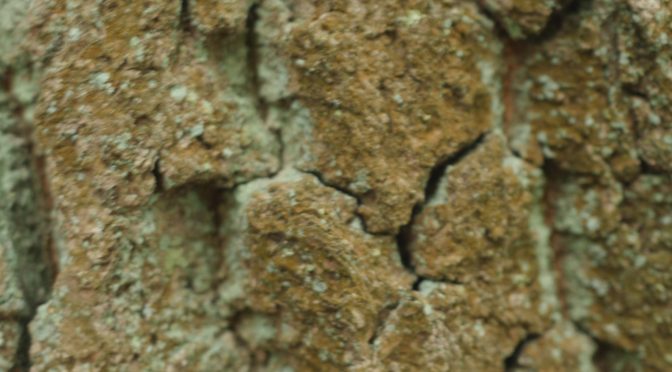
Minä aloitin kuvaamalla tammen kaarnaa, kiertämällä sen runkoa lähietäisyydeltä. Liikkuminen kameran kanssa on minulle outoa, yleensä jätän sen jalustalle, ja syystä, liikkeessä kameran automaattitarkennus ei toimi kunnolla. Kun nostin katseeni, huomasin ruohikosta nousevan käden. Kirsi löysi ryhmän nuoria jalavia (luultavasti ne olivat jalavia, vaikka lehdet olivat aika vaaleat) ja ryhtyi nojailemaan niihin eri tavoin, etsien erilaisia lepopaikkoja. Minä siirsin kameraa niin, että taustalla näkyvä männyn runkokin mahtui kuvaan, ja menin sen luokse nojailemaan. No, siinä vaiheessa kameran akku olikin loppunut. Vaihdoin akun ja rajasin kuvaa hiukan uudelleen. Kirsi ryhtyi kiertämään vanhaa koivua, ja minä istuuduin kivelle taustalla ihailemaan kallioseinämää. Hiljalleen alkoi pisaroida, iltapäiväksi oli luvattu sadetta. Ihmettelimme vielä hetken outoja puita ja niiden meluisaa kasvupaikkaa – junat ajoivat ohi aivan vierestä, ja liikenteen ääni kuului joka suunnalta – ehkä kasvit eivät kärsi melusta. Mutta vaikkei niillä olisi kuuloaistia ne varmaan tuntevat ääniaallot jollakin tavalla.
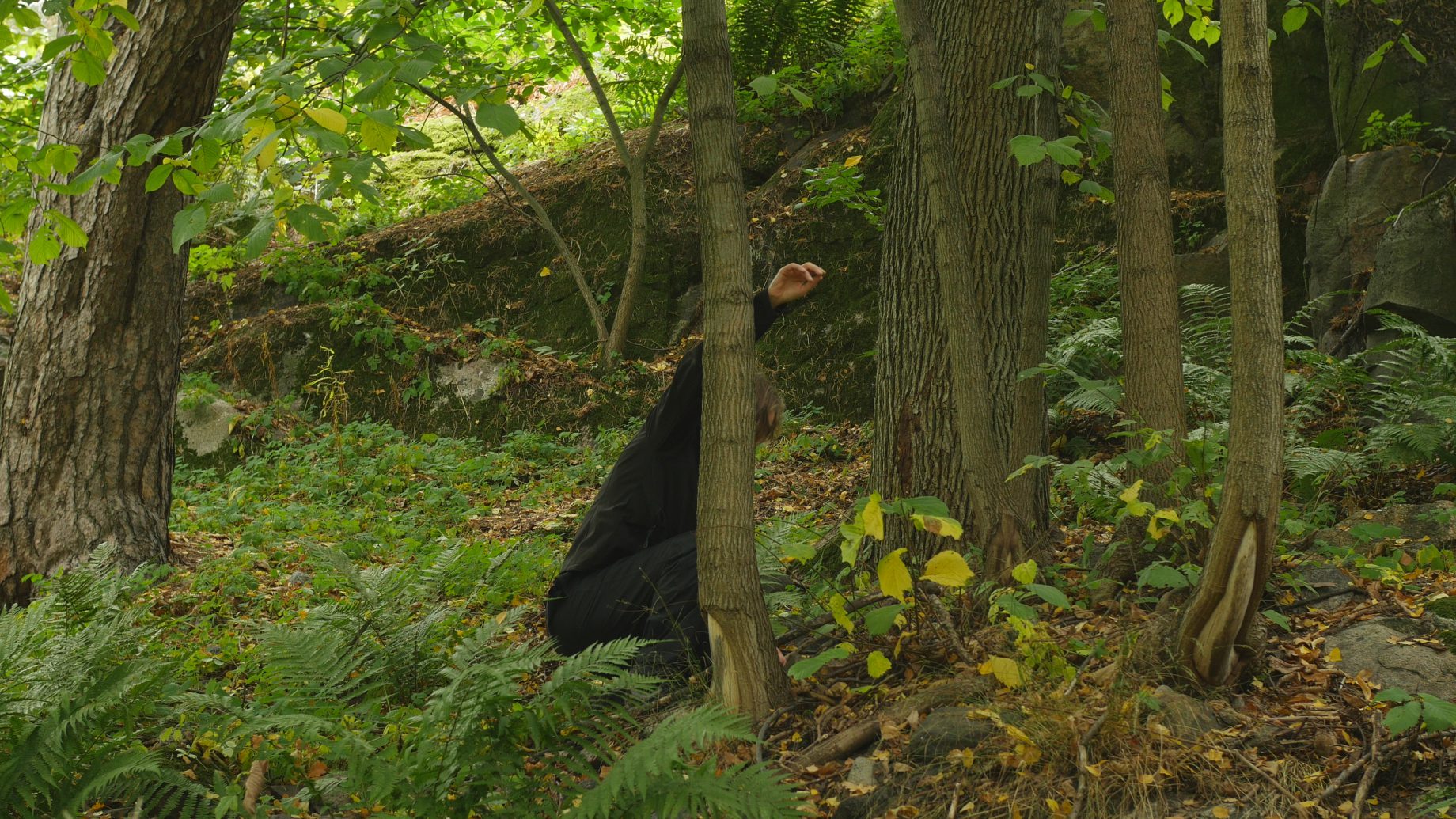
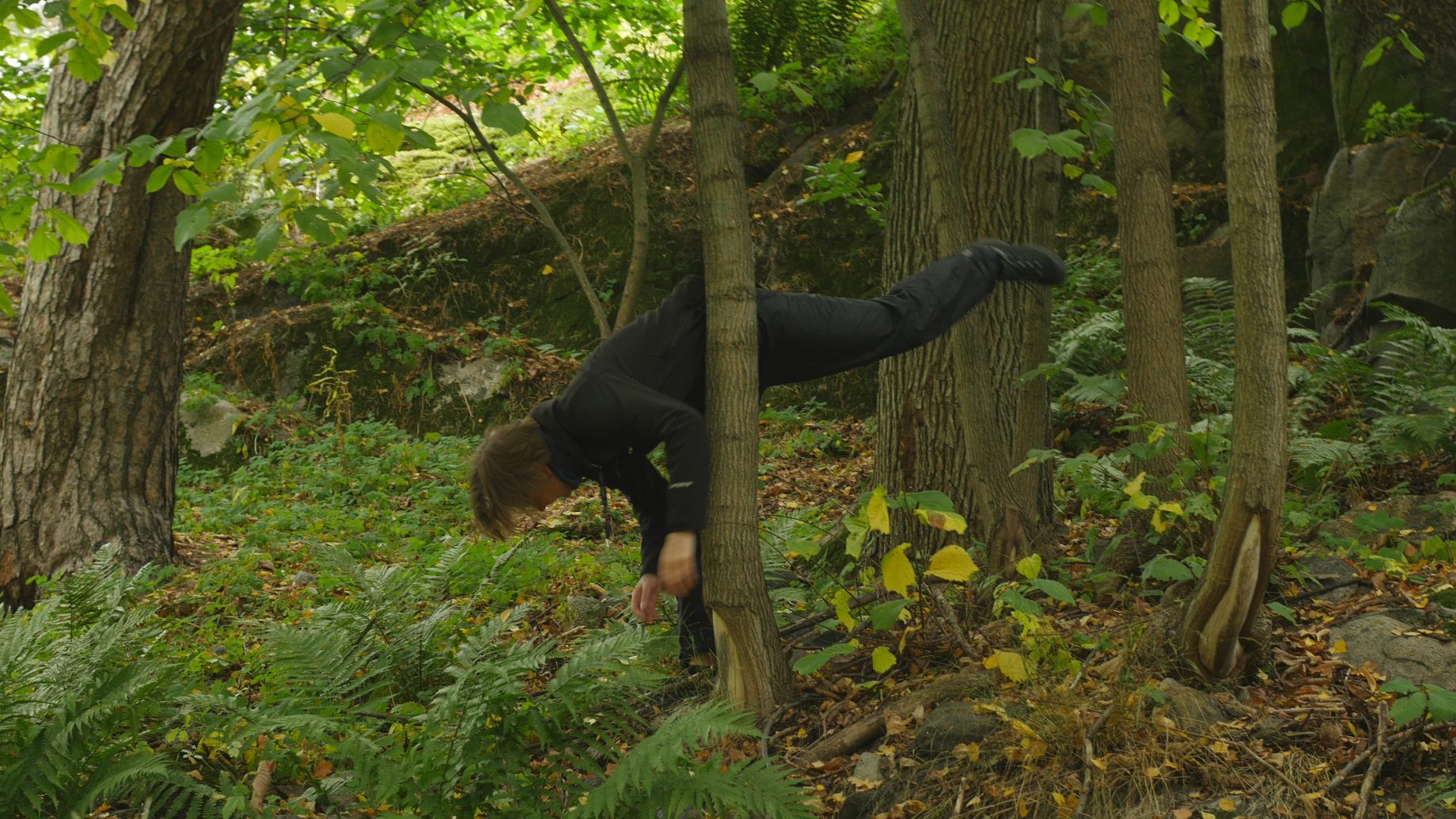

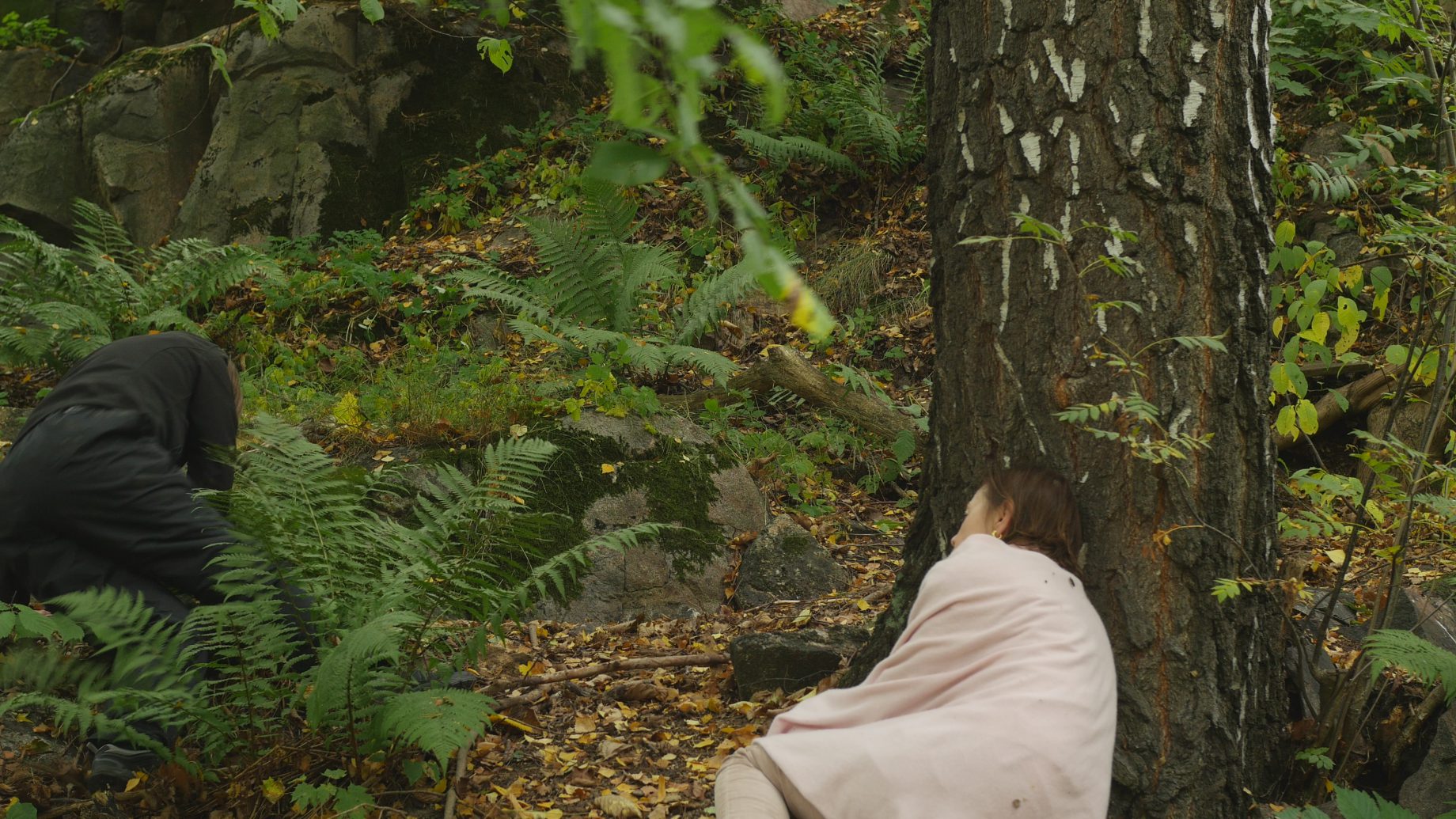
Palasimme polulle, enemmän tai vähemmän roskien peitossa, minun vaaleaan huiviini ne varsinkin tarttuivat. Kulkiessamme takaisin kadulle päin sovimme, että tapaisimme toistamiseen, ja sopisimme jonkinlaiset säännöt. Ehkä niin, että sovimme paikan ennakkoon ja kumpikin voi käydä tutustumassa siihen. Kun sitten tapaamme, pidämme yhteisen “session”, jonka tallennamme videolle ja lopetamme äänimerkistä. Lopuksi sitten keskustelemme siitä mitä teimme ja mitä tapahtui. Koska ja missä tuo seuraava tapaaminen puiden kanssa tapahtuu sovitaan myöhemmin. Ensimmäinen kokeilu on nyt joka tapauksessa tehty…
Rocks on the Body in Exeter
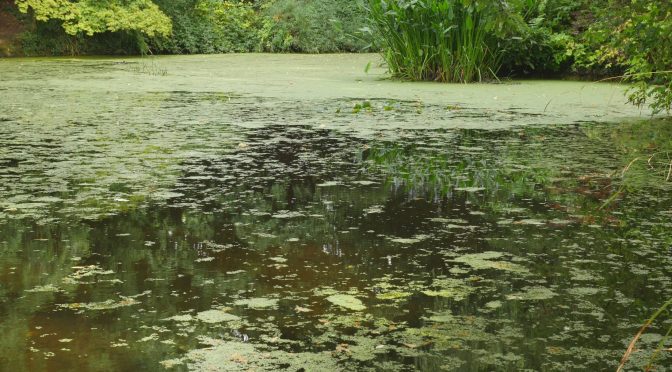
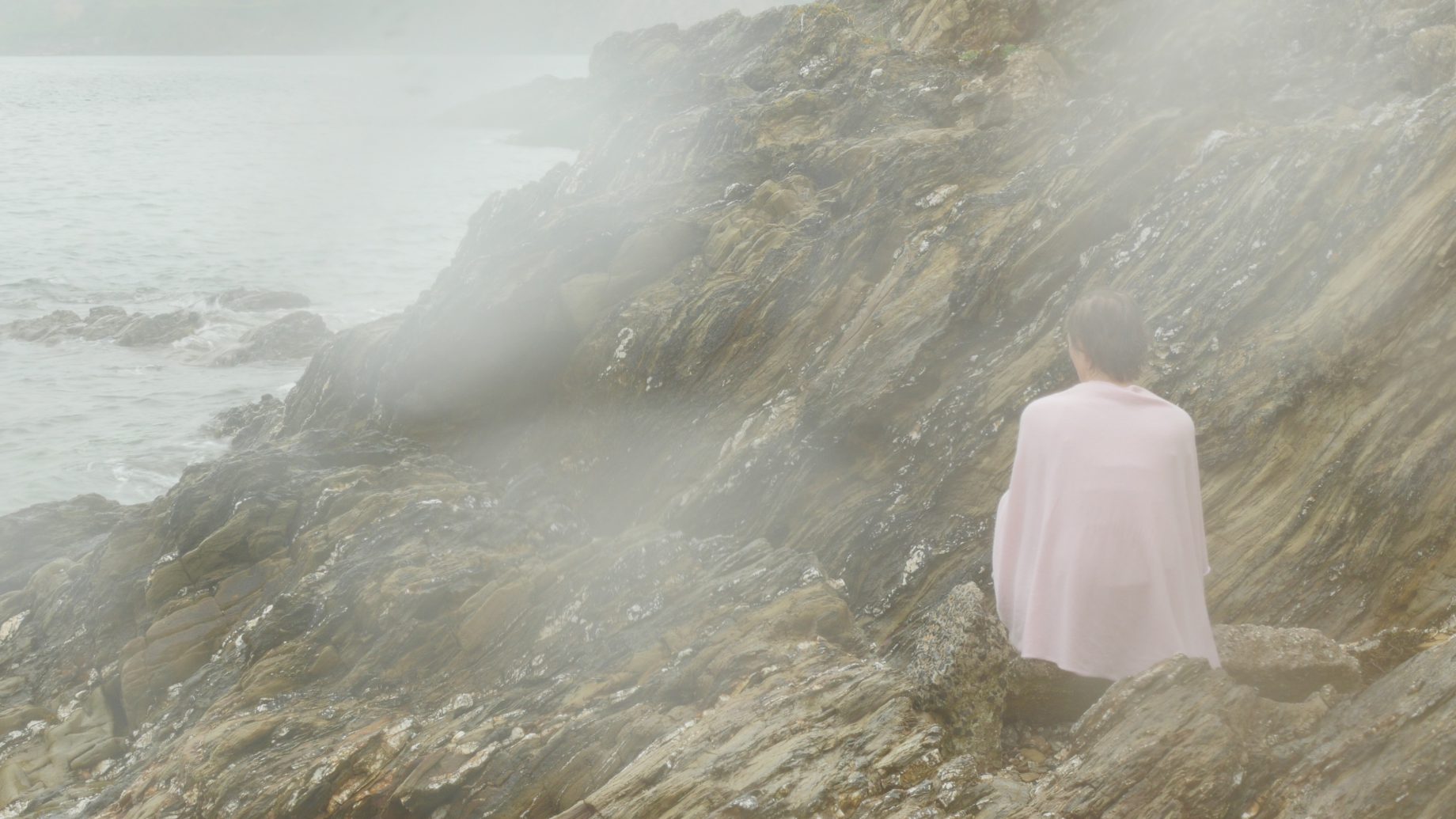
Performing for camera can have its drawbacks, unless you check and double-check and then do it once more. This experience was confirmed once again in Exeter this weekend. I was participating in the third seminar organized by the Rock-Body project, see rock-body website , an exciting interdisciplinary mixture of scholars and artists from various disciplines, including geographers, geologists, performance studies scholars and philosophers. As part of this event dancer and choreographer Paula Kramer planned to create a site specific dance piece, eventually together with David Paton and Carolyn Deby, who invited me to join in. I happily agreed to sit somewhere with a rock in my lap, as Carolyn suggested. I thought I could sit immobile in the foreground watching them, as it were. When I saw the chosen site, under a huge old oak tree by a pond, where they already had placed the rocks they would work with, it was obvious that the only place to sit was at the piece of rock at the edge of the pond, in the background. I had brought with me two lumps of rose quartz that I had at home, because I expected that it might be hard to find “feral” rocks of a suitable size in the city. I noticed them at home when returning from the previous workshop in Penryn and connected them with the image I made there, due to their colour. In the morning after the seminar in Penryn I sat on the shore in Falmouth with a pale pink scarf in the rain and made a short video piece that I called Body on the Rocks. (See blog post) Of course I wanted to make a sequel with Rocks on the Body using the same scarf. And this I could somehow do based on the image to be created live during the performance. In the video the focus would be on the rocks in my hands. I was not sure if I would find the time to do it, so I asked Carolyn to take some snapshots with my phone in order to have some documentation. And they remain the sharpest images of those two pieces of rose quartz:
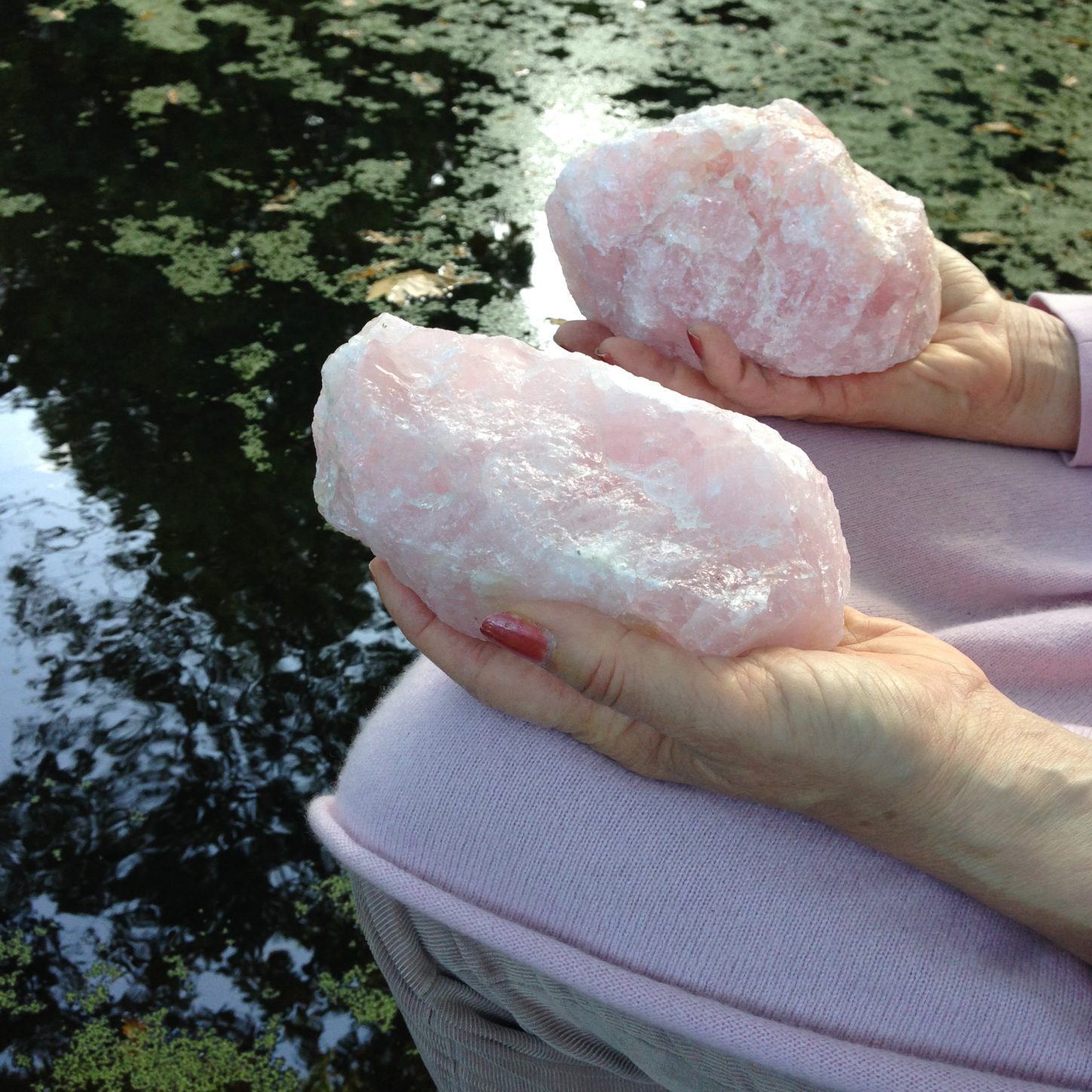
Photo by Carolyn Deby
In the morning on the day of the performance, the last day of the seminar, I went to the site with my camera and tripod, the scarf and the rocks to try to perform a session. I made some tests, recording a few seconds of video and then looking at it and adjusting the position of the tripod, recording again, and quickly realized I needed a close up to show “rocks on the body”.
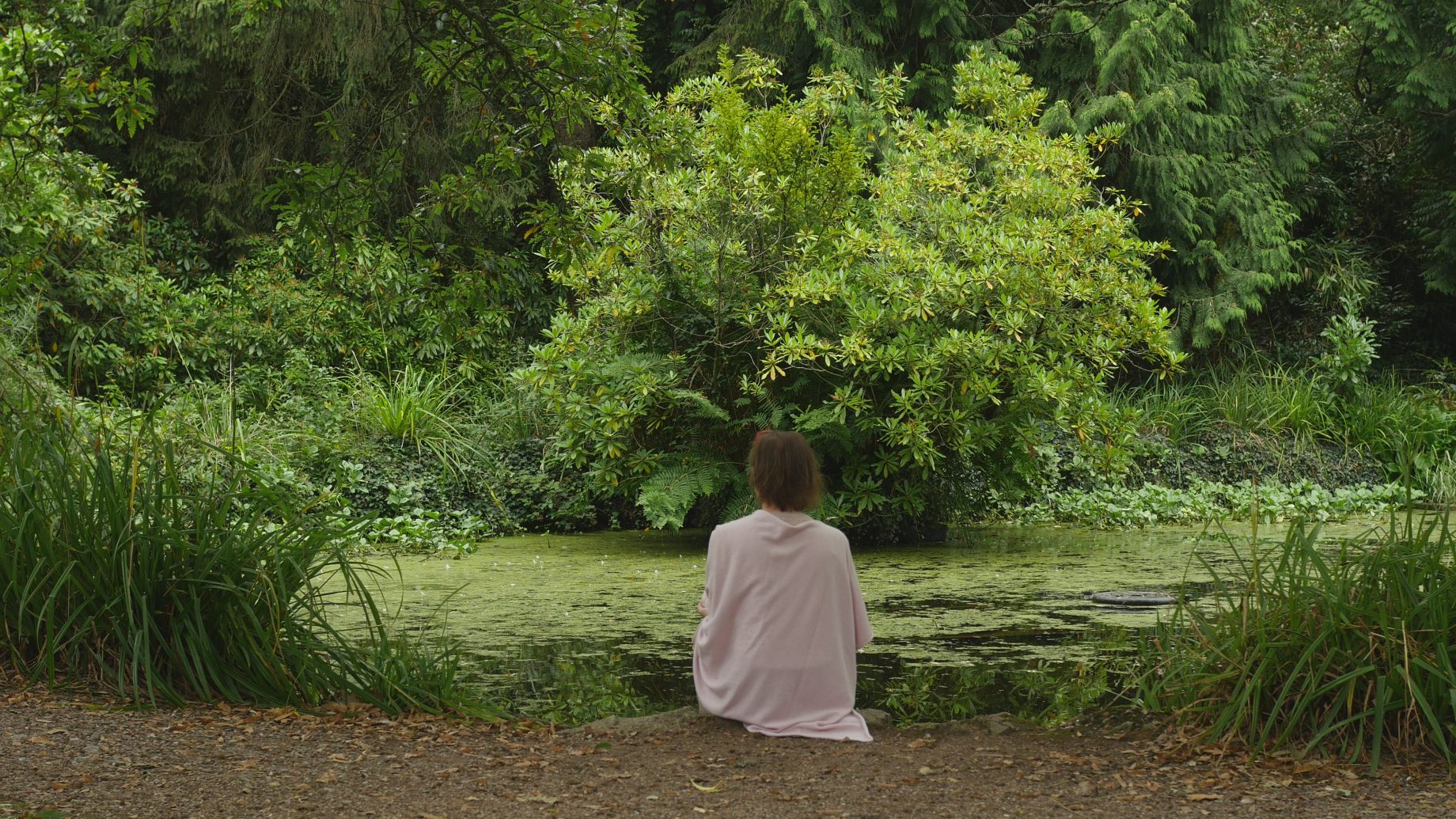
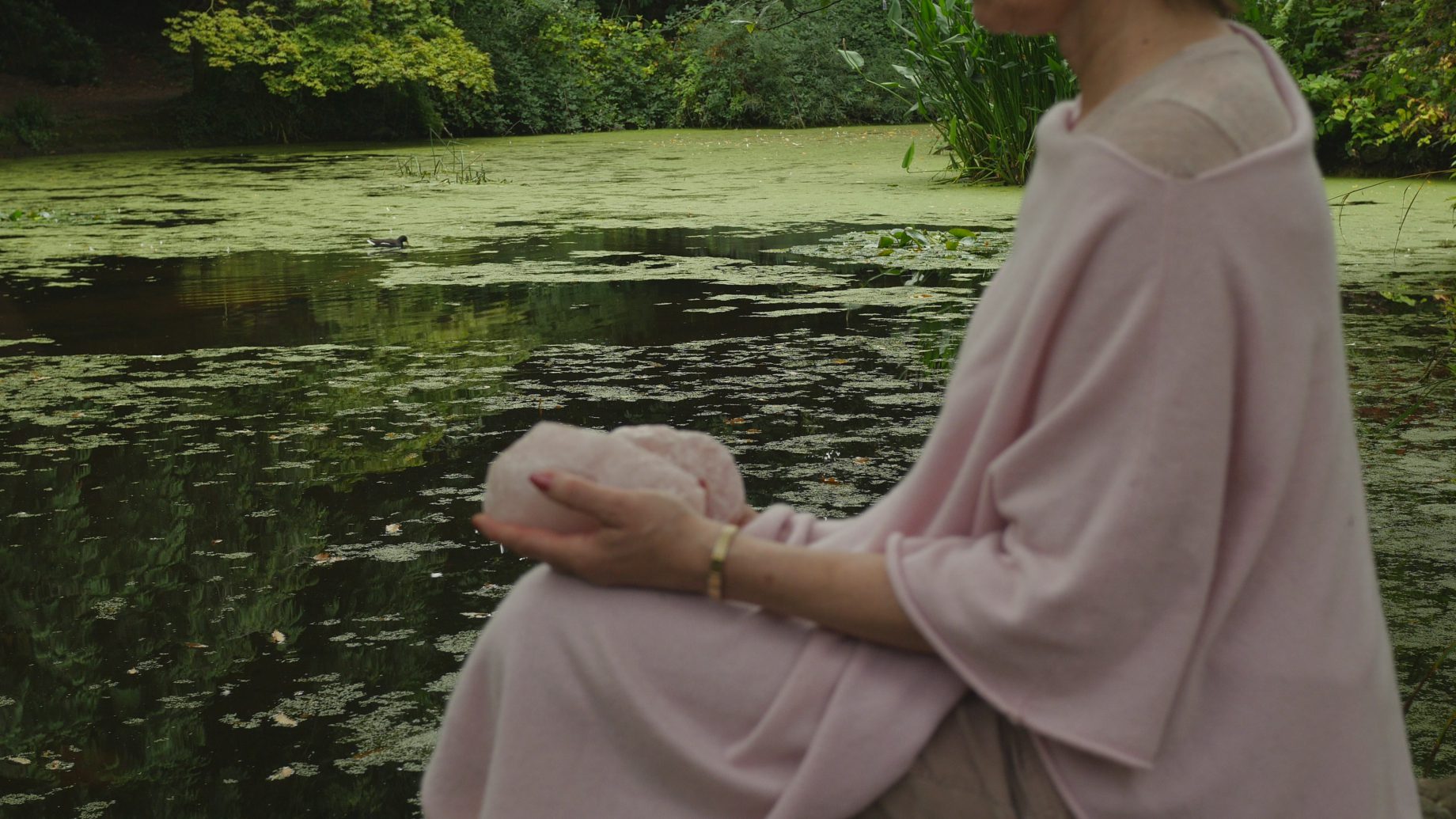
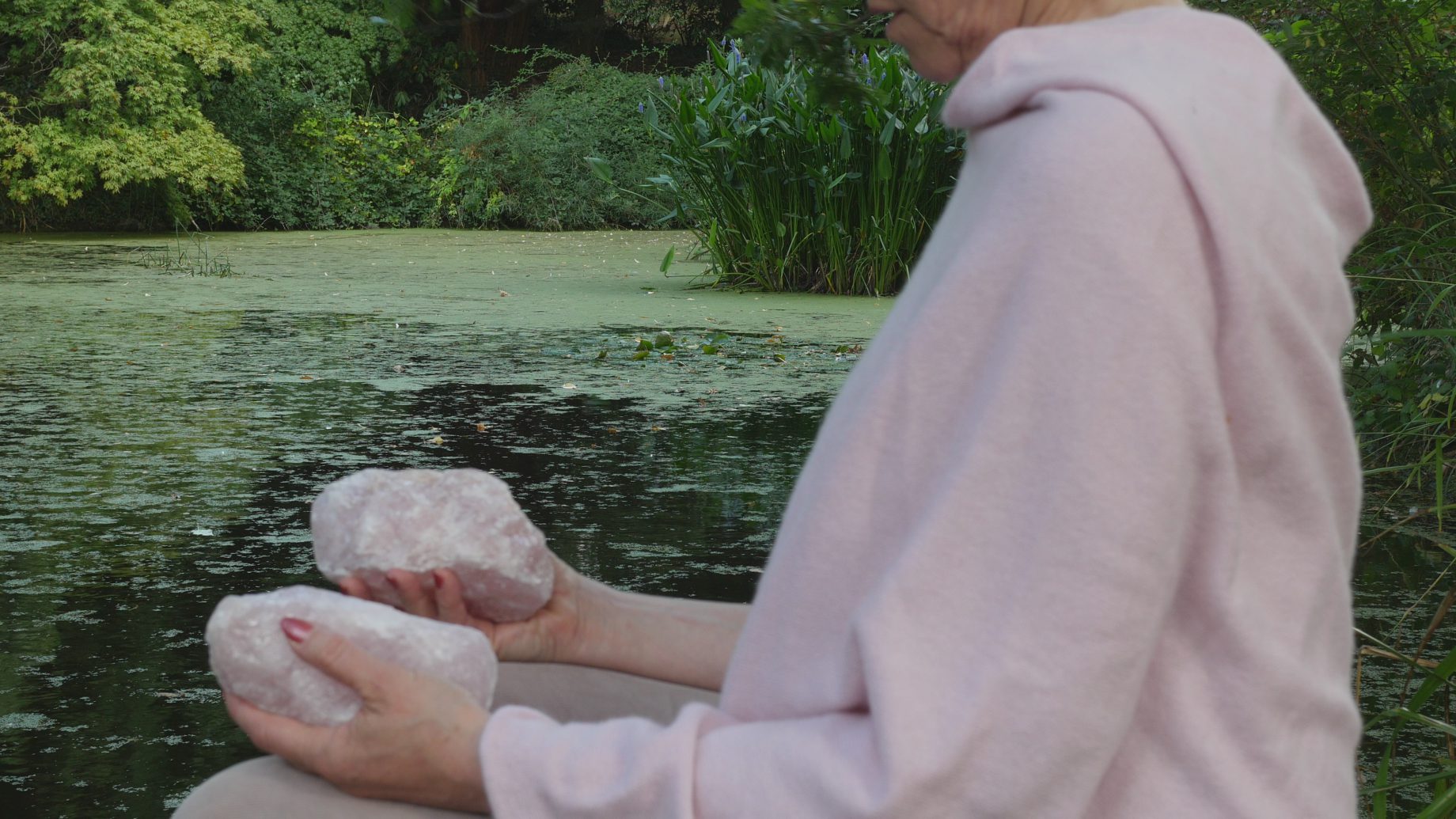
The morning was overcast and there was not much light in the shade of the oak. While moving about trying to adjust the image I was somehow careless, so one of the rocks fell into the pond. I was shocked, feeling like Adalmina, the little princess in a fairy tale by the Finnish writer Zachris Topelius, who lost her pearl and thereby all her good fortune in a pond due to her vanity. Luckily the pond was not very deep, I could see the rock and tried to reach it but quickly noticed there was no other way than to undress and climb down into the pond. I did that and retrieved the rock, hoping that nobody had passed by exactly then. The rock felt nice and fresh after having its bath, so I washed the other one, too. When I finally sat down I saw a huge fish swim by, probably curious or expecting to be fed. I decided to use my phone as a timer, since I wanted to have enough material but also to be in time for the seminar, and thought 15 minutes would be enough so I put the timer on 17 minutes, started the camera – or so I thought – and sat down. I counted my breathing, partly to calm down, partly to focus, since sitting was surprisingly uncomfortable and the rocks in my hands felt heavy. Some birds were making loud sudden sounds that startled me and would probably show in the image. Slowly it started to rain, softly. The droplets created beautiful patterns on the surface of the pond, and I was happy with this link to the rain in Falmouth. The rain came and went several times, almost starting and then receding again and never really turning into a proper rain. Finally the sun came out and made the rocks sparkle in my hands. I wondered about the time, but decided to continue until 250 breaths and leave it at that; my left leg felt numb and enough was enough. I got up and realized the camera was black, when did it turn off and why? I looked again, and once more, and finally realized, I had never turned it on! And the same might be true of the timer, or then I just did not hear the sound. I felt devastated, all this beauty and pain had been in vain, experienced by me alone. By now it was five minutes to ten, I had been sitting there for more than half an hour, so I had to hurry to the seminar. – Later Paula told me she had seen me sitting, when she came to practice, and the sun arriving, too, but did not want to disturb me. It was a consolation to know there had been a witness, but I still wanted to make the image…
I decided to make a new attempt just before the actual performance, and then to remove the camera and the tripod before the audience arrived. And that is exactly what I did, although the session was rather short, 100 much shorter breaths. But of course there was neither raindrops on the surface of the pond or sun glistening on the quartz in my hands this time. Even the camera angle seemed less interesting, although that might be my imagination.
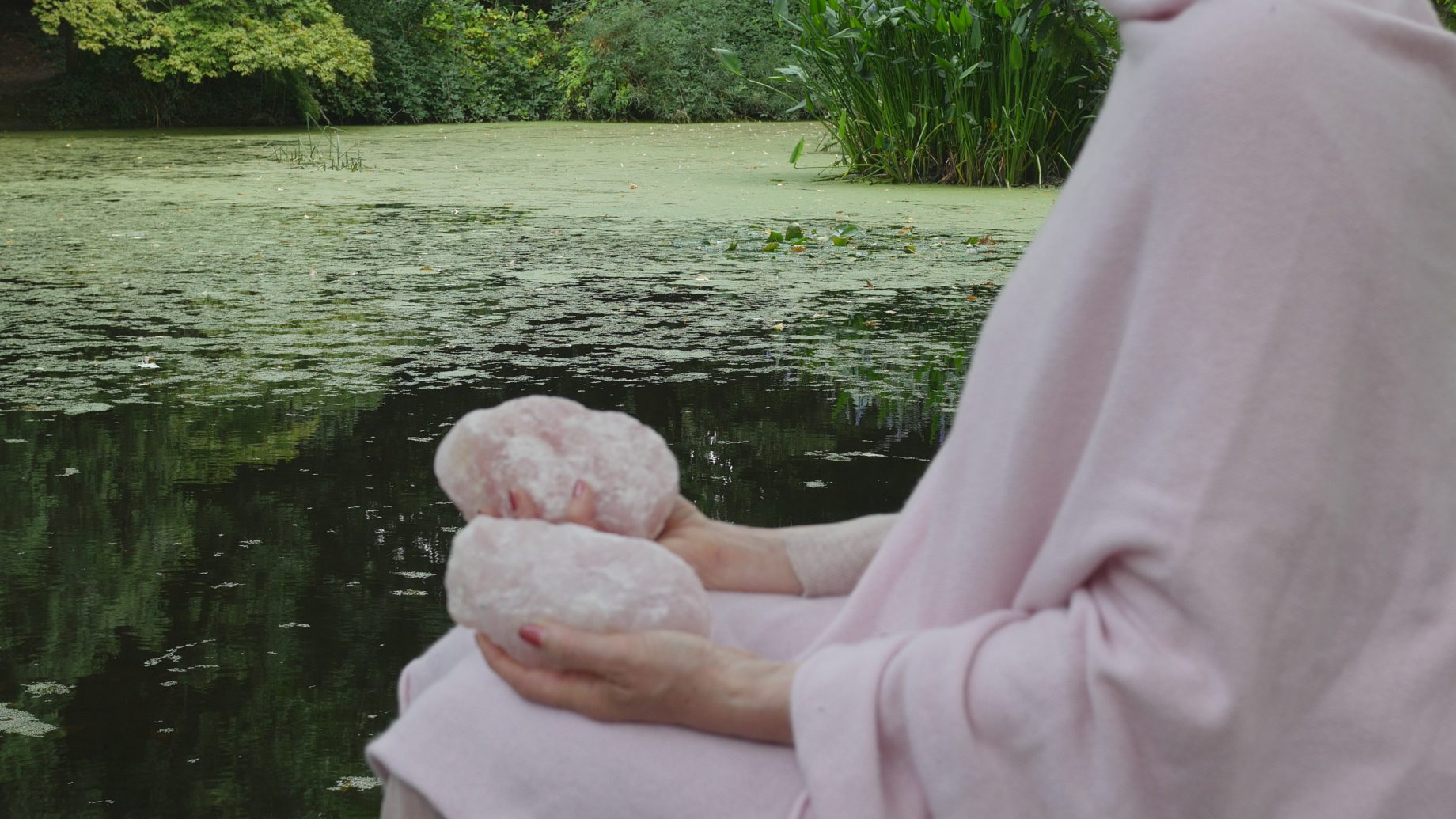
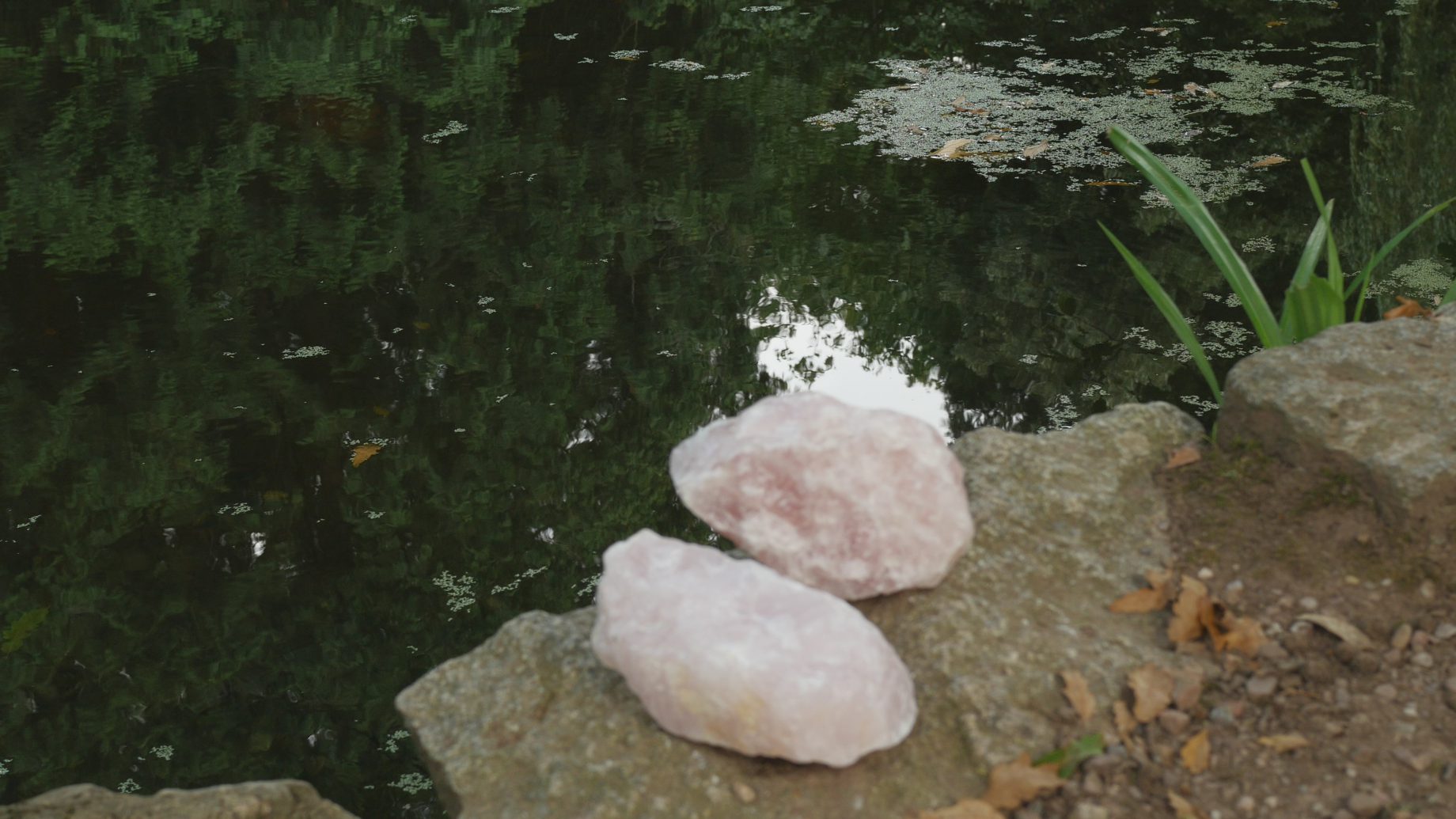
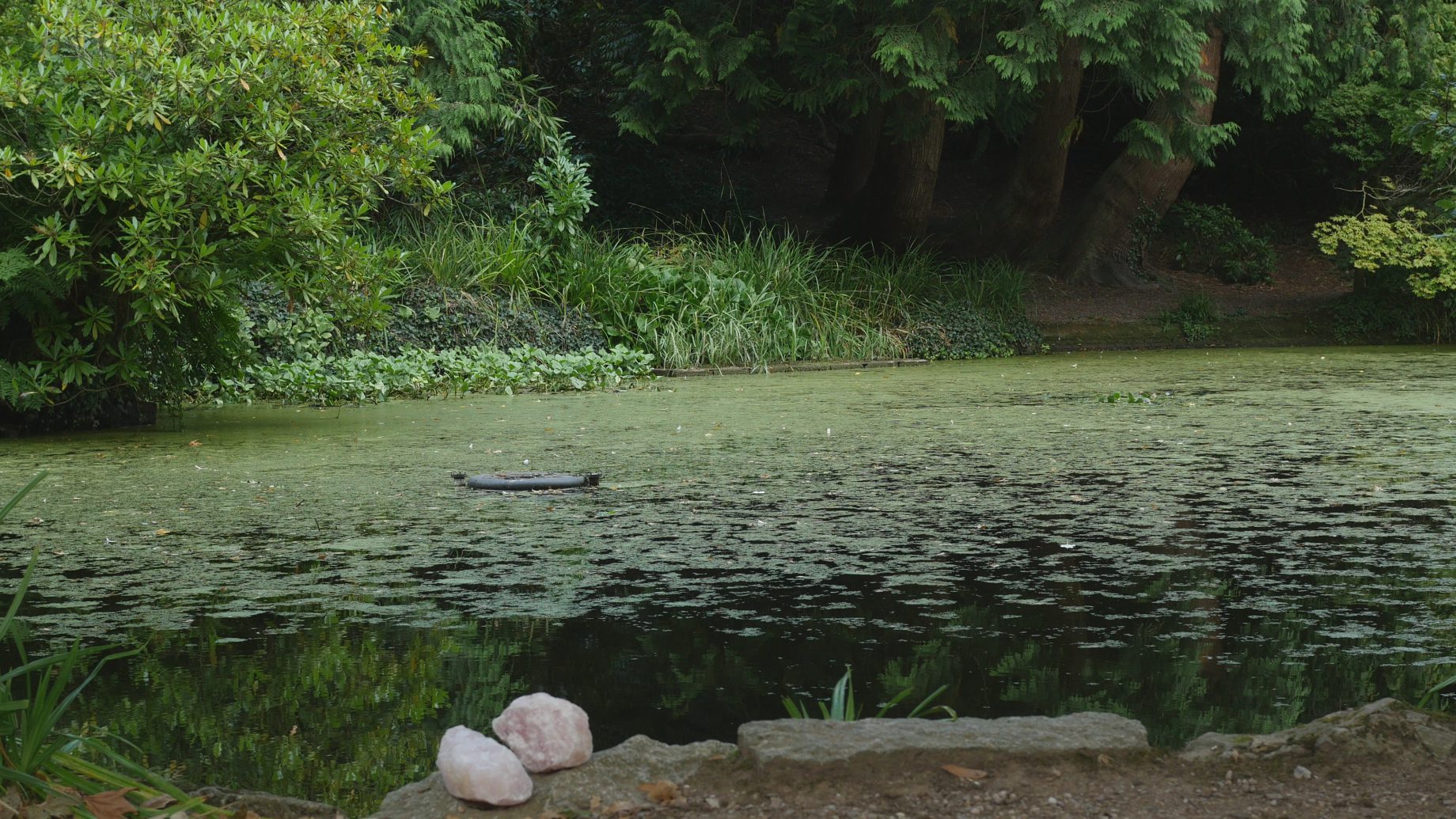
The actual performance went well, although a little faster than planned. And it was fascinating having the audience move about. At some point I looked up from the rocks in my hands and saw people standing and watching us from the other side of the pond. Moreover, at some point somebody was sitting down next to me by the pond; I saw a glimpse of blue, but did not recognize who it was. I was mainly listening to David hammering on the large rock and realized the two pieces of rock I had in my hands had also been violently cut off from somewhere. Sitting with the two pieces in my hands became like an act of strange helpless mourning. When I heard the piece of rock fall I waited for a while and then got up, leaving the two pieces of rose quartz on the rock by the pond and walked to the oak, as planned. There I noticed Paula was just about to begin, so I waited standing until she had moved further away, before sitting down to watch the rest of the action, and realized that I could actually have sat with the rocks in my lap much longer…
For an idea of the performance, please look at the rock_body_programme_notes
And for an idea of the whole endeavor, look at the rock-body website.
Body on the Rocks in Falmouth
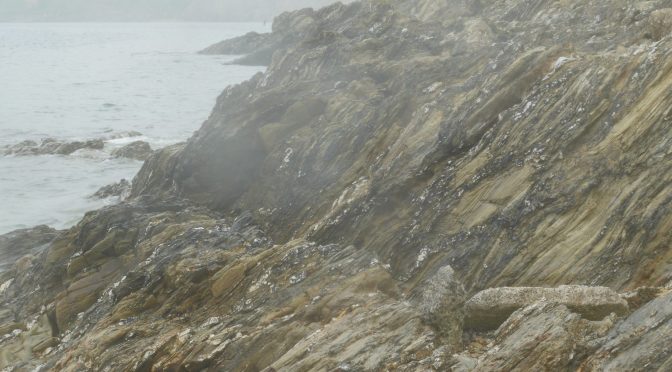
After participating in the inspiring seminar organized by Rock/Body: Performative Interfaces Between the Geologic and the Body I asked some of the participants with knowledge of the area around Penryn where I could possible find ‘live rock’ or ‘wild rock’ nearby, and they suggested the beach in Falmouth, adding that I would not find granite but sandstone, which was fine for me. I thought I could walk down to Falmouth in the evening after the seminar, but the weather was getting worse and the discussions were interesting, so I decided to try in the morning instead. And yes, I easily woke up at six with the light, left my room at seven with a biscuit and some water, my camera and my pale pink poncho and headed towards to shore to see if I could find some rock to pose with. It took me an hour to get to Falmouth, and half an hour more to find the beach and some rocks by the beach. On the way to the beach I noticed there were two trains going up to Penryn, one at 9.30 and the other after 11, which was a little late considering that I should be catching the train to Truro and London at 12.47. But I thought I could take the risk if I found something to really work with. I followed some paths that led me nowhere near rocks so despite the high tide I decided to simply walk on the shore to the end of the beach, where I placed my tripod at the end of the concrete path and sat down on the first ‘wild rock’ on the shore. No time for too many tryouts. And the rock sure was wild enough, very different from the cliffs smoothened by the glacial ice at home.


I sat on the shore for ten minutes and got out of the image in order to have enough of “empty” view to create a slow cross-fade. The drizzle was turning into rain, and the raindrops blurred the image into something foggy, pale and soft. The rain made the decision to return easier, I took the earlier train and had some time for breakfast and farewells. So in the end I made only one image, but perhaps it was enough. Sitting on a rock on the shore is nothing new for me, I have done it in too many works, but the soft whiteness of the rain could have been fascinating, if I would have had enough time to wait for the image to be completely obliterated…


And only now, writing this, did I realize I was so focused on rocks that I forgot to record the ocean view, my customary “After Sugimoto” image, although the open sea at Falmouth would have been ideal for that.
Apollo Bay and The Great Ocean Walk
After participating in the conference Performance Studies International PSI #22 Performing Climates I had reserved a week to stay in Australia and perhaps find some landscape to perform in and with. When planning this I did not realize it is winter here, that is, the rainy season. In a city like Melbourne some rain now and then does not matter so much, but in the country side rain is a nuisance. The footpaths are all wet and slippery, the landscape looks grey and worst of all, the camera does not like water. When I looked at the weather forecast it showed sun at the end of the week, when I would return to Melbourne, but what could I do. So early on Sunday morning I took a tram to the Southern Cross station and then a train to Geelong, where i could catch a bus to take me along the great ocean road all the way to Apollo Bay for a start. I arrived here in the afternoon yesterday, and spent some time walking to the guesthouse on the outskirt of this little town and then back again, along the beach. I was very happy that I brought a proper rain suit with me, a pair of trousers and a coat to wear on top of my normal clothes. Rain is a lot less irritating, when you do not get wet. I walked up to the Mariner’s Lookout to enjoy a great view of the bay, and headed back to the village to get a torch. And sure it came in handy when I had to find my way back after dinner in the evening.
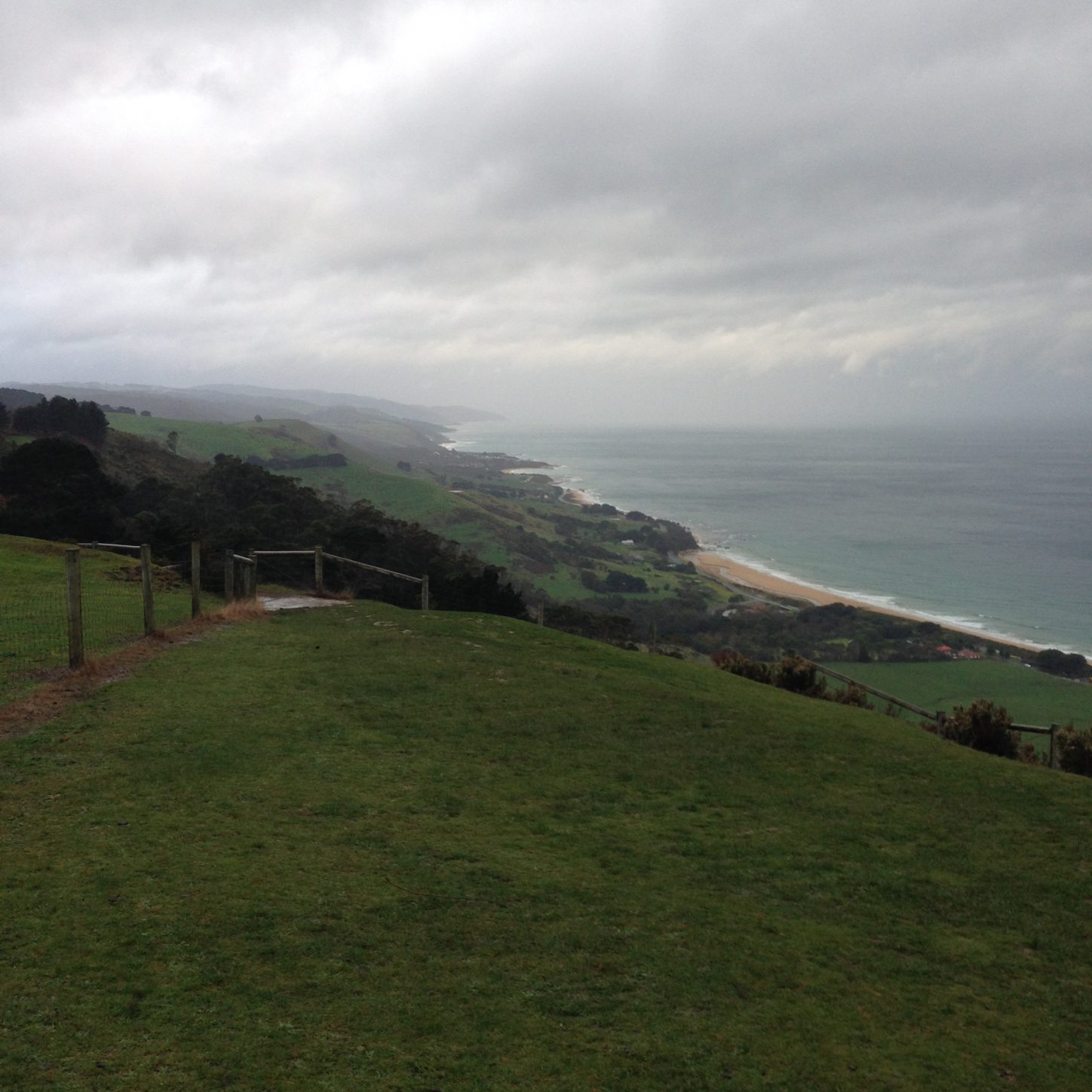
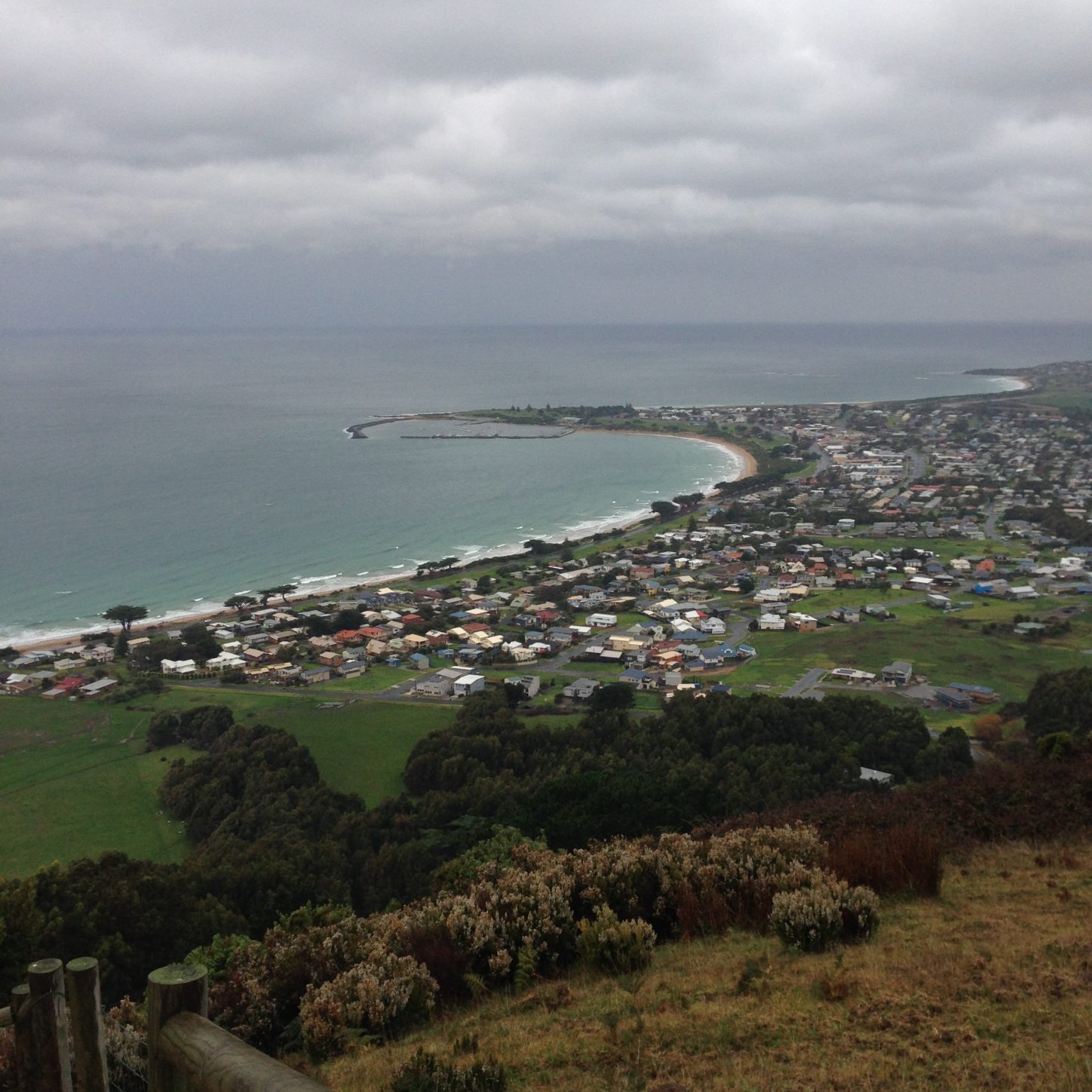
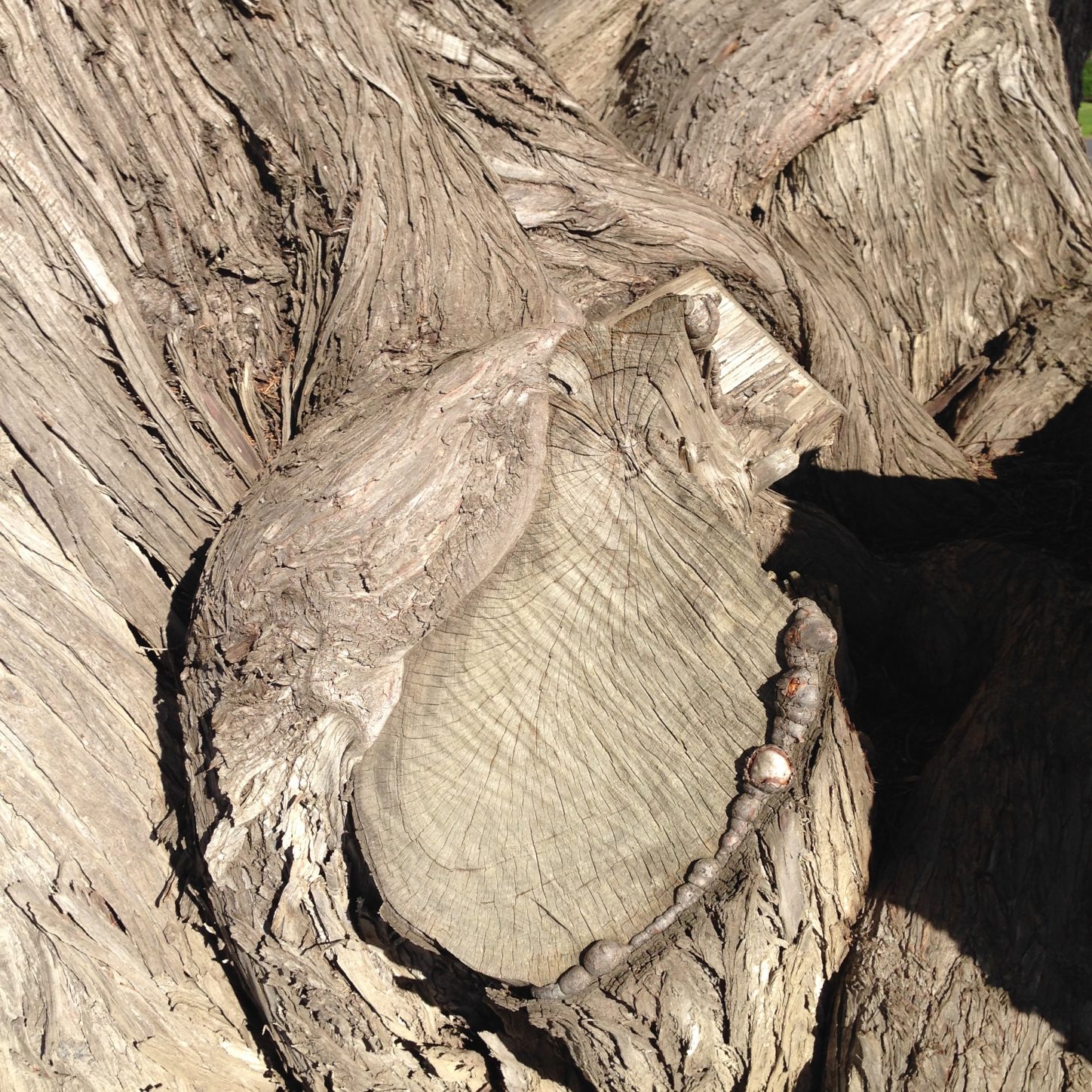
This morning the sky was clearer and the sun was out, which made the strong wind a lot more enjoyable. I walked along the shore and tried to think of what to work with? Perhaps the tall trees growing along the path, which seemed rather special in many ways. But what to do with them? Simply making photos of their rather spectacular trunks did not seem so interesting…


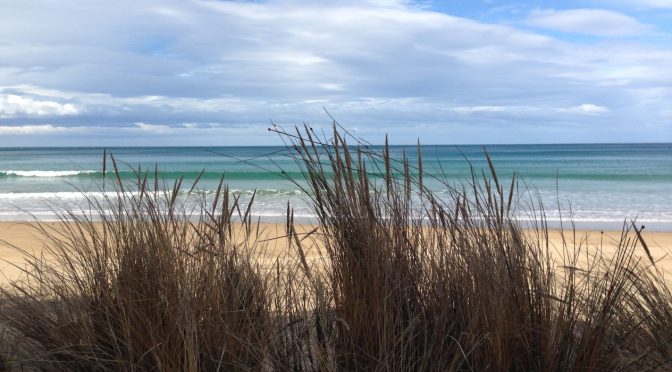
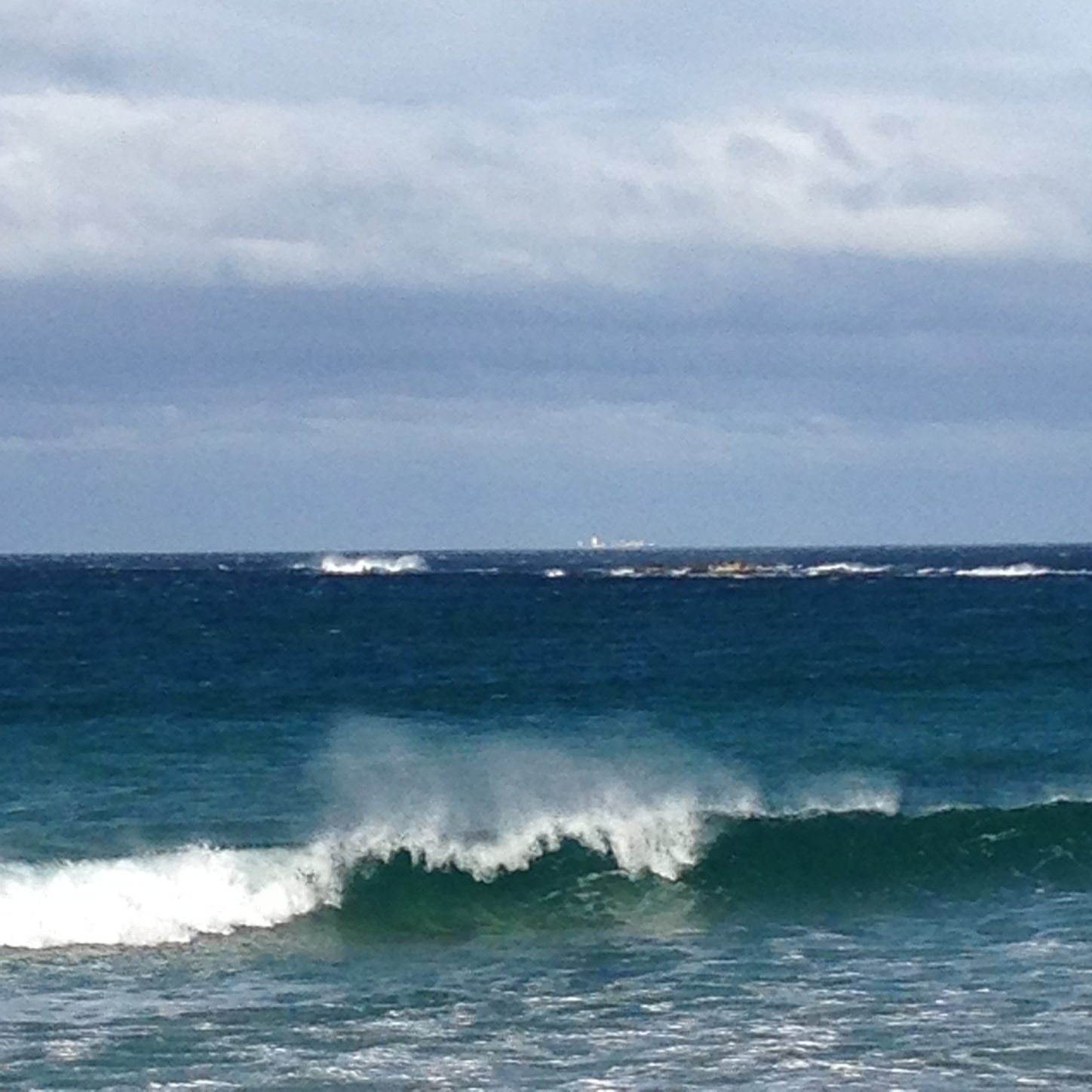
I tried to record my customary sea view, after Sugimoto, but did not find a place where the surf would not be included when the horizon was at the middle of the image. The waves look great, of course, although they are hard to catch, except by accident.
In the afternoon I walked up to Marengo, the village where the path called the great ocean walk actually starts. And I walked on it for a while, enjoying the scenery. But then the path led me down to the beach and a sign warned against high tide. I knew the tide was on its way in, and the path might be under water at the time I would be coming back before sunset, so I decided to turn back there and then although the sun was shining and the rainbow over the sea was like a perfect decoration.
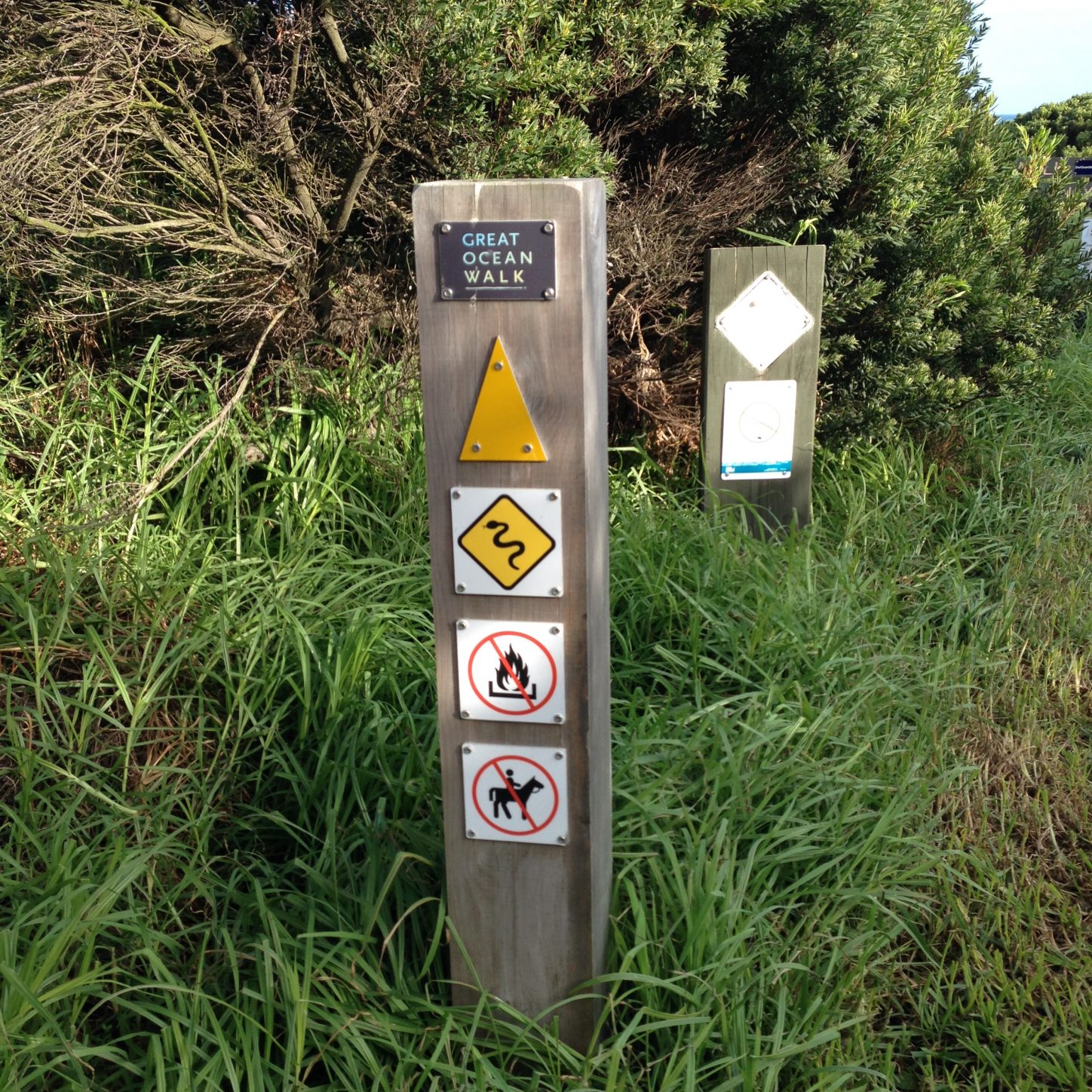


Before I reached the bridge across the river that separates Marengo from Apollo Bay, the rain was pouring down. And tomorrow the weather forecast promises more rain. I have one more day to walk around here, and to try to find some place to perform in or with. If I cannot find anything, then so be it. In that case I simply have to enjoy walking in the rain simply for the fun of it…
En stund på Solstrand
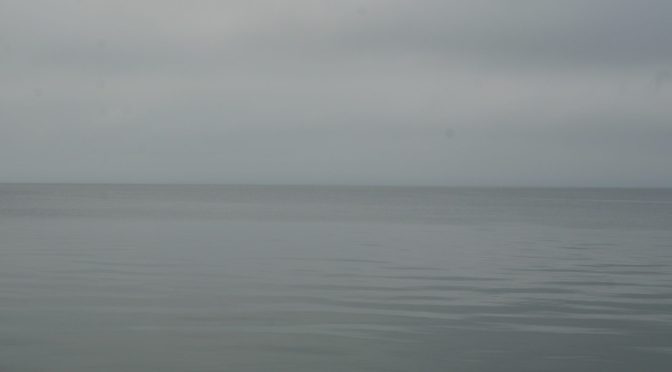
Tunga arbetsmöten i lyxig omgivning är något av en paradox, men en lugnande omgivning underlättar det mesta, det kan man inte komma ifrån. Mitt andra besök på Solstrand, nära Bergen i Norge, bekräftade vad jag kom ihåg från förr; det är en spektakulär miljö. Igår beslöt jag mig för att avstå från att ens försöka skapa en bild i serien “Efter Sugimoto”, en video jag samlat på redan i flera år, som en respons på Sugimotos svartvita fotografier med hälften himmel och hälften hav. Trots att jag släpat min kamera och mitt stativ med mig enkom för den bilden, och trots att de blånande bergen i horisonten såg fina ut, fanns där ingen öppen horisont. Men efter gårdagens solgass och stekande hetta var himlen i morse täckt av moln och horisonten höljd i dimma, så man inte kunde se ifall det var öppet vatten eller inte. Så efter ett dopp i simbassängen, gjorde jag ett snabbt försök från terrassen på mitt rum.
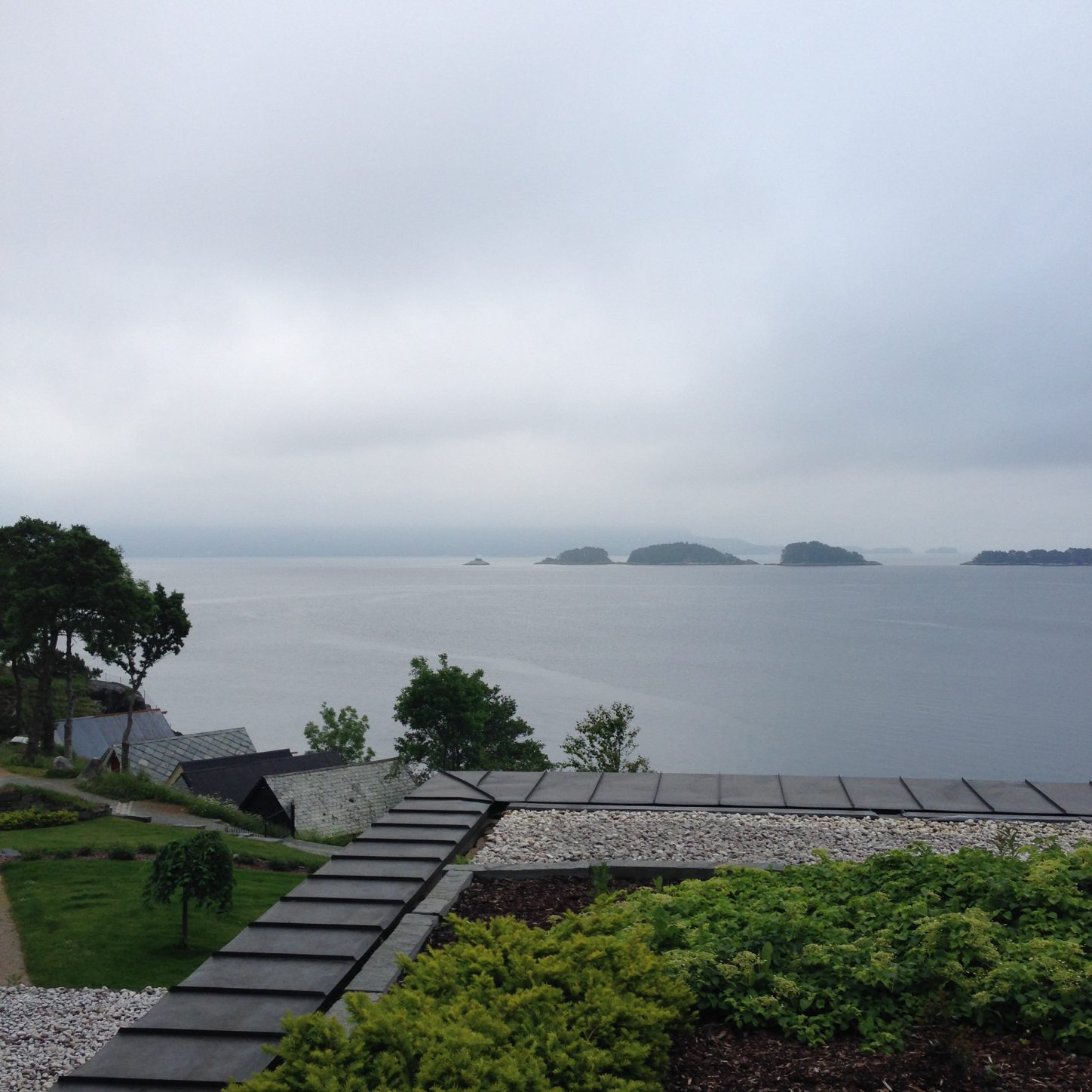
Eftersom jag inte hade ett teleobjektiv med mig, kunde jag inte få en bild med horisonten på mitten utan att ta med trädgård och annat grönt, så jag skyndade mig ner till badbryggan. Och där gick det hur lätt som helst att hitta en bit horisont med så avlägsna berg att de inte syntes i dimman, och att spela in en minut av himmel och hav. Vattnet var klart och det skulle ha varit lätt att ta ett dopp direkt i havet, men jag visste att det var ganska kallt, och dessutom hade jag inte mycket tid innan det var dags för möte igen. Så min stund med Sugimoto på Solstrand blev kort, men oförglömlig åtminstone tekniskt sett, för nu finns den förevigad på band, eller rättare sagt i en digital fil.


