
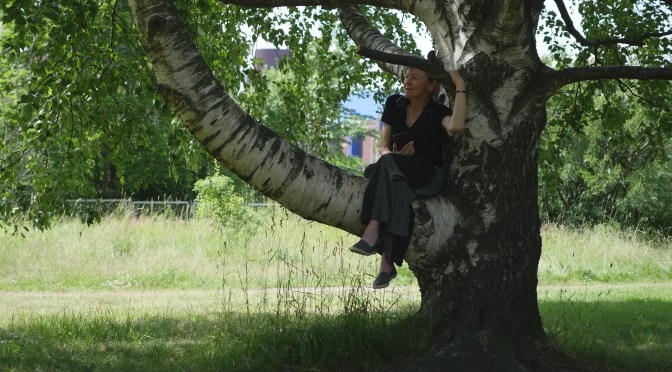
My new contact tree and collaborator in Lappviken, the large birch at the outskirts of the park towards the highway, has helped me to feel connected to my new environment, the former mental hospital Lapinlahti or Lappviken built already in 1841. The tree has a huge branch that is easy to sit on as if on a lap of some wise wizard. I began visiting the birch immediately in April when I had signed the contract for my studio in the building, and decided to record a conversation once a month, as I had done with the junipers the year before. I felt like speaking Swedish with the birch and planned to read a poem by Josef Julius Wecksell each time. He is not at all as famous as Aleksis Kivi, whose room is a small museum in the same corridor as mine, but Wecksell lived forty years of his life as a patient here. Besides these monthly conversations spiced up by an old-fashioned poem, I have enlisted the assistance of the birch several times this spring, and recorded brief conversations in English for various purposes. They are all linked to a page on the Research Catalogue called simply Lapinlahti – Lappviken.
The first of these extra conversations was made for a performance called Birch to Birch in Bodø, Norway, and for that performance I simply breathed through a blues harp in and for the birch and recorded it as a form of greeting to the birches up in the north. The audience could see the video via QR codes hanging from my hat while I was “playing” for the birches there. The second conversation is called Asking the Birch and it was made for a lecture titled At the Edges of Disciplinary Conventions – Asking Trees for Advice in University of Agder, in Kristiansand Norway. The third conversation called Birch Response, I made for the meeting of the Artistic Research Working Group of PSi (Performance Studies international) in Jakarta. In fact I recorded two conversations, the first in response to the preoccupation of a participant who cancelled her trip and the second version, Repetition with Birch, in response to the preoccupation of another participant who joined later. The latest conversation, so far, Side effects with Birch I recorded for the meeting of the Performance as Research Working Group of IFTR (International Federation for Theatre Research) in Melbourne. These conversations were all recorded in June and the birch really helped me in responding to all those challenges in different contexts. Now I feel I can turn to the birch with almost any problem I encounter and I really feel more at home in Lappviken, despite having spent more time travelling than in my new studio here.
All posts by Annette Arlander
Kiitos Koivu – Uusi yhteistyökumppanini
Uusi yhdyspuuni ja yhteistyökumppanini Lapinlahdessa,
suuri koivu puiston laidalla moottoritielle päin, on auttanut minua
olemaan yhteydessä uuteen ympäristööni, entiseen Lapinlahden mielisairaalaan joka rakennettiin jo 1841. Puulla on valtava oksa jonka päällä on helppo istua kuin jonkun viisaan velhon sylissä. Aloin vierailla koivun luona heti huhtikuussa kun olin allekirjoittanut sopimuksen työhuoneesta rakennuksessa, ja päätin tallentaa keskustelun kerran kuussa, kuten olin tehnyt katajien kanssa edellisvuotena. Minusta tuntui luontevalta puhua ruotsia koivun kanssa ja suunnittelin myös lukevani Josef Julius Wecksellin runon joka kerta. Hän ei ole yhtä kuuluisa kuin Aleksis Kivi, jonka huone on pieni museo samassa käytävässä kuin omani, mutta Wecksell asui neljäkymmentä vuotta elämästään potilaana täällä. Näiden kuukausittaisten keskustelujen lisäksi olen käyttänyt koivua apunani useita kertoja tänä keväänä ja tallentanut pieniä keskusteluja englanniksi eri tarkoituksia varten. Ne on kaikki linkitetty Research Catalogue alustan sivulle nimeltään yksinkertaisesti vain Lapinlahti – Lappviken.
Ensimmäinen näistä ylimääräisistä keskusteluista tehtiin performanssia Birch to Birch varten Bodøssä, Norjassa ja sitä performanssia varten vain hengitin huuliharpun lävitse koivussa ja koivulle ja tallensin sen eräänlaisena tervehdyksenä koivuille pohjoisessa. Yleisö saattoi nähdä videon QR koodien kautta, jotka roikkuivat hatustani kun “soitin” koivuille siellä. Toinen keskustelu on nimeltään Asking the Birch ja se tehtiin At the Edges of Disciplinary Conventions – Asking Trees for Advice nimistä luentoa varten Agderin yliopistossa, Kristiansandissa Norjassa. Kolmannen keskustelun, nimeltään Birch Response, toteutin Artistic Research Working Group of PSi (Performance Studies international) -työryhmän tapaamiseen Jakartassa. Itse asiassa tallensin kaksi keskustelua, ensimmäisen vastauksena osallistujan huolen aiheeseen, joka joutui perumaan matkansa, ja toisen, Repetition with Birch, vastauksena toisen osallistujan huolen aiheeseen, joka tuli mukaan myöhemmin. Toistaiseksi viimeisen keskustelun, Side effects with Birch tallensin Performance as Research Working Group of IFTR (International Federation for Theatre Research) -työryhmän tapaamista varten Melbournessa. Tallensin kaikki nämä keskustelut kesäkuussa ja koivu todella auttoi minua vastaamaan kaikkin näihin haasteisiin erilaisissa yhteyksissä. Nyt minusta tuntuu että voin kääntyä koivun puoleen melkein minkä tahansa ongelman kanssa ja tunnen jo olevani enemmän kotona Lapinlahdessa vaikka olenkin viettänyt enemmän aikaa matkoilla kuin uudessa työhuoneessani täällä.
Tack Björk – Min nya samarbetspartner
Mitt nya kontaktträd och min nya samarbetspartner i Lappviken, den stora björken vid utkanten av parken mot motorvägen, har hjälpt mig att nå kontakt med min nya omgivning, det tidigare mentalsjukhuset Lapinlahti eller Lappviken som byggdes redan 1841. Trädet har en stor gren som det är lätt att sitta på, liksom i famnen på en vis trollkarl. Jag började besöka trädet genast i april när jag hade skrivit kontraktet för mitt nya arbetsrum i byggnaden och beslöt mig för att spela in ett samtal varje månad som jag gjort med enrisen året innan. Jag kände för att tala svenska med björken och planerade att läsa en dikt av Josef Julius Wecksell varje gång. Han är inte alls lika berömd som Aleksis Kivi, vars rum är ett litet museum i samma korridor som mitt, men Wecksell levde fyrtio år av sitt liv som patient här. Förutom dessa månatliga samtal kryddade med en gammaldags dikt har jag tagit hjälp av björken flera gånger den här våren och spelat in korta samtal på engelska för olika ändamål. De är all kopplade till en sida på Research Catalogue som heter helt enkelt Lapinlahti – Lappviken.
Det första av dessa extra samtal gjordes för en performance som heter Birch to Birch i Bodø, i Norge, och för det uppträdandet andades jag helt enkelt genom en munharpa i och för björken och spelade in det som ett slags hälsning till björkarna uppe i norr. Publiken kunde se videon via QR koder som hängde från min hatt medan jag “spelade” munharpa för björkarna där. Det andra samtalet heter Asking the Birch och det gjordes för en föreläsning med rubriken At the Edges of Disciplinary Conventions – Asking Trees for Advice på universitetet i Agder, i Kristiansand i Norge. Det tredje samtalet heter Birch Response, och det spelade jag in för mötet med Artistic Research Working Group of PSi (Performance Studies international) i Jakarta. I själva verket spelade jag in två samtal, den första som en respons till en deltagares ‘huvudbry’ som avbokade sin resa och den andra versionen, Repetition with a Birch, som en respons till en annan deltagares ‘huvudbry’ som kom med senare. Det sista samtalet, tillsvidare, Side effects with Birch spelade jag in för Performance as Research Working Group of IFTR (International Federation for Theatre Research) mötet i Melbourne. Dessa samtal spelades alla in i juni och björken hjälpte mig verkligen att bemöta alla utmaningarna i olika sammanhang. Nu känner jag att jag kan vända mig till björken med nästan vilket problem som helst och jag känner mig faktiskt mera hemma i Lappviken även om jag tillbringat mera tid på resor än i mitt nya arbetsrum här.
Goodbye Harakka
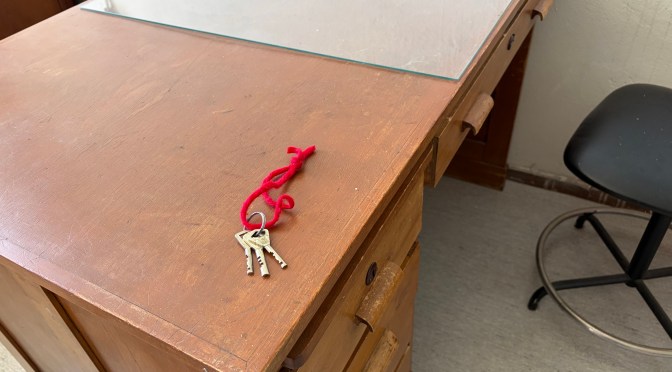
Today I left my keys on the table and locked the door. When I go to the farewell party tonight I don’t have a studio on the island any longer, I go as a guest. As a souvenir of sorts I placed the four bricks with I Ching trigrams painted on them that I made for the library exhibition (2001-2005) at the four entrances of the artists house. In the original exhibition they were combined with photos of the bricks taken in respective parts of the island.
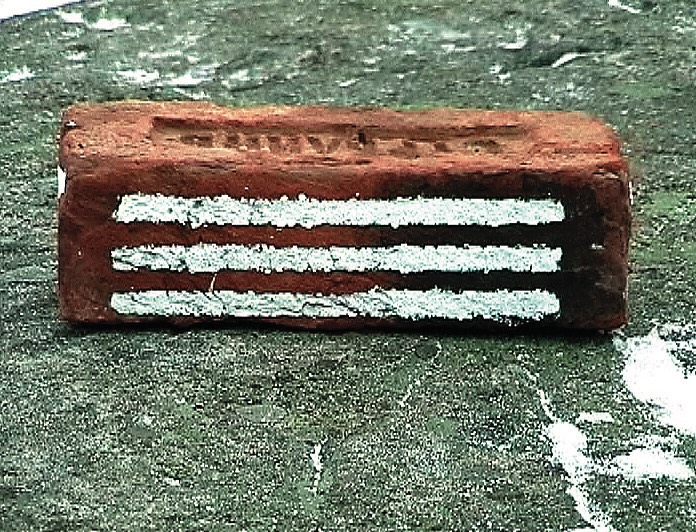
(Northwest)
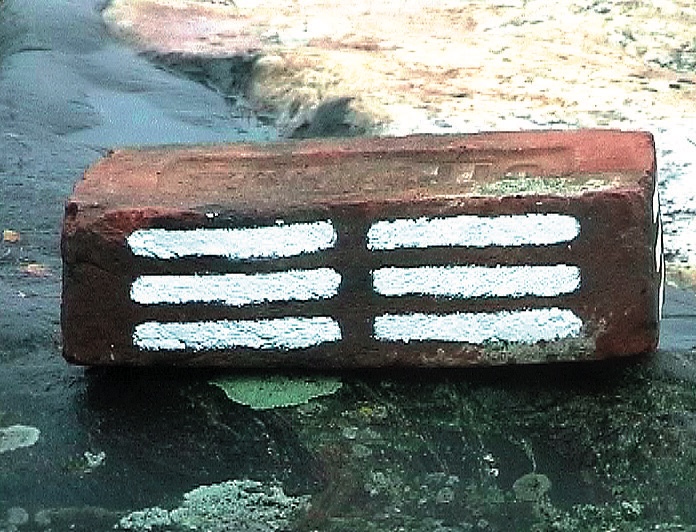
(Southwest)
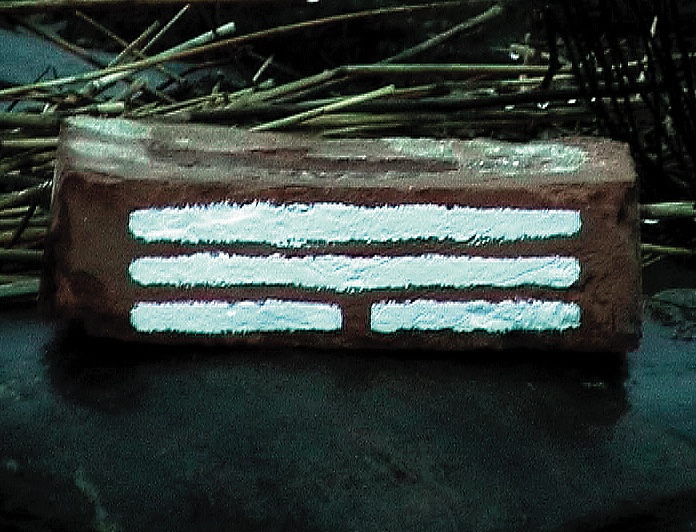
(Southeast)
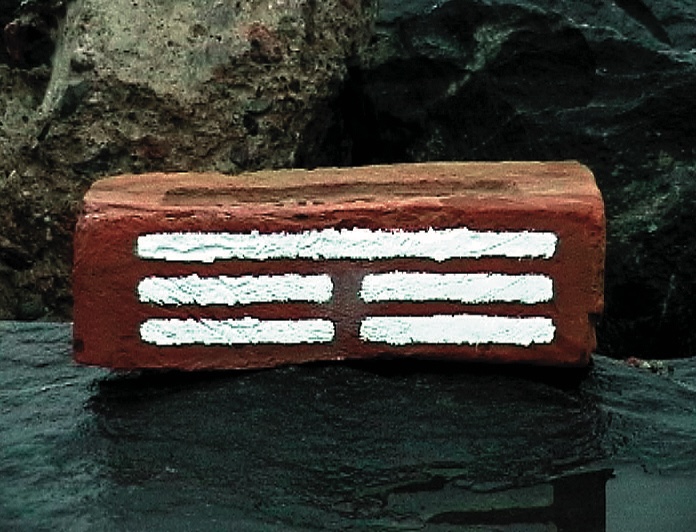
(Northeast)
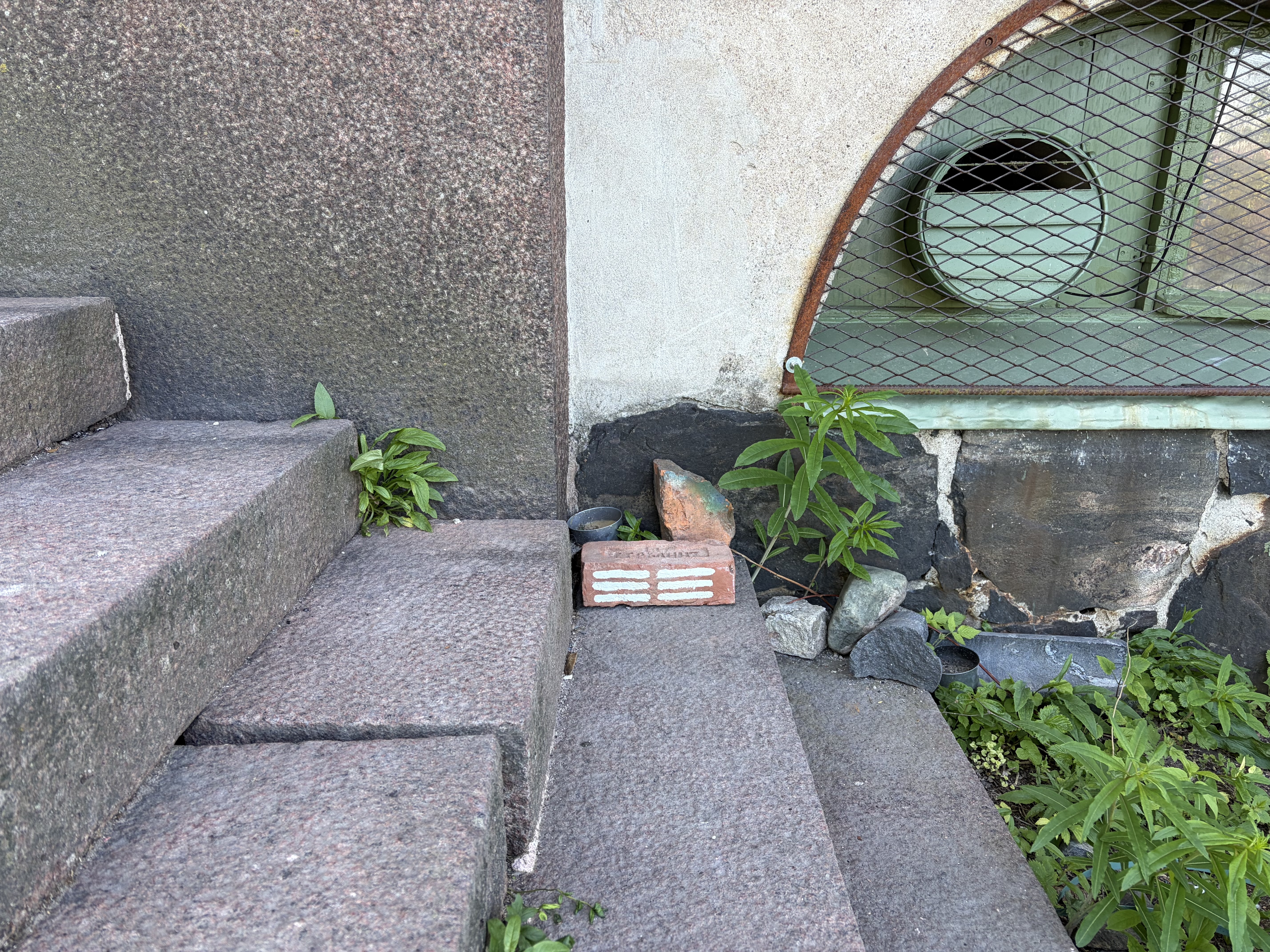
entrance facing northeast, entering towards southwest
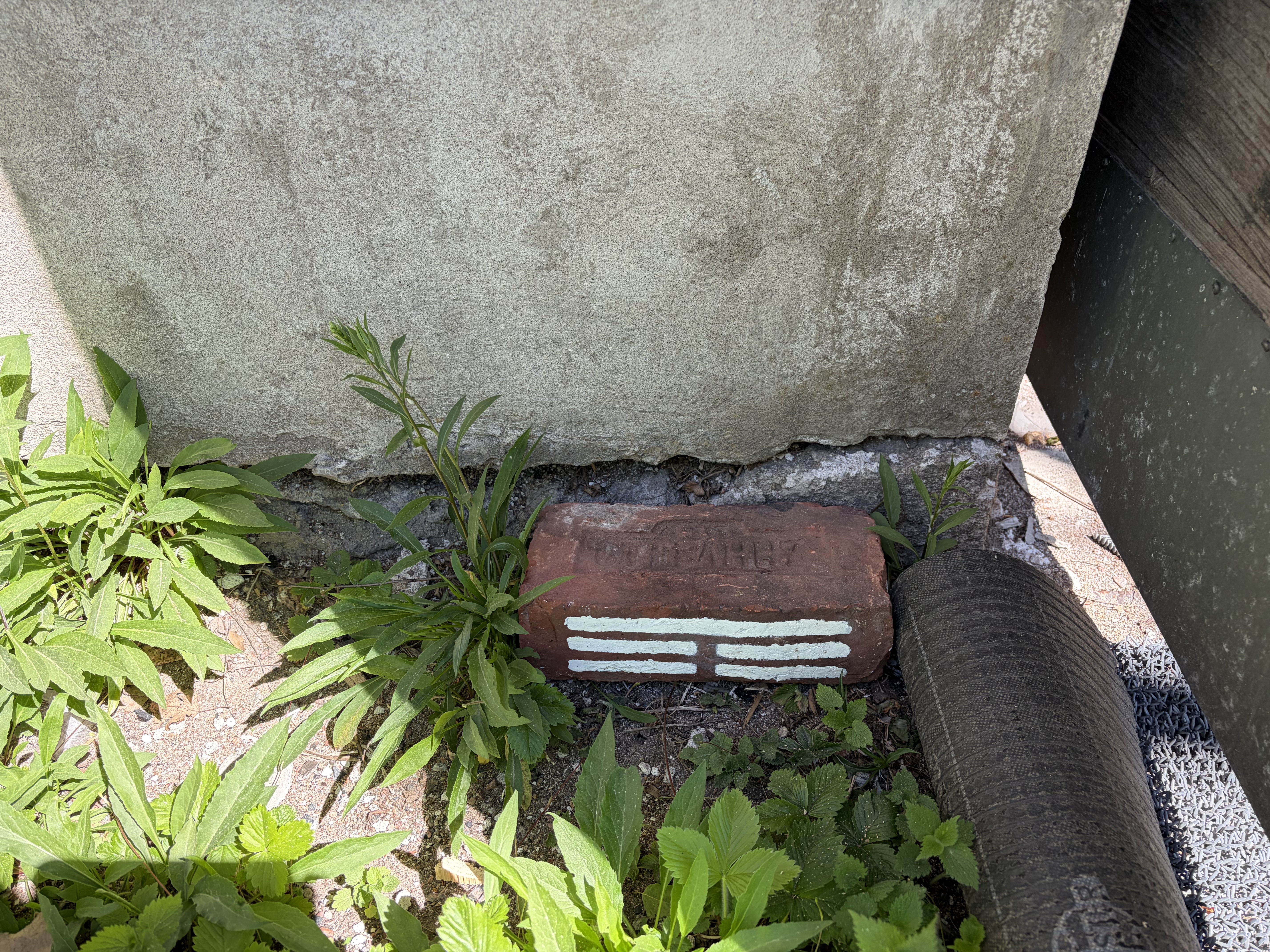
entrance facing southwest, entering towards northeast
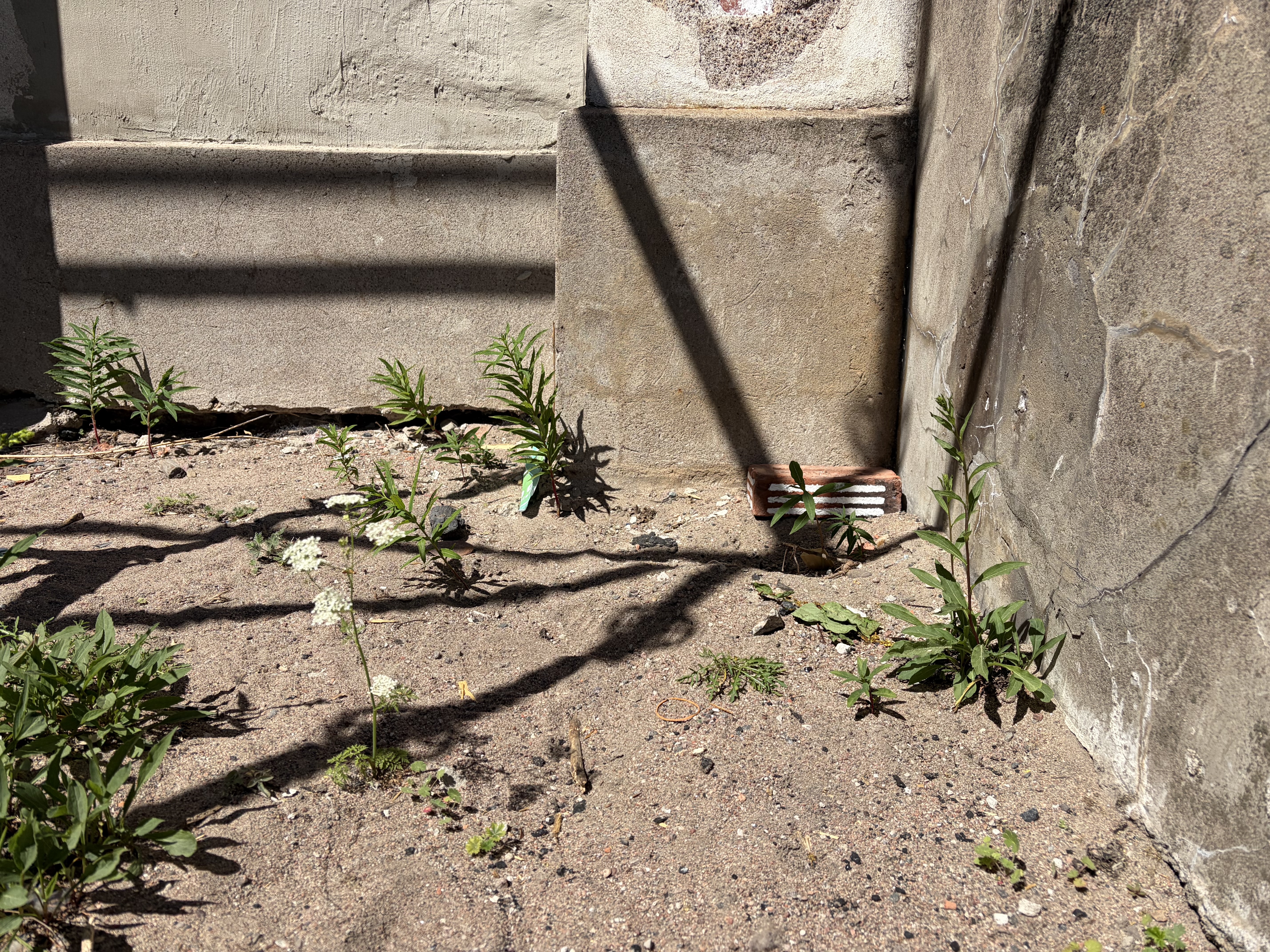
entrance facing southeast, entering towards northwest
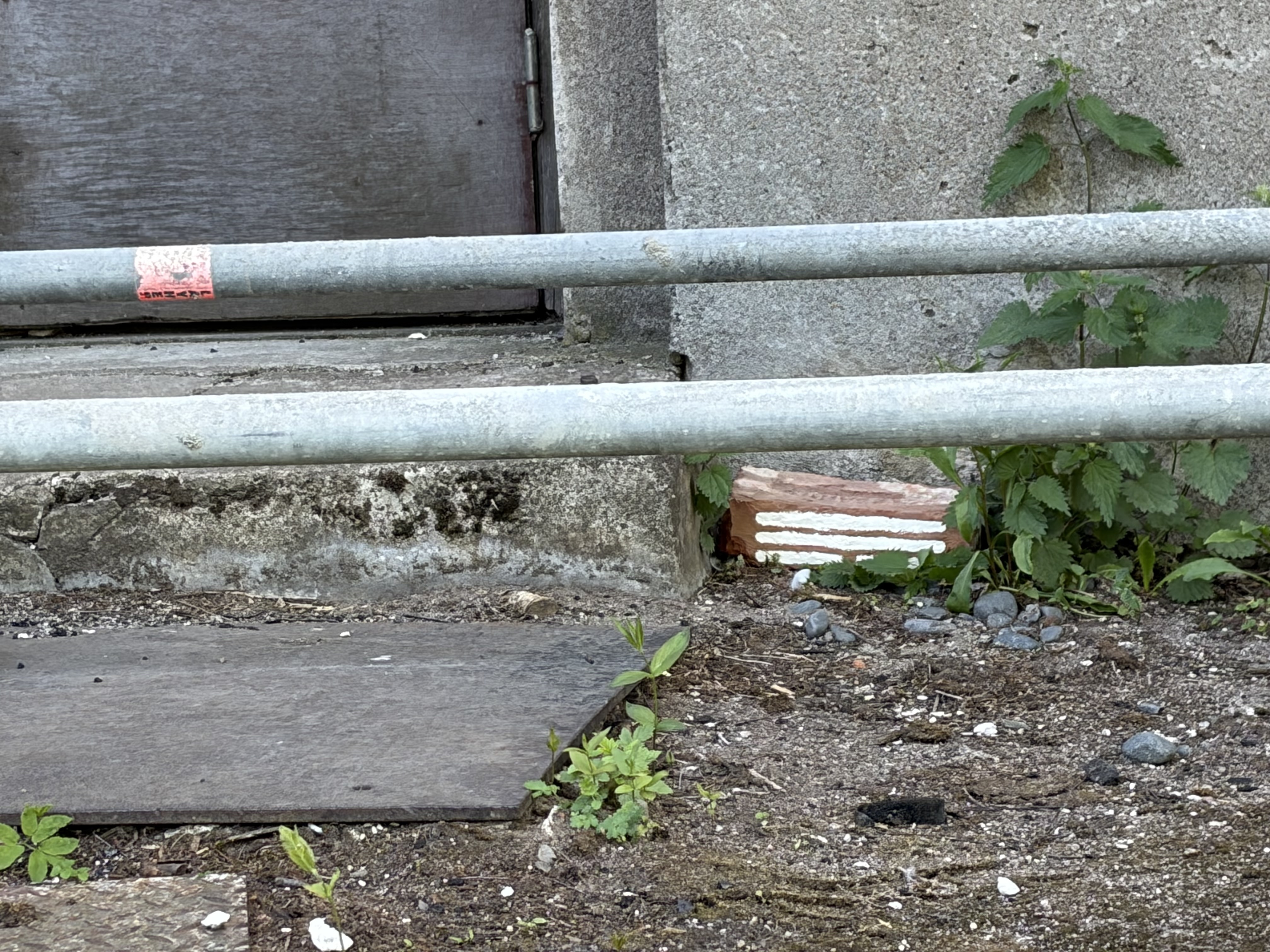
entrance facing northwest, entering towards southeast
I hope they will stay there for a while…
Hyvästi Harakka
Tänään jätin avaimeni pöydälle ja suljin oven. Kun menen jäähyväisjuhliin tänä iltana minulla ei ole enää työhuonetta saarella, vaan menen sinne vieraana. Eräänlaiseksi matkamuistoksi asetin neljä tiiliskiveä, joihin maalasin I Ching trigrammit kirjastonäyttelyä varten (2001-2005) taiteilijatalon neljän oviaukon luokse. Alkuperäisessä näyttelyssä ne oli yhdistetty valokuviin tiilistä vastaavissa ilmansuunnissa saaressa.
(Luode)
(Lounas)
(Kaakko)
(Koillinen)
koilliseen avautuva ovi, sisään kohti lounasta
lounaaseen avautuva ovi, sisään kohti koillista
kaakkoon avautuva ovi, sisään kohti luodetta
koilliseen avautuva ovi, sisään kohti lounasta
Toivottavasti ne pysyvät paikoillaan jonkin aikaa…
Farväl Stora Räntan
Idag lämnade jag mina nycklar på bordet och låste dörren. När jag går till avskedsfesten ikväll har jag inte längre ett arbetsrum på ön, utan går dit som en gäst. Som ett slags souvenir placerade jag de fyra tegelstenarna som jag målat I Ching trigram på för biblioteksutställningen (2001-2005) vid de fyra ingångarna till konstnärshuset. I den ursprungliga utställningen var de kombinerade med foton på tegelstenarna tagna i respektive väderstreck på ön.
(Nordväst)
(Sydväst)
(Sydost)
(Nordost)
dörren mot nordost, in i riktning sydväst
dörren mot sydväst, in i riktning nordost
dörren mot sydost, in i riktning mot nordväst
dörren mot n orväst, in i riktning mot sydost
Jag hoppas de får bli kvar ett tag…
Voices that matter
The book Mattering Voices, edited by Laasonen Belgrano, Tarvainen and Tiainen starts with a dedication: “To Voice as Nothing, All and always More-Than…” It is divided in three parts, I Voicing Ontologies, II Voicing Intra-active human agencies and III Voicing the more-than-human. The subtitle of the introduction reveals the aim of the collection: How to let a crossroads emerge between (the study of) voices and new materialism? And many of the articles are dealing with those crossroads, not all of them with music or singing.
The section that I found most interesting due to my own concerns was of course the third part, which contains four very different approaches. Julianna Preston writes in “Motor-mouthing” among other things of her own performance RPM hums “where voice made the life force of electric motors palpable” (p 149) and refers to Laura Levin’s idea of ‘performing ground’. Tero Nauha refers to the non-standard thought of François Laruelle in his chapter “The non-standard performance with the singing theremin”. Jennie Tiderman-Österberg describes ‘kulning’ a specific practice of voicing with cows in her text “Cow choirs – Singing-with-more-than-human herds”. She refers to music philosopher David Rothenberg’s idea that “we cannot make any kind of music without sensing its resonance in an environment” (Rothenberg 2001, p 4, quoted on p 2003). In her concluding remarks she further notes how “we should not think ‘what is the point’, but ‘this is the point where I depart into something new’. (p 203) In the last chapter “Speaking of atmospheres – More-than voice and voice of the more-than” Norie Neumark refers to Gernot Böhme’s idea of atmospheres and Ben Anderson’s ‘affective atmospheres’ when describing some artworks. First I am sitting in a courtroom, 2017, by Joel Stern, then Rubber Coated Steel, 2016, by Lawrence Abu Hamdan and finally several versions of their own work with worms.
The afterword by Laura Cull brings in further dimensions in the form of echoes, ontological echoes of a new spiritualism and interspecies echoes of intersectional solidarities. In short: a very rich and thought provoking book even for an artist-scholar like me, with no particular interest or experience in voice or the study of voice. But I am talking to trees, so perhaps I should think about that in terms of voice, too.
Laasonen Belgrano, Elisabeth, Tarvainen, Anne and Tiainen, Milla (eds.) Mattering Voices – Studying Voice Through New Materialism. Routledge 2025
Interpretation – a key concept?
In the beginning of the year I read a small book, easy to carry around, with brief texts, easy to read in a coffee break, but did not remember to make any notes: Interpretation in Qualitative Research – Key concepts in Qualitative methods. The reason why I found, rather surprisingly, a book on key concepts of qualitative methods in my hands, was that we contributed a small text to the collection with Pilvi Porkola. Our concept was “Performance” (pp 75-79), although performance as research would have been a more apt title. When trying to remember my reading experience the two texts on diffraction seemed most useful; “Diffraction” by Vivienne Bozalek and Michelins Zembylas (pp 32-34) and “Diffractive analysis” by Kathryn Storm and Shakhnoza Kayumova (pp 35-39).
The first one focuses on reflexivity, diffraction and interpretation, and tries to understand and even overcome the differences. “Although diffraction and reflection differ both as methodologies and as practices, being grounded in different ontologies, epistemologies, and ethics, there is some continuity in relation to certain forms of interpretation.” (p 34).
The second one focuses on diffractive analysis and interpretation as a practical methodology. ” As a methodological orientation, then, the theoretical ideas and goals of diffraction are quite clear. What this looks liken translated into actual methods and analytic processes, however, varies widely (and should, since diffraction is fundamentally about complexity, difference, hybridity and emergence from local conditions). (p 36) They mention diffractive studies that “think-with” data, others are reading data “through” each other to produce interpretive pattern of difference, and many are decentering the human while deliberately including the researcher as part of the process. They note that “diffractive methods enable us to examine how boundaries of differences are produced in our knowledge-making practices” and quote Barad’s point that “knowing [does] not come from standing at a distance and representing but rather from direct material engagement with the world” (Barad 2007, 49, quoted on p 38).
A handbook to return to, when brief clarifying or explanatory quotes are needed…
Karin Murris & Mirka Koro (eds.) Interpretation in Qualitative Research – Key concepts in Qualitative methods, New York: Routledge 2025
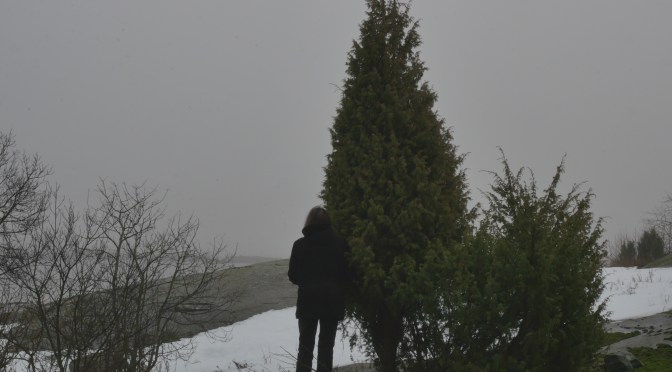
The Slow Goodbye
The Slow Goodbye – With the Juniper on Harakka
video works by Annette Arlander
Telegraph Gallery on Harakka Island
12 -17. May 2026, open noon to 5 pm
In 2025 I talked once a month with a juniper growing on the southeastern shore of Harakka Island and recorded the conversations on video. Summaries made of these are presented alongside the original conversations.
Works
Hitaat jäähyväiset – Harakan katajan kanssa, 2025 (28:45)
(The Slow Goodbye – With the Juniper on Harakka)
Hitaat jäähyväiset – Harakan katajan kanssa, 2025 (36:23)
(The Slow Goodbye – With the Juniper on Harakka)
Hitaat jäähyväiset – Harakan katajan kanssa 1-12, 2025
(The Slow Goodbye – With the Juniper on Harakka 1-12)
1 (7:30), 2 (8:40), 3 (12:51), 4 (11:15), 5 (9:05), 6 (20:46),
7 (15:34), 8 (14:49), 9 (7:46), 10 (10:34), 11(10:34), 12 (11:05)
Revisiting the Juniper – with text, 2019 (21:50)
Hitaat jäähyväiset
Hitaat jäähyväiset – Harakan katajan kanssa
Annette Arlanderin videoteoksia
Harakan Lennätingalleria
12-17.5.2026 avoinna klo 12 -17.00
Vuonna 2025 keskustelin kerran kuussa Harakan saaren kaakkoisrannalla kasvavan katajan kanssa ja tallensin keskustelut videolle. Näistä muokatut koosteet ovat esillä alkuperäisten keskustelujen rinnalla.
Teokset
Hitaat jäähyväiset – Harakan katajan kanssa, 2025 (28:45)
Hitaat jäähyväiset – Harakan katajan kanssa, 2025 (36:23)
Hitaat jäähyväiset – Harakan katajan kanssa 1-12, 2025
1 (7:30), 2 (8:40), 3 (12:51), 4 (11:15), 5 (9:05), 6 (20:46),
7 (15:34), 8 (14:49), 9 (7:46), 10 (10:34), 11(10:34), 12 (11:05)
Revisiting the Juniper – with text, 2019 (21:50)

