

Det är dags att sätta igång med något nytt, även om jag kommer att jobba med projektet Möten med betydande och obetydliga träd ett tag till – några arbeten kommer till exempel att vara med på en grupputställning på galleri Forum Box i februari, och förhoppningsvis blir det flera möjligheter att visa videoarbeten som jag gjort med olika träd. Det nya är inte heller helt nytt, utan en fokusering; jag började med växter, fokuserade sedan på träd och skall nu koncentrera mig på tallar. Projektet heter (tillsvidare) Pondering with Pines – Miettii Mäntyjen kanssa – Tänker med Tallar. Egentligen skulle jag ha velat kalla det “funderar med furor” på svenska, för ‘tänka’ låter lite väl pretentiöst. Men alla tallar är väl inte furor?
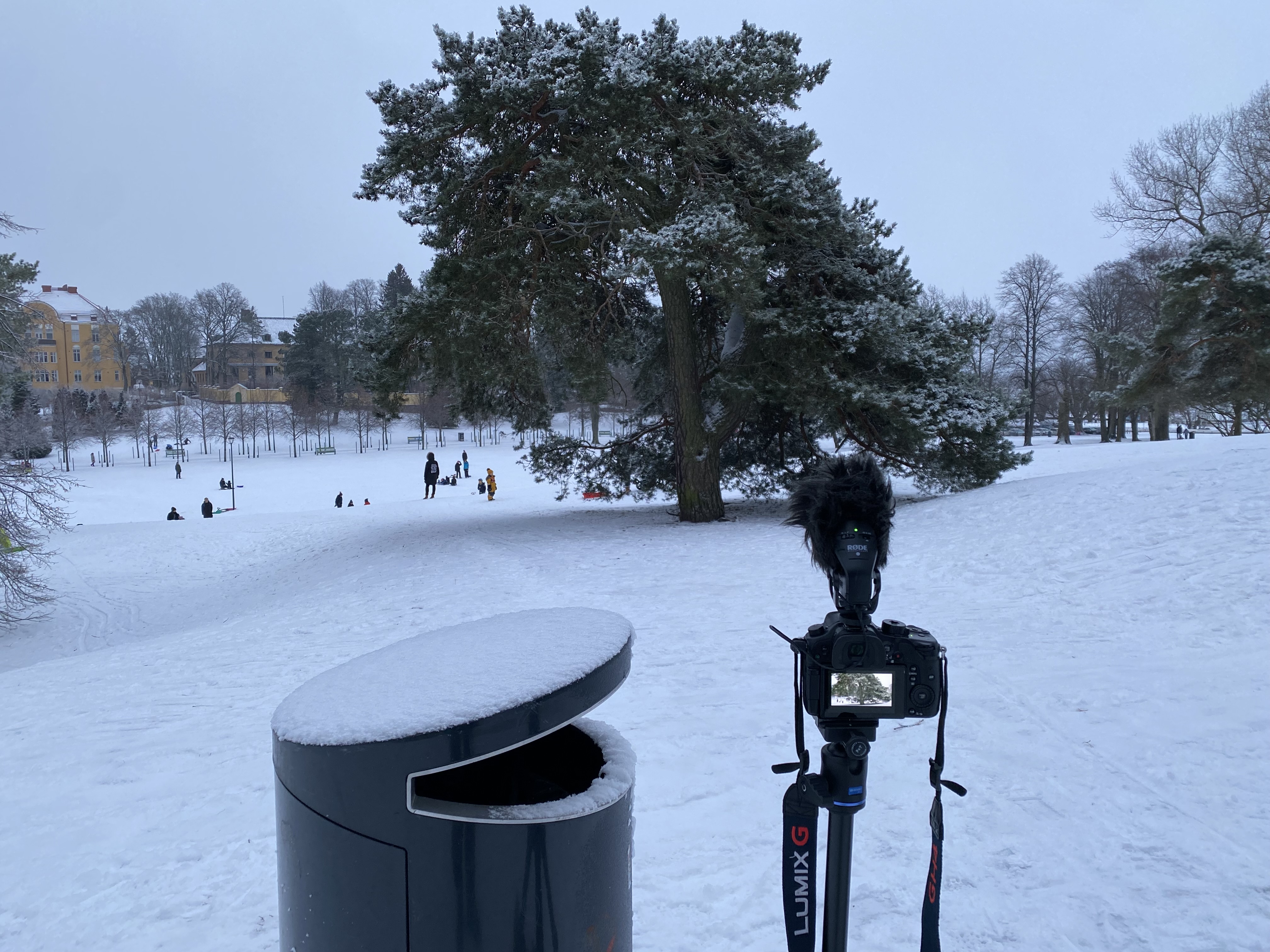
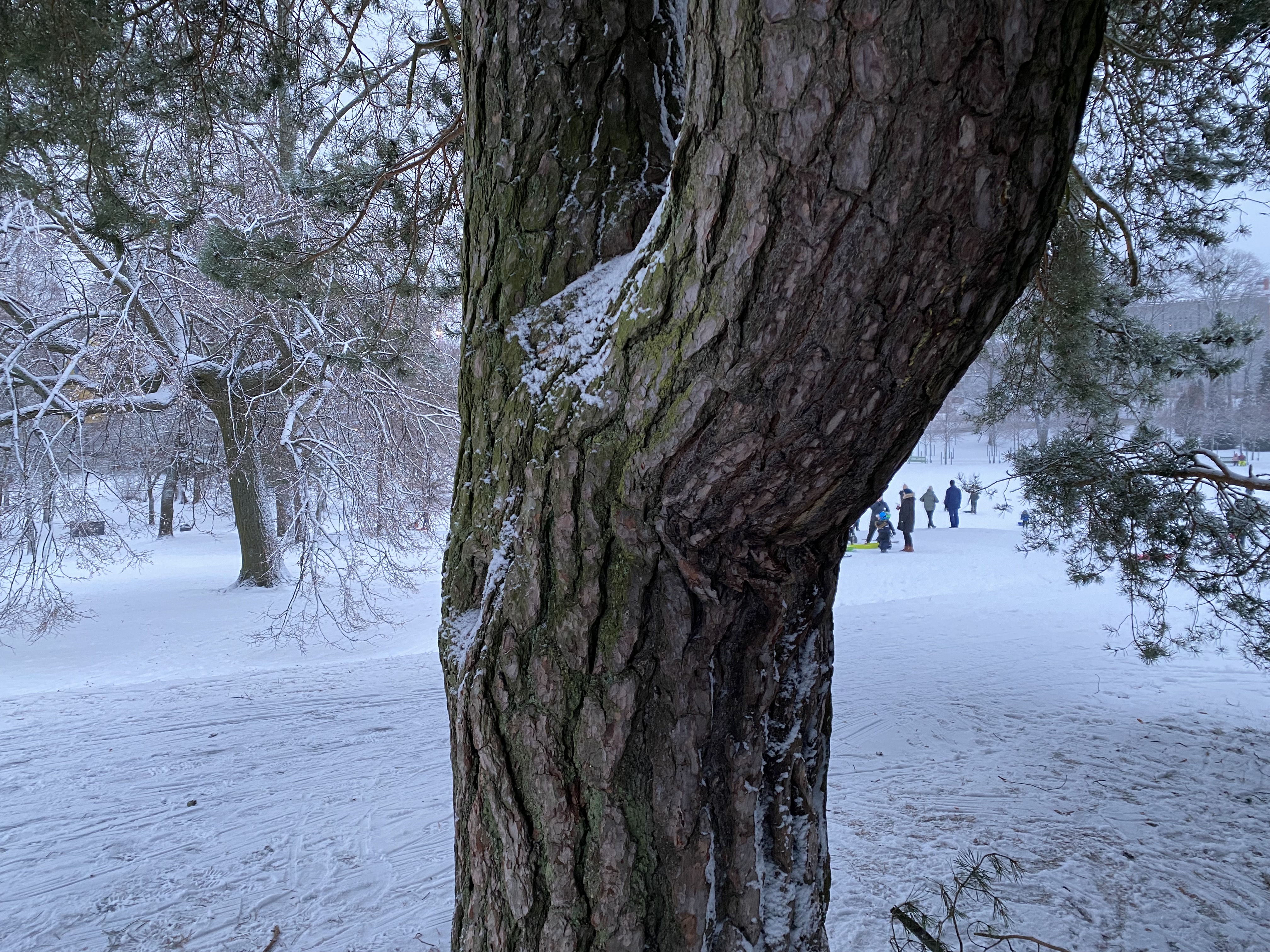
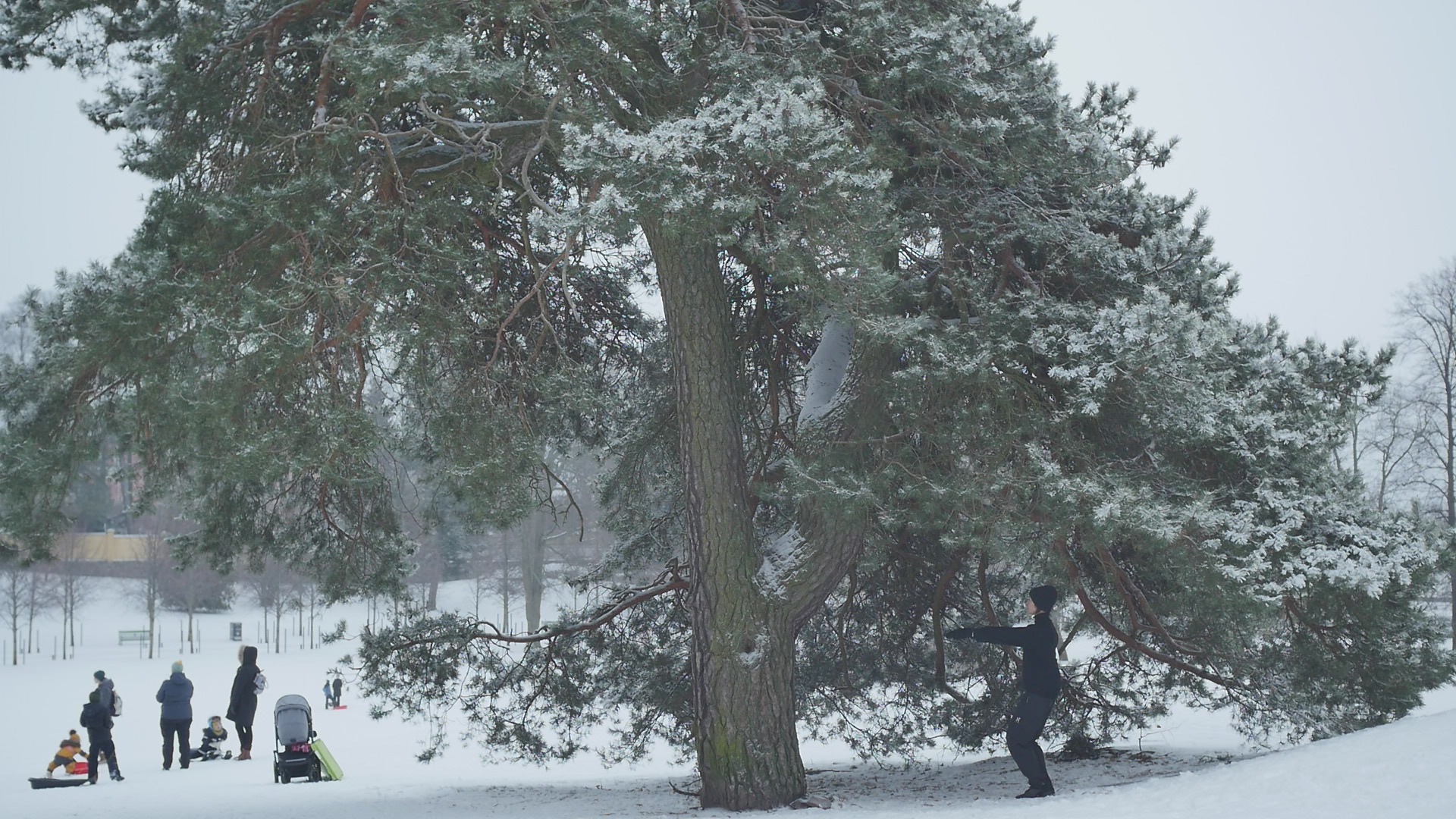
Den första tall som jag skall praktisera med i år, fundera, tänka men också posera i trädpositionen från taiji, är en stor och vacker tall i Brunnsparken, mitt uppe på sluttningen som för tillfället tjänstgör som pulkabacke. Bilderna som följer tog jag med telefonen som minnesanteckningar – de två sista är stillbilder från videon, från den allra första sessionen idag.

All posts by Annette Arlander

Katsaus kuluneeseen vuoteen 2021
Tarkastellessani kulunutta vuotta 2021, toista vuotta hankkeen Kohtaamisia huomattavien ja huomaamattomien puiden kanssa, Meetings with Remarkable and Unremarkable Trees parissa, on vaikea erottaa mikä oli todella tärkeää. Eräs tärkeä käänne tapahtui jo marraskuussa 2020, kun vietin kuukauden Örön saarella Öres residensissä. Sen seurauksena ryhdyin työskentelemään sikäläisten mäntyjen kanssa ja palasin saarelle useampaan otteeseen vuoden 2021 kuluessa. Vuoden aikana vietin huhtikuun Päiväkoti y residenssissä Hailuodossa, kaksi viikkoa kesäkuussa ArsBioarctica residenssissä Kilpisjärvellä ja heinäkuun Post and Customs house residency residenssissä Eckerössä Ahvenanmaalla. Saatoin vihdoinkin palata Tukholmaan oltuani yli vuoden covid-maanpaossa ja vietin siellä melko paljon aikaa syksyllä. Tutkimushankkeen Miten tehdä asioita esityksellä, How to Do Things With Performance (HTDTWP), lopputapahtumat keväällä olivat tietenkin tärkeä merkkipaalu, vaikka työtä on vielä jäljellä julkaisun ja raportin parissa. Tänä syksynä opetin myös hiukan sekä Tukholmassa että Helsingissä, ja kurssit jatkuvat vuonna 2022: Concepts and Discussions around Artistic Research, tohtoriopiskelijoiden seminaari Mika Elon kanssa Taideyliopistossa Helsingissä ja Developing an Artistic Research Project kurssi Synne Behrndtin kanssa Tukholman Taideyliopistossa, online. Seuraavassa luettelemieni performanssien, näyttelyiden, luentojen ja julkaisujen lisäksi on ollut kaikenlaista muutakin ja jotkut tekeillä olevista asioista voivat hyvinkin osoittautua tärkeiksi tulevaisuudessa.
Päättyneet projektit
How to do things with performance? – Miten tehdä asioita esityksellä?, nelivuotinen (viisivuotinen) Suomen Akatemian rahoittama tutkimushanke Hanna Järvisen, Tero Nauhan ja Pilvi Porkolan kanssa (2016-2021). Lisätietoja Taideyliopiston HTDTWP projektin esittelysivulla jossa myös linkitblogiin ja arkistoon RC-alustalla
Residenssi Ahvenanmaalla, Eckerö Post och Tullhus, heinäkuussa 2021.
Ars Bioarctica residenssi, Kilpisjärven biologisella tutkimusasemalla, kaksi viikkoa kesäkuussa 2021, katso täällä ja täällä.
Residenssi Kulttuuritalo Päiväkodissa Hailuodossa huhtikuussa 2021.
Näyttelyt, tapahtumat ja performanssit
On the Edge (2020) Öres näyttelyssä Örön saarella 19.6.-31.9.2021. Katso täällä ja täällä
Kuusi Hyvä 1-7 (2020) ja July with a Pine (2020) näyttelyssä Taiteilijoiden saari Harakan saarella 9.8.-26.9.2021. Katso täällä
Avoimet ovet työhuoneella Harakassa osana Konstrundan tapahtumaa 4. ja 5.9.
“Performance with a Pine” (kasarmialueella lähellä hotellia ja ravintolaa Örössä) 2.9. 2021. Katso täällä.
The Tide in Kan Tiang (2016) osana LiikKUVAT näyttelyä Harjavallan sairaalassa 18.6.-16.8.2021.
On the Edge II-IV Örön residenssitaiteilijoiden lyhytelokuvanäytöksessä osana Norpas festivaalia 7.8.2021.
“Swinging in a pine”, osallistava esitys osana Öres 2021 näyttelyä Örön saarella 26.6.2021. Katso täällä.
HTDTWP: epilogue, näyttely Tutkimuspaviljongissa 22-24.6.2021 sekä Longtable performanssi 23.6.2021. Katso täällä
The Tree Calendar – Puukalenteri – Trädkalendern. Näyttely Harakan lennätingalleriassa 19-30.5.2021. Katso täällä
Provokaatio osana hanketta “Designing the Pluriversity”, katso täällä
“HTDTWP: Grande Finale”, Taideyliopiston Teatterikorkeakoulussa verkkotapahtumana 6-7.5.2021. Katso täällä
“Swinging in a Pine in Hailuoto” osana verkkoesitystä Be-coming Tree Spring Event 24.4.2021.
Sitting on a Birch (2006) näyttelyssä MIRRORED – photo performance exhibition, 10.3–16.5. 2021, MUU Helsinki Nykytaidekeskuksessa Kaapelitehtaalla. Katso täällä ja täällä.
“Holding Hands with a Pine” osana verkkoesitystä Be-Coming Tree Live Art Event, 9.1.2021.
Julkaisut
“Calling for Zoe as a Utopian Gesture” Ruukku – studies in artistic research #17 Arkipäivän utopiat ja taiteellinen tutkimus, katso täällä ja täällä
“A dialogue about performance, artistic research and trees”, haastattelu-keskustelu José Quaresman kanssa RIACT no 3, katso täällä ja erillisenä pdf tiedostona AA-interview-from RIACT_3
“Dear Olive Tree.” Journal of Embodied Research, 4(2): 5 (19:40). 2021. DOI: https://doi.org/10.16995/jer.70
“With Mountain Birches on the Tree Line”, Ars Bioarctica Blogi 23.6. 2021, täällä.
Working with the Vegetal, Ruukku #16 numero, katso täällä
Annette Arlander, Jerry Määttä, Malin Lobell “Engaging Vegetation in the Arts”, pääkirjoitus Ruukku #16 numeroon Working with the Vegetal, katso täällä
“Kertaa ja koosta” eli märehtiminen menetelmänä, Taide 3/2021, s 26.
Radiohaastattelu sarjassa Kuusi Kuvaa ja sen lyhennetty teksti täällä.
“With Spruce Stumps and Old Tjikko – On the Individuality of Trees” teoksessa Daniela Fargione and Carmen Concilio (toim.)Trees in Literature and the Arts: Humanarboreal Perspectives in the Anthropocene. Lexington Books, s 211-228.
“Islands in Time” ja “The Feather” Paula Kramerin teoksessa Suomenlinna / Gropius. Two contemplations on Body, Movement and Intermateriality, Dorset UK: Triarchy Press 2021, s 35-39 ja 61.
Esitarkastuslausunnot (Tuula Närhinen ja Elina Saloranta), teoksessa Mika Elo ja Denise Ziegler (toim.) Yhä Osuvammin / More and More to the Point, Taideyliopiston Kuvataideakatemia, Helsinki 2021. (s 70-73, 75-78, 81-84, 87-89, 92-95 and 226-229, 233-235, 239-242, 247-248, 252-255, 258-260, 267-269, 280-283).
”Day with a Bog Birch – Vegetalising”, temaattinen video essee Peripheries in Parallax verkkosivuilla, täällä
“Beyond the Saturation Point – Bortom Mättnadspunkten”, VIS #5 2021, katso täällä
“Diffraction, Mixture and Cut-ups in Performing with Plants”, Performance Research 25:5 2021, s 31-38. DOI: 10.1080/13528165.2020.1868835
“Dear Spruce – Dear Deceased”, temaattinen video essee Peripheries in Parallax verkkosivuilla (selaa alas), täällä
Meetings with Remarkable and Unremarkable Trees in Johannesburg and Environs Arts Research Africa, The Wits School of Arts, University of Witwatersrand, Johannesburg, ladattavissa täältä: http://wiredspace.wits.ac.za/handle/10539/30395
Luennot, esitelmät ja alustukset
“Kasvidemokratia ja esitys tutkimuksena” Teatterintutkimuksen seuran seminaarissa Teatteri ja demokratia 17.12.2021.
“Meetings with trees – repetition as a tool in artistic research” verkkoluento tapahtumassa Video and painting: parallell movements, Artistic research into the unstable condition of the image, International lectures, University of Lisbon 30.11.2021. Katso täällä
Luento esitystutkimuksesta Marja Silden kussilla helsingin yliopistossa 10.11.2021.
“In the Disappearing Forest” verkkoalustus tutkimustyöpajassa Saint Etienne yliopistossa 22.10.2021. Katso täällä
Projektiesittely Katri Tanskasen luentosarjassa ekodramaturgiasta Helsingin yliopistossa 15.10.2021
“Notes on performativity”, luento Marjaana Kellan johtamassa valokuvaa käsittelevässä seminaarissa Taideyliopiston Kuvataideakatemiassa24.9.2021.
“Holding nature: Meetings with Trees” verkkoluento osana näyttelyn New Nature oheisohjelmaa Pietarissa 22.9.2021
“Planning and Sharing a Process – Some Nordic Approaches to Artistic Research” seminaarissa Different Temporalities in Artistic Research, RESCAM, Grenoble, 16-17.9.2021. Katso täällä
“Writing to Your Chosen Tree – a Workshop” ja “Writing Letters to Trees with the Trees” verkon kautta kollokviossa CARPA 7 – Elastic Writing in Artistic Research 25.8. ja 27.8.2021. Katso täällä
“Meetings with Trees in Cities” verkkoluento osana tapahtumaa ”Nature in the City. Nonhuman Heterotopias” 6-8.8. 2021 Pietarissa, katso täällä
”Becoming a Tree – a documented workshop” IFTR PAR (Performance as Research) Working Group työryhmän järjestämässä verkkotapaamisessa 12-16.7.2021.
“Examples of text on video when writing to trees” PSi Artistic Research Working Group työryhmän järjestämässä verkkotapaamisessa osana Constellate 2021 tapahtumaa 7-9.6.2021. Katso täällä
“Meetings with Remarkable and Unremarkable Trees as Artistic Research” verkkoluento sarjassa International lectures, Faculdade de Belas-Artes Universidade de Lisboa, 16.6.2021.
“Monday Lecture: Working with Spruces – On the Strange Individuality of Trees” verkkoluento, järjestäjänä the Art Academy, Bergen, 26.5.2021, katso täällä
Osallistuminen “kadonneen” SAR konferenssin 2020 fragmentteihin, SAR konferenssin 2021 yhteydessä, katso kokonaisuus ja minun osuuteni
“Day with a Bog Birch – Vegetalising”, temaattisen esseen esittely konferenssin Peripheries in Parallax yhteydessä 9.4.2021, katso täällä<
"Meetings with Remarkable and Unremarkable Trees", verkkoluento 30.3.21,
Knowledge in the Arts #2: Annette Arlander, katso täällä
Oona Tikkaojan väitöstutkimuksen “Reality Tinkering. An Artistic Approach to the Abundance of the Familiar” opponentti Aaltoyliopistossa 12.3.2021.
ARA (Arts Research Africa) julkaisun Meetings with Remarkable and Unremarkable Trees in Johannesburg and Environs julkistamistapahtuma verkossa 18.2. 2021.
Opponentti Nathalie Fari’n 50% seminaarissa “Situated Agencies: an embodied and documentary approach to site-oriented performance practice”, University of Gothenburg 17.2.2021.
Michael Karlg’in väitöstutkimuksen “on performative materiality”, tarkastuslautakunnan jäsen, University of Applied Arts Vienna 16.2.2021
“Meetings with Remarkable and Unremarkable Trees” hankeen esittely, Kuva Research Club 15.2.2021.
Unfold and Articulate, Norjalaisten tohtoriopiskelijoiden seminaari 3-5.2.2021.
Discussing digital possibilities, Tutken post doc tapahtumassa 28.1. 2021.
Verkkoluento seminaarissa KISS, Colloquium on Kinetics in Sound and Space, Hamburg 27 January 2021.
“Dear Spruce – Dear Deceased” temaattisen esseen esittely verkossa Peripheries in Parallax tutkimuspäivän yhteydessä Aaltoyliopistossa 22.1.2021, katso (selaa alas) täällä
Päättyneet tehtävät
Ruotsin tiedeakatemian (Vetenskapsrådet) taiteellisen tutkimuksen jaoston jäsen 2018-2021.
Ruukku – Taiteellisen tutkimukseen kausijulkaisun toimitusneuvoston jäsen 2012 – 2021.
En tillbakablick på det gångna året 2021
Då jag ser tillbaka på året 2021, mitt andra år med projektet Möten med betydande eller obetydliga träd, Meetings with Remarkable and Unremarkable Trees, är det svårt att urskilja vad som verkligen var viktigt. En viktig vändpunkt skedde redan i november 2020, då jag tillbringade en månad på Örö i Öres residenset. Som en följd därav började jag arbeta med tallarna där och återvände till ön flera gånger under år 2021. Under året tillbringade jag april på Karlö (Hailuoto) i Päiväkoti residenset där, två veckor i juni i ArsBioarctica residenset i Kilpisjärvi och juli månad i Post and Customs house residency på Eckerö. Jag kunde äntligen återvända till Stockholm efter mer än ett år i covid exil, och vistades där en hel del under hösten. De avslutande evenemangen för forskningsprojektet How to Do Things With Performance (HTDTWP) på våren var givetvis en viktig milstolpe, även om arbete återstår med publikationen och raporten. Den här hösten har jag också undervisat lite i Stockholm och i Helsingfors, och kurserna fortsätter år 2022: Concepts and Discussions around Artistic Research, ett doktorandseminarium med Mika Elo på konstuniversitetet i Helsingfors, och Developing an Artistic Research Project, en kurs med Synne Behrndt på Stockholms konstnärliga högskola, online. Förutom de performance, utställningar, föreläsningar och publikationer, som jag räknar upp här nedan, har det funnits andra saker och något av det som är på gång, kan visa sig vara viktigt i framtiden.
Avslutade projekt
How to do things with performance? – Miten tehdä asioita esityksellä?, ett fyraårigt (egentligen femårigt) forskningsprojekt finansierat av Finlands Akademi, tillsammans Hanna Järvinen, Tero Nauha och Pilvi Porkola (2016-2021). Mera info på HTDTWP:s Uniarts websidat med länkar till projektets blog och arkivet på RC.
Residens på Eckerö Post och Tullhus i juli 2021.
Ars Bioarctica residens på den biologiska stationen i Kilpisjärvi i juni, see här och här.
Residens i Kulttuuritalo Päiväkoti på Karlö (Hailuoto) i april 2021
Utställningar, tillställningar, performance
On the Edge (2020) i Öres sommarutställningen på Örö 19.6.-31.9.2021. Se här och här
Dear Spruce – Kuusi Hyvä 1-7 (2020) ohh July with a Pine (2020) i utställningen Taiteilijoiden saari (konstnärernas ö) på ön Stora Räntan (Harakka) 9.8.-26.9.2021. Se taiteilijoidensaari_tiedote_en och här
Öppen studio på Stora Räntan i sambaed med Konstrundan 4.9. och 5.9.
“Performance with a Pine” (nära barrackområdet och restaurangen på Örö) 2.9. 2021. Se här.
The Tide in Kan Tiang (2016) i utställningen LiikKUVAT på Harjavalta sjukhus 18.6.-16.8.2021.
On the Edge II-IV på en filmvisning med korta filmer av Öres residenskonstnärer under Norpas festivalen 7.8.2021.
“Swinging in a pine”, en performance att medverka i, som en del av Öres 2021 utställningen på Örö 26.6.2021. See här
HTDTWP: epilogue, utställning i Research Pavillion (Forkningspaviljongen) 22-24.6.2021 med en Longtable performance 23.6.2021. See här
The Tree Calendar – Puukalenteri – Trädkalendern. Utställning i Telegrafgalleriet på Stora Räntan 19-30.5. 2021. Se här
En provokation som bidrag till projektet “Designing the Pluriversity”, se här
“HTDTWP: Grande Finale”, University of the Arts Helsinki Theatre Academy (online) 6-7.5.2021 see here
“Swinging in a Pine in Hailuoto” as part of Be-coming Tree Spring Event April 24, at 14.15-15.15 GMT
Sitting on a Birch (2006) i photo performance utställningen MIRRORED 10.3.- 16.5. 2021, MUU Helsinki Contemporary Art Centre, Cable Factory se här och här. “Holding Hands with a Pine” som en del av Be-Coming Tree Live Art Event, online 9.1.2021.
Publikationer
“Calling for Zoe as a Utopian Gesture” i Ruukku – studies in artistic research #17 Everyday Utopias and Artistic Research, se här ohh här
“A dialogue about performance, artistic research and trees”, en intervju av José Quoresma i RIACT no 3, se här ohh som en separate pdf AA-interview-from RIACT_3
“Dear Olive Tree.” Journal of Embodied Research, 4(2): 5 (19:40). 2021. DOI: https://doi.org/10.16995/jer.70
“With Mountain Birches on the Tree Line”, Ars Bioarctica blogger 23.6. 2021, see här.
Working with the Vegetal, nummer 16 av Ruukku Journal, se här
Annette Arlander, Jerry Määttä, Malin Lobell “Engaging Vegetation in the Arts”, redaktörernas inledning till Ruukku #16 Working with the Vegetal se här
“Kertaa ja koosta” eli märehtiminen menetelmänä [“Upprepa och kombinera”, eller idisslandet som metod], Taide 3/2021, p 26.
Radio intervju på finska i series Kuusi Kuvaa [sex bilder] med tillhörande förkortad text, här
“With Spruce Stumps and Old Tjikko – On the Individuality of Trees” i Daniela Fargione and Carmen Concilio (red.)Trees in Literature and the Arts: Humanarboreal Perspectives in the Anthropocene. Lexington Books, 211-228.
“Islands in Time” och “The Feather” i Paula Kramer Suomenlinna / Gropius. Two contemplations on Body, Movement and Intermateriality, Dorset UK: Triarchy Press 2021, 35-39 ooh 61.
Pre-examinationsutlåtanden (på finska) åt Tuula Närhinen och Elina Saloranta, i Mika Elo och Denise Ziegler (red.) Yhä Osuvammin / More and More to the Point. The Academy of Fine Arts at the University of the Arts, Helsinki 2021. (70-73, 75-78, 81-84, 87-89, 92-95 and 226-229, 233-235, 239-242, 247-248, 252-255, 258-260, 267-269, 280-283).
”Day with a Bog Birch – Vegetalising”, tematisk online essä på Peripheries in Parallax websidan, här
“Beyond the Saturation Point – Bortom Mättnadspunkten”, VIS #5 2021 see here
“Diffraction, Mixture and Cut-ups in Performing with Plants” i Performance Research 25:5, 31-38. DOI: 10.1080/13528165.2020.1868835
“Dear Spruce – Dear Deceased”, tematisk online essä på Peripheries in Parallax websidan, här
Meetings with Remarkable and Unremarkable Trees in Johannesburg and Environs Arts Research Africa, The Wits School of Arts, University of Witwatersrand, Johannesburg, kan nedladdas här: http://wiredspace.wits.ac.za/handle/10539/30395
Föredrag, föreläsningar och presentationer
“Kasvidemokratia ja esitys tutkimuksena” [växtdemokrati och performance som forsaking] vid symposiet Teater och Demokrati, organiserat av den finska associationen för teaterforskare 17.12.2021.
“Meetings with trees – repetition as a tool in artistic research”, ett online föredrag som en del av Video and painting: parallell movements, Artistic research into the unstable condition of the image, International lectures, University of Lisbon 30.11.2021. Se här
Föreläsning om performance studies i en serie ledd av Marja Silde vid Helsingfors Universitet 10.11.2021.
“In the Disappearing Forest” en online presentation vid en workshop i Saint Etienne 22.10.2021. Se här.
Projektpresentation som en del av en föreläsningsserie om ekodramaturgi ledd av Katri Tanskanen vid Helsingfors Universitet 15.10.2021.
“Notes on performativity”, föreläsning i ett seminarium lett av Marjaana Kella vid Bildkonstakademin, Konstuniversitetet i Helsingfors 24.9.2021.
“Holding nature: Meetings with Trees” ett online föredrag som en del av programmet i samband med utställningen New Nature i St. Petersburg 22.9.2021
“Planning and Sharing a Process – Some Nordic Approaches to Artistic Research” keynote som en del av seminaries Different Temporalities in Artistic Research, RESCAM, Grenoble, 16-17.9.2021 se här
“Writing to Your Chosen Tree – a Workshop” och “Writing Letters to Trees with the Trees” online vid kollokviet CARPA 7 – Elastic Writing in Artistic Research 25.8. och 27.8.2021. Se här
“Meetings with Trees in Cities” online föredrag som en del av ”Nature in the City. Nonhuman Heterotopias” 6-8.8. 2021 St. Petersburg, se här
”Becoming a Tree – a documented workshop” som en del av online sammankomsten organiserad av IFTR PAR (Performance as Research) Working Group 12-16.7.2021.
“Examples of text on video when writing to trees” i online sammankomsten Constellate 2021 organised av PSi Artistic Research Working Group 7-9.6.2021. Se här.
“Meetings with Remarkable and Unremarkable Trees as Artistic Research” som en del av föreläsningsserien International lectures, organiserad av Faculdade de Belas-Artes Universidade de Lisboa 16.6. 2021
“Monday Lecture: Working with Spruces – On the Strange Individuality of Trees” online föredrag vid Art Academy, Bergen, 26.5.2021, se här
Bidrag till fragmenten av the “lost” SAR conference 2020, publisrade i samband med SAR konferensen 2021, se overview och min andel
“Day with a Bog Birch – Vegetalising”, presentation av den tematiska essän på online konferensen Peripheries in Parallax 9.4. 2021, se här
“Meetings with Remarkable and Unremarkable Trees”, online föredrag Knowledge in the Arts #2: Annette Arlander, 30.3.21, se here
Opponent för Oona Tikkaoja’s doktorsavhandling “Reality Tinkering. An Artistic Approach to the Abundance of the Familiar” vid Aalto Universitetet 12.3.2021.
Publiseringstillfället online för ARA (Arts Research Africa) publikationen Meetings with Remarkable and Unremarkable Trees in Johannesburg and Environs 18.2. 2021.
Opponent vid Nathalie Faris 50% seminarium “Situated Agencies: an embodied and documentary approach to site-oriented performance practice”, Göteborgs Universitet 17.2.2021.
Medlem av granskningskommittén (Prüfungskommission) för Michael Karlgs doktorsavhandling “on performative materiality”, University of Applied Arts Vienna 16.2.2021
Presentation av “Meetings with Remarkable and Unremarkable Trees” vid Kuva Research Club 15.2.2021.
Unfold and Articulate, online seminarium med doktorander i Norge 3-5.2.2021.
En diskussion om digitala möjligheter vid Tutke post doc event 28.1.2021.
Föreläsning online för KISS, Colloquium on Kinetics in Sound and Space, Hamburg 27.1.2021.
Presentation av den tematiska essän “Dear Spruce – Dear Deceased” på online seminariet Peripheries in Parallax vid Aalto Universitetet 22.1.2021, se (nere på sidan) här
Avslutade uppdrag
Medlem i Kommittén för konstnärlig forskning vid Vetenskapsrådet (i Sverige) 2018-2021.
Medlem i redaktionsrådet för Ruukku – Studies in Artistic Research 2012 – 2021.
Looking Back at the Year 2021
Looking back at the year 2021, my second year working on the project Meetings with Remarkable and Unremarkable Trees, see also Meetings with Remarkable and Unremarkable Trees it is difficult to distinguish what was really important. One important turn took place already in November 2020, when I spent a month on Örö island in Öres residency. As a consequence I began working with the pine trees there and returned to the island several times during 2021. During the year I spent April in Päiväkoti residency in Hailuoto, two weeks in June in ArsBioarctica in Kilpisjärvi and July in the Post and Customs house residency on Eckerö. I could finally return to Stockholm after more than one year of covid exile, and spent quite some time there in the autumn. The final events by the research project How to Do Things With Performance (HTDTWP) in the spring were of course an important milestone, although there remains some work to be done with publications and the report. This autumn I was also teaching a little bit in Stockholm and in Helsinki, and the courses will continue in 2022: Concepts and Discussions around Artistic Research, a doctoral seminar with Mika Elo at University of the Arts Helsinki, and Developing an Artistic Research Project, a course with Synne Behrndt at Stockholm University of the Arts, online. Besides the completed performances, exhibitions, lectures and publications, which are listed below, there have been other things and some of the things that are in the making might prove important in the future.
Projects completed in 2021
How to do things with performance? – Miten tehdä asioita esityksellä?, a four-year (five year) research project funded by the Academy of Finland, with Hanna Järvinen, Tero Nauha and Pilvi Porkola (2016-2021). More info on the Uniarts website of HTDTWP with links to blog and living archive on the RC.
Residency at Eckerö Post och Tullhus in July 2021.
Ars Bioarctica residency at the biological station in Kilpisjärvi for two weeks in June, see here and here.
Residency in Kulttuuritalo Päiväkoti in Hailuoto in April 2021
Exhibitions, events and performances
On the Edge (2020) in Öres exhibition on Örö Island 19.6.-31.9.2021. See here and here
Dear Spruce – Kuusi Hyvä 1-7 (2020) and July with a Pine (2020) in the exhibition Artists’ Island on Harakka Island 9.8.-26.9.2021. See taiteilijoidensaari_tiedote_en and here
Open studio on Harakka as part of Konstrundan 4.9. and 5.9. 2021.
“Performance with a Pine” (in the barracks area near the restaurant on Örö) 2.9. 2021. See here.
The Tide in Kan Tiang (2016) in LiikKUVAT exhibition in Harjavalta hospital 18.6.-16.8.2021.
On the Edge II-IV shown in a screening of short films by Örö residency artists at Norpas festival 7.8.2021.
“Swinging in a pine”, participatory performance as part of the Öres 2021 exhibition on Örö 26.6.2021. See here
HTDTWP: epilogue, exhibition in the Research Pavillion 22-24.6.2021 with a Longtable performance 23.6.2021. See here
The Tree Calendar – Puukalenteri – Trädkalendern. Exhibition in the Telegraph gallery on Harakka Island, 19-30.5.2021. See here
Contributing a provocation to “Designing the Pluriversity”, see here .
“HTDTWP: Grande Finale”, University of the Arts Helsinki Theatre Academy (online) 6-7.5.2021 see here
“Swinging in a Pine in Hailuoto” as part of Be-coming Tree Spring Event online 24.4. 2021.
Sitting on a Birch (2006) in MIRRORED – photo performance exhibition, 10.3-16.5. 2021, MUU Helsinki Contemporary Art Centre, Cable Factory. See here and here
“Holding Hands with a Pine” in Be-Coming Tree Live Art Event, online 9.1.2021.
Publications
“Calling for Zoe as a Utopian Gesture” in Ruukku – studies in artistic research #17 Everyday Utopias and Artistic Research, see here and here
“A dialogue about performance, artistic research and trees”, interview by José Quaresma in RIACT no 3, see here and as a separate pdf AA-interview-from RIACT_3
“Dear Olive Tree.” Journal of Embodied Research, 4(2): 5 (19:40). 2021. DOI: https://doi.org/10.16995/jer.70
“With Mountain Birches on the Tree Line”, Ars Bioarctica Blog 23 June 2021, here.
Working with the Vegetal, 16th issue of Ruukku Journal, see here.
Annette Arlander, Jerry Määttä, Malin Lobell “Engaging Vegetation in the Arts”, editorial for Ruukku #16 Working with the Vegetal, see here
“Kertaa ja koosta” eli märehtiminen menetelmänä [“Repeat and combine” or regurgitating as a method], Taide 3/2021, p 26.
Radio interview in Finnish in the series Kuusi Kuvaa [Six images] and adjacent abbreviated text, here
“With Spruce Stumps and Old Tjikko – On the Individuality of Trees” in Daniela Fargione and Carmen Concilio (eds.) Trees in Literature and the Arts: Humanarboreal Perspectives in the Anthropocene. Lexington Books, 211-228.
“Islands in Time” and “The Feather” in Paula Kramer Suomenlinna / Gropius. Two contemplations on Body, Movement and Intermateriality, Dorset UK: Triarchy Press 2021, pp 35-39 and 61.
Pre-examination statements (in Finnish) for Tuula Närhinen and Elina Saloranta, in Mika Elo and Denise Ziegler (eds.) Yhä Osuvammin / More and More to the Point. The Academy of Fine Arts at the University of the Arts, Helsinki 2021. (pp. 70-73, 75-78, 81-84, 87-89, 92-95 and 226-229, 233-235, 239-242, 247-248, 252-255, 258-260, 267-269, 280-283).
”Day with a Bog Birch – Vegetalising”, available online as theme essay on the Peripheries in Parallax website, here
“Beyond the Saturation Point – Bortom Mättnadspunkten”, VIS #5 2021, see here
“Diffraction, Mixture and Cut-ups in Performing with Plants” in Performance Research 25:5, 31-38. DOI: 10.1080/13528165.2020.1868835
“Dear Spruce – Dear Deceased”, available online as theme essay on the Peripheries in Parallax website, here
Meetings with Remarkable and Unremarkable Trees in Johannesburg and Environs Arts Research Africa, The Wits School of Arts, University of Witwatersrand, Johannesburg, downloadable here: http://wiredspace.wits.ac.za/handle/10539/30395
Talks, papers and presentations
“Kasvidemokratia ja esitys tutkimuksena” [Vegetal democracy and performance as research] at the symposium Theatre and Democracy organised by the Finnish Association for Theatre Research 17.12.2021.
“Meetings with trees – repetition as a tool in artistic research” online lecture as part of Video and painting: parallell movements, Artistic research into the unstable condition of the image, International lectures, University of Lisbon 30.11.2021. See here
Lecture about performance studies in a series by Marja Silde at Helsinki University 10.11.2021.
“In the Disappearing Forest” online-presentation at a workshop in Saint Etienne 22.10.2021. See here.
Project presentation as part of a lecture series on ecodramaturgy by Katri Tanskanen at Helsinki University 15.10.2021
“Notes on performativity”, lecture in a seminar led by Marjaana Kella at Academy of Fine Arts, Uniarts Helsinki 24.9.2021.
“Holding nature: Meetings with Trees” online talk as part of the program related to the exhibition New Nature in St. Petersburg 22.9.2021
“Planning and Sharing a Process – Some Nordic Approaches to Artistic Research” as part of the seminar Different Temporalities in Artistic Research, RESCAM, Grenoble, 16-17.9.2021 see here
“Writing to Your Chosen Tree – a Workshop” and “Writing Letters to Trees with the Trees” at CARPA 7 – Elastic Writing in Artistic Research 25.8.and 27.8.2021.(online) See here
“Meetings with Trees in Cities”, talk as part of ”Nature in the City. Nonhuman Heterotopias” (online) 6-8.8.2021 St. Petersburg, see here
”Becoming a Tree – a documented workshop” in IFTR PAR (Performance as Research) Working Group online event 12-16.7.2021.
“Examples of text on video when writing to trees” in Constellate 2021 PSi Artistic Research Working Group online event 7-9.6.2021. See here.
“Meetings with Remarkable and Unremarkable Trees as Artistic Research” 16.6.2021, as part of the International lectures, Faculdade de Belas-Artes Universidade de Lisboa.
“Monday Lecture: Working with Spruces – On the Strange Individuality of Trees” at the Art Academy, Bergen (online), 26.5.2021, see here
Contribution to the fragments of the “lost” SAR conference 2020 published at the SAR conference 2021, see overview and my part
“Day with a Bog Birch – Vegetalising”, presenting the thematic essay in the context of the conference Peripheries in Parallax 9.4.2021, see here
“Meetings with Remarkable and Unremarkable Trees”, online talk
Knowledge in the Arts #2: Annette Arlander, 30.3.21, see here
Opponent for Oona Tikkaoja’s doctoral dissertation “Reality Tinkering. An Artistic Approach to the Abundance of the Familiar” at Aalto University 12.3.2021.
The ARA (Arts Research Africa) publication event of Meetings with Remarkable and Unremarkable Trees in Johannesburg and Environs 18.2.2021.
Opponent at Nathalie Fari’s 50% seminarium on “Situated Agencies: an embodied and documentary approach to site-oriented performance practice”, University of Gothenburg 17.2.2021.
Member of the “Prüfungskommission” for Michael Karlg’s Doktoratstudium on performative materiality, University of Applied Arts Vienna 16.2.2021
Presentation of “Meetings with Remarkable and Unremarkable Trees” at Kuva Research Club 15.2.2021.
Unfold and Articulate, seminar with doctoral candidates in Norway 3-5.2.2021.
Discussing digital possibilities at Tutke post doc event 28 January 2021.
Online lecture at KISS, Colloquium on Kinetics in Sound and Space, Hamburg 27 January 2021.
Presentation of “Dear Spruce – Dear Deceased” as part of the Peripheries in Parallax event, Aalto University 22 January 2021, available online (scroll down) here
Completed engagements
Member of the Committee for Artistic Research at the Swedish Research Council 2018-2021.
Member of the editorial board of Ruukku – Studies in Artistic Research 2012 – 2021.

MörkÖrö festivalen
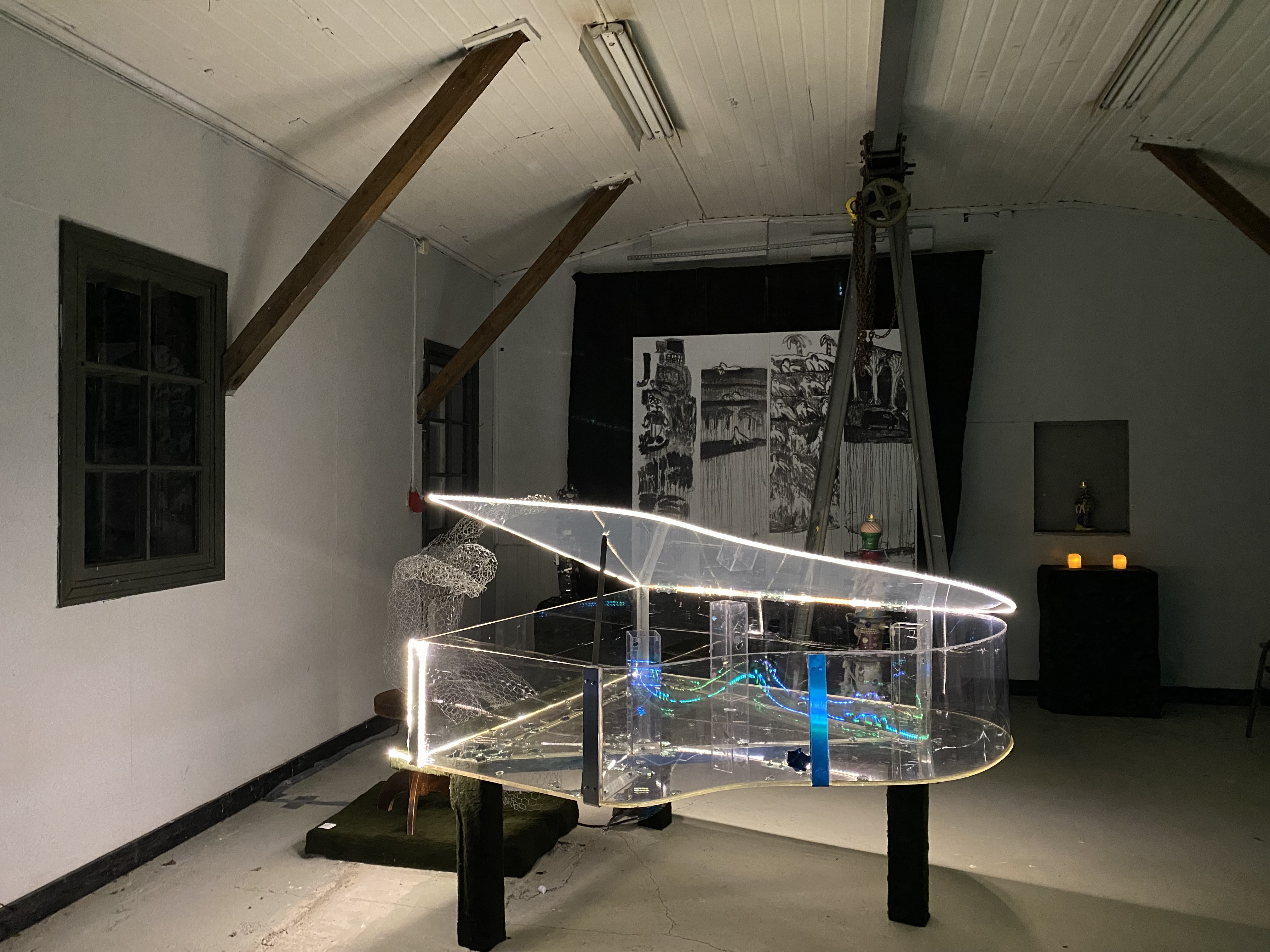
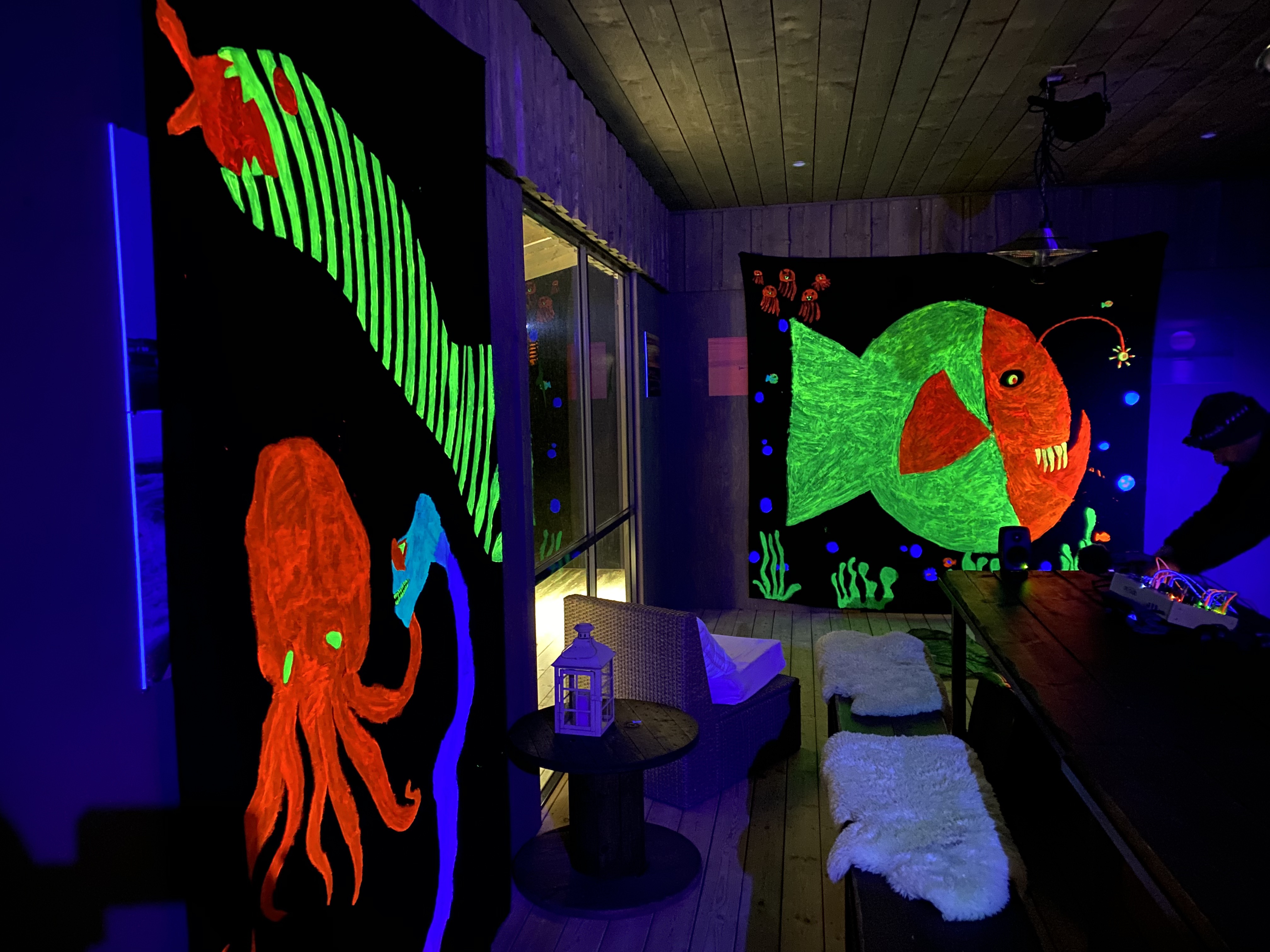
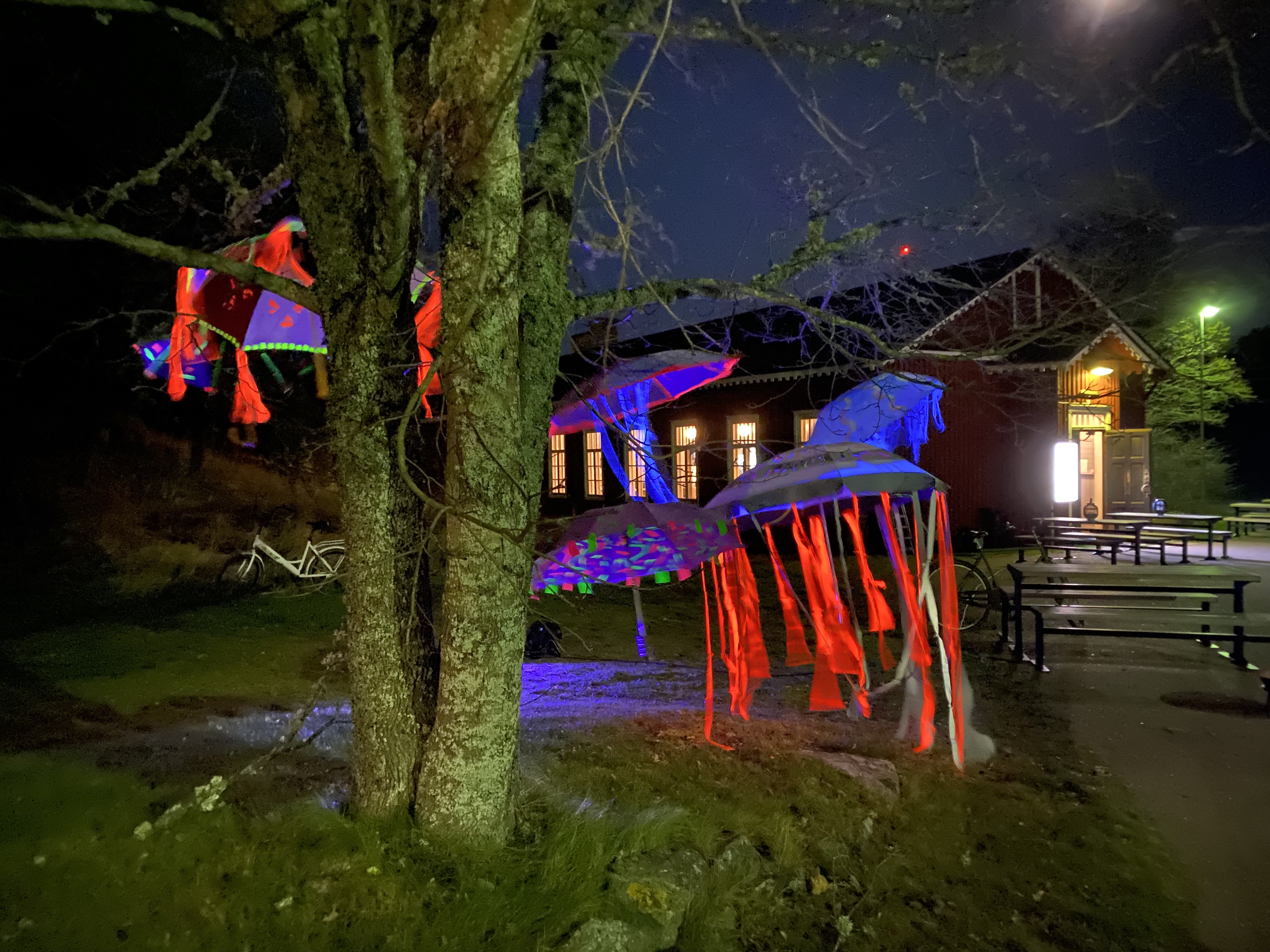
Årets sista besök på Örö sammanföll med Mörkö festivalen, en lokal mörker- och spökfestival som byter plats i Kimitotrakten varje år. Mörkö låter ju som om det handlade om en mörk ö men namnet kommer från finskans ‘mörkö’, som förutom Morran i muminvärlden används för alla möjliga kusliga och hemska spöken och liknande väsen, ofta med anknytning till barn. Och när det blev på Örö så blev namnet alltså MörkÖrö som är rätt fint. Jag var inte särkilt intresserad av festivalen i sig, men tack vare den var det flera båtturer att välja mellan. Och eftersom jag var på ön ville jag se mig omkring. Nära residenset fanns flera arbeten, bl.a. en stig med reflektorer, som inte såg mycket ut i dagsljus, men var rätt spännande på natten, men omöjlig att fotografera med en vanlig telefon kamera. En morgon såg jag de röda lyktorna i militäranläggningarna på stranden (se bilden ovan), och de var faktiskt ganska fina. I princip var jag ju på ön för att spela in mina besök hos tallarna som jag hälsar på varje gång jag är här (se här) och att njuta av naturen, och hade inte behov av något extra ståhej. Men jag deltog trots allt i en visning för att ha ett hum om vad det gällde. Många av konstverken är gjorda av något slags grupper eller resultatet av workshops som publiken fått delta i. Mera information finns här. Några bilder kan tjänstgöra som smakprov:



Örössä tuulessa taas
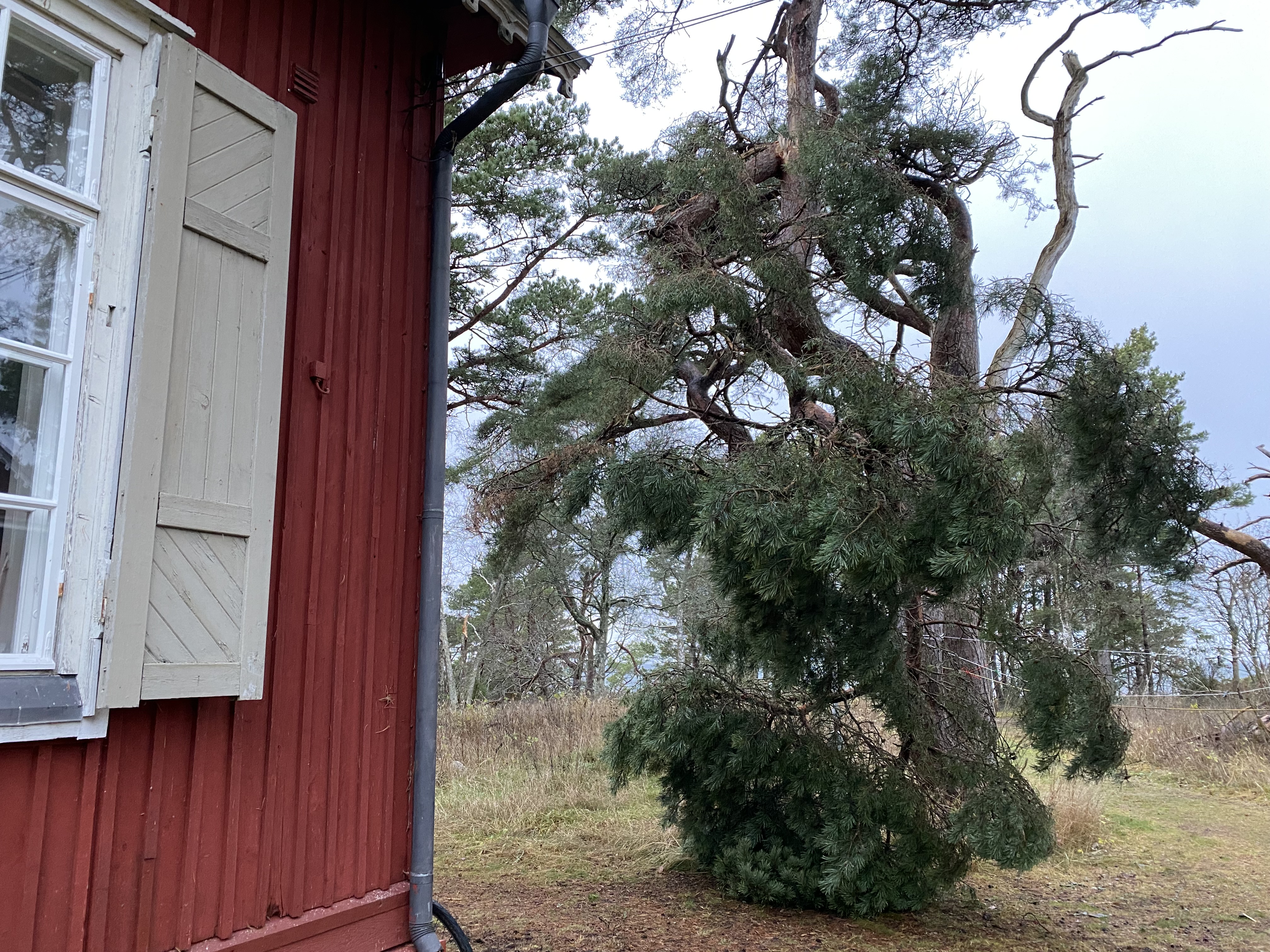
Vuosi sitten vietin koko marraskuun Örössä, Öres residenssissä, ja se oli “rakkautta ensi silmäyksellä”. Kun peruutuksen takia tarjoutui tilaisuus tulla viikoksi tänne taas, innostuin heti, ja nyt kun on aika lähteä takaisin en todellakaan kadu. Olen viihtynyt Örössä myös vierasmajassa muutaman kerran mutta residenssi eteläkärjessä on toista. Ja tällä kertaa koko talo oli tyhjä, minä siis ainoana asukkaana. Viikkoon tai oikeastaan kymmeneen päivään – tulin Stellan kyydissä torstaina 11.11. ja lähden nyt Wilsonin kyydissä 21.11. – mahtui sekä sadetta ja sumua että kirkasta auringonpaistetta kuten tänään. Ja välillä tuulista, tietysti, kuten aamukävelyllä ottamani kuvan aallokosta näkyy. Eilen oli poikkeuksellisen tuulinen päivä, mutta talon edustalla kasvavaa vanhaa mäntyä kohdannut myrskyvaurio sattui jo ennen sitä. Ei ollut edes kovin tuulista kun heräsin yöllä räsähdykseen, ja mietin mikä putosi. En nähnyt mitään ja jatkoin uniani, mutta aamulla selvisi, että iso oksa oli lohjennut ja roikkui nyt puun ja seinän välissä. Se oli ilmeisesti pudonnut osin katon kautta, ja irrottanut jotain tiiliä. Kun näin Metsähallituksen traktorin tiellä vihjasin kuljettajalle että oksa oli katkennut, lähinnä näytin sen suuntaan ja hän tuli pian toisenlaisen koneen kanssa katkaisemaan ja pilkkomaan sen. Ja myöhemmin tuli vielä toinen porukka korjaamaan kattotiiliä. Tehokasta toimintaa, täytyy sanoa, eikä siinä monta sanaa vaihdettu. Hyvä että ehdin edes ottaa kuvan roikkuvasta oksasta. Mänty parka on nyt vailla yhtä isoa oksaansa, ja sen kyljessä ammottaa haava, kun oksa on repinyt kaarnan repeytyessään irti, mutta muuten puu näyttää voivan hyvin. – Lähden täältä hyvillä mielin, sillä olen saanut kuvattua sen mitä pitikin, mm. viimeiset vierailuni vuoden mittaan toistuvasti pamaani mäntyjen luona (katso täältä), ja muutakin. En tietenkään kirjoittanut kaikkea mitä kuvittelin kirjoittavani, mutta niin minulle yleensä käy. Yliarvioin melkein aina taitoni, aikani ja voimani. Mutta tärkeintä oli päästä nauttimaan tästä Örön syksystä edes vähäksi aikaa, siitä saa energiaa jaksaa pimeiden viikkojen yli. Kiitos kaikille jotka olivat tietäen tai tietämättään mahdollistamassa sen.



Walking in Örö
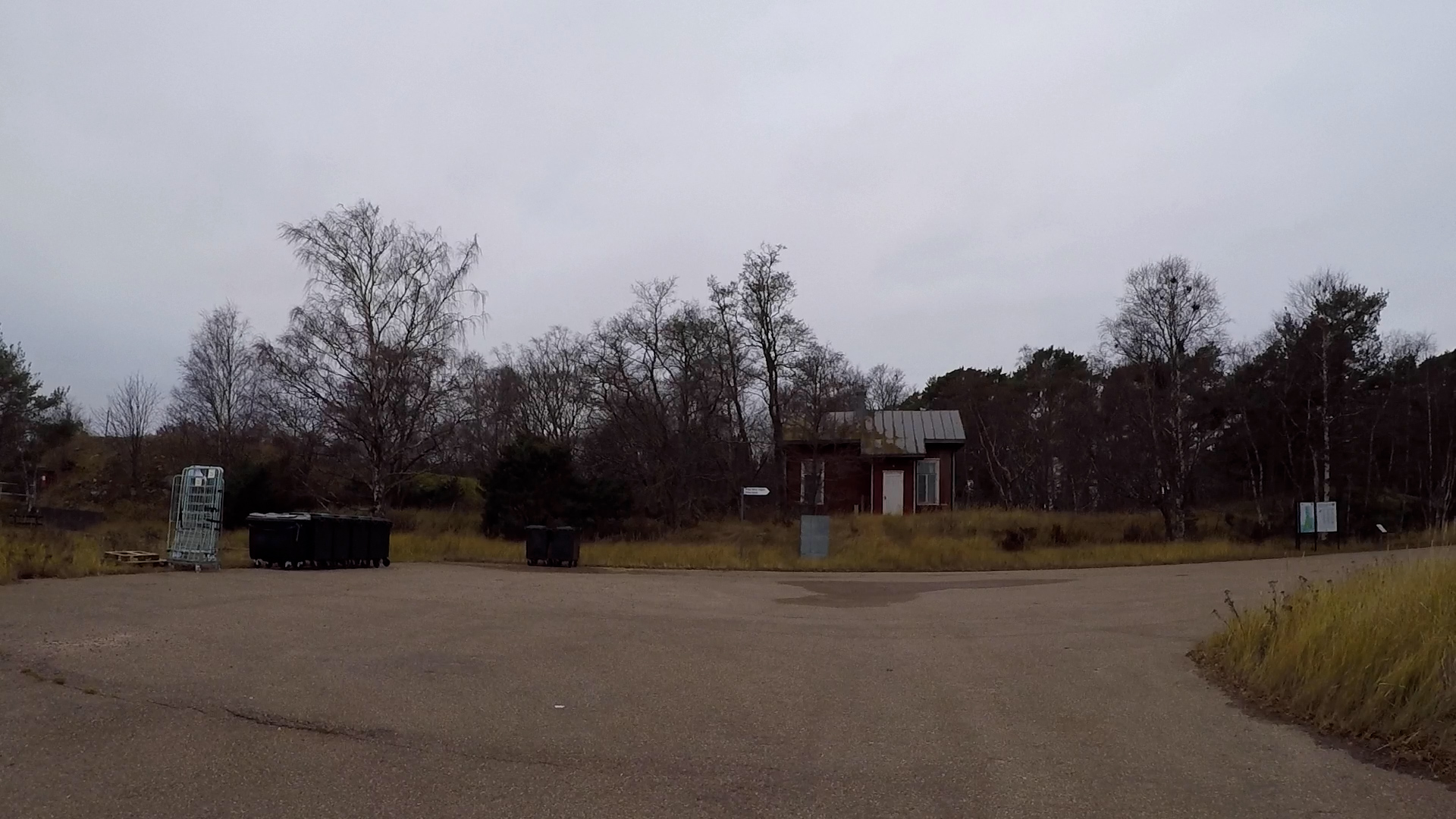
Having the opportunity to spend a week, or actually ten days on Örö, I wanted to explore some new ideas, besides continuing my usual routines. These include visiting The Pine Next Door daily while I am on the island, and talking to or with the pine on the western shore at least once during each trip. This time I recorded the seventh and last Tell it to the Pine (Tala om det för tallen), in Swedish, as usual. The new thing I wanted to explore, which does not really fit into my current project Meetings with Remarkable and Unremarkable Trees, is not really new, but a further development of something I explored in Nida in September 2017, namely walking (see Walking in Nida). And doing that with an action camera on my forehead. The long road through the island on Örö, from south to north or north to south, covered in cobble stones and built in Russian times is called Pitkä ikävä, a Finnish name that translates as the long boredom and also the long yearning. The road is long and almost straight and uncomfortable to walk on at times, but also inviting to record on video, because it traverses the whole island. Therefore I have now recorded five walks from south to north and back, in order to combine them somehow, perhaps not in a grid as I did in Nida, but as a diptych with images inserted into each other. How that will work I do not know yet, but at least I have enough material. And because the half an hour walk is hard to time to be of equal length both ways, I quickly discovered I should begin and end each walk by standing still for a while. Here are the first and last images from my first walk from north to south.

And the first and last from south to north as well, which I actually began with, because the residency house is near the southern tip.
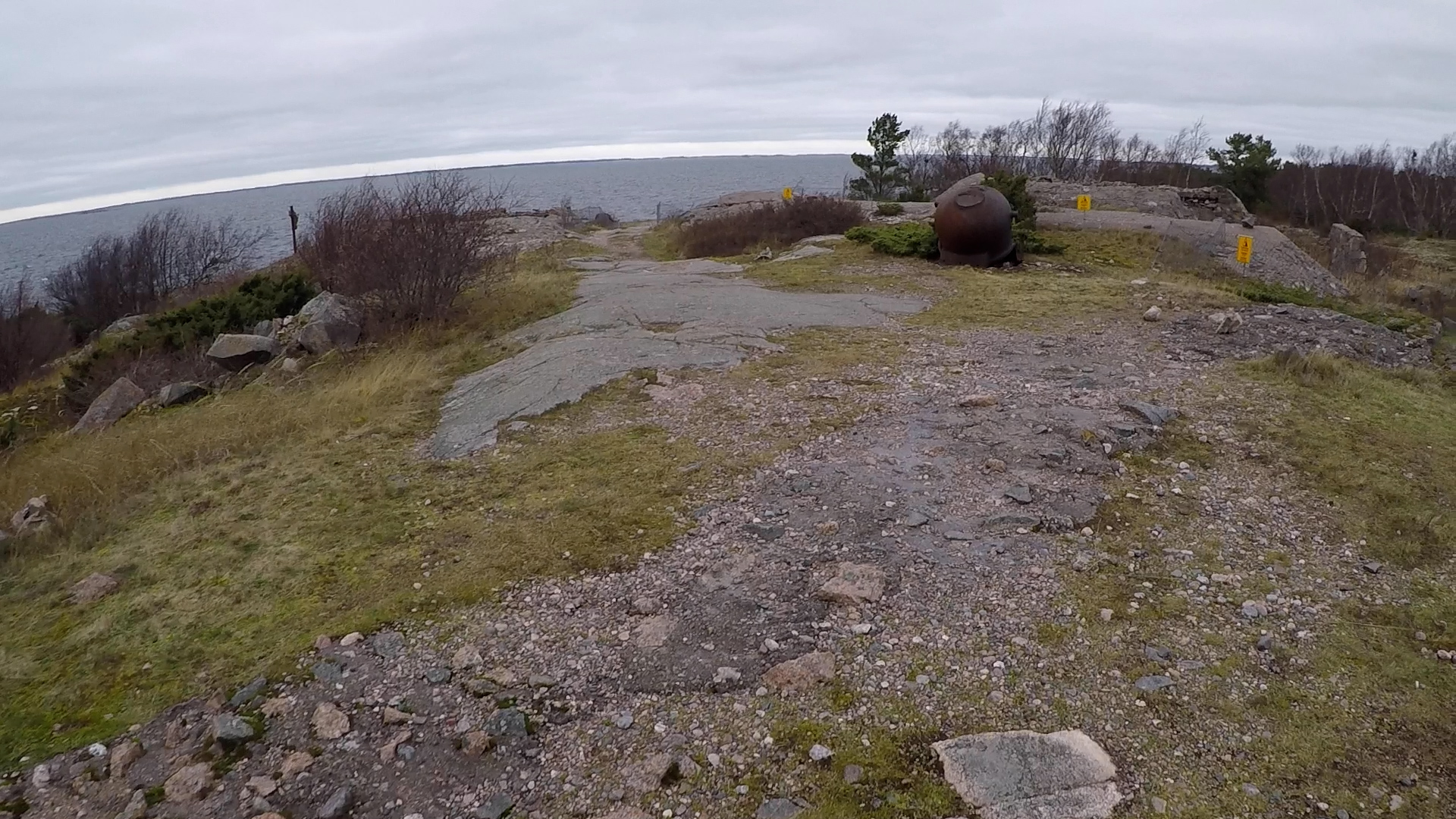

During my fifth walk on a sunny windy day, the same images look rather different:

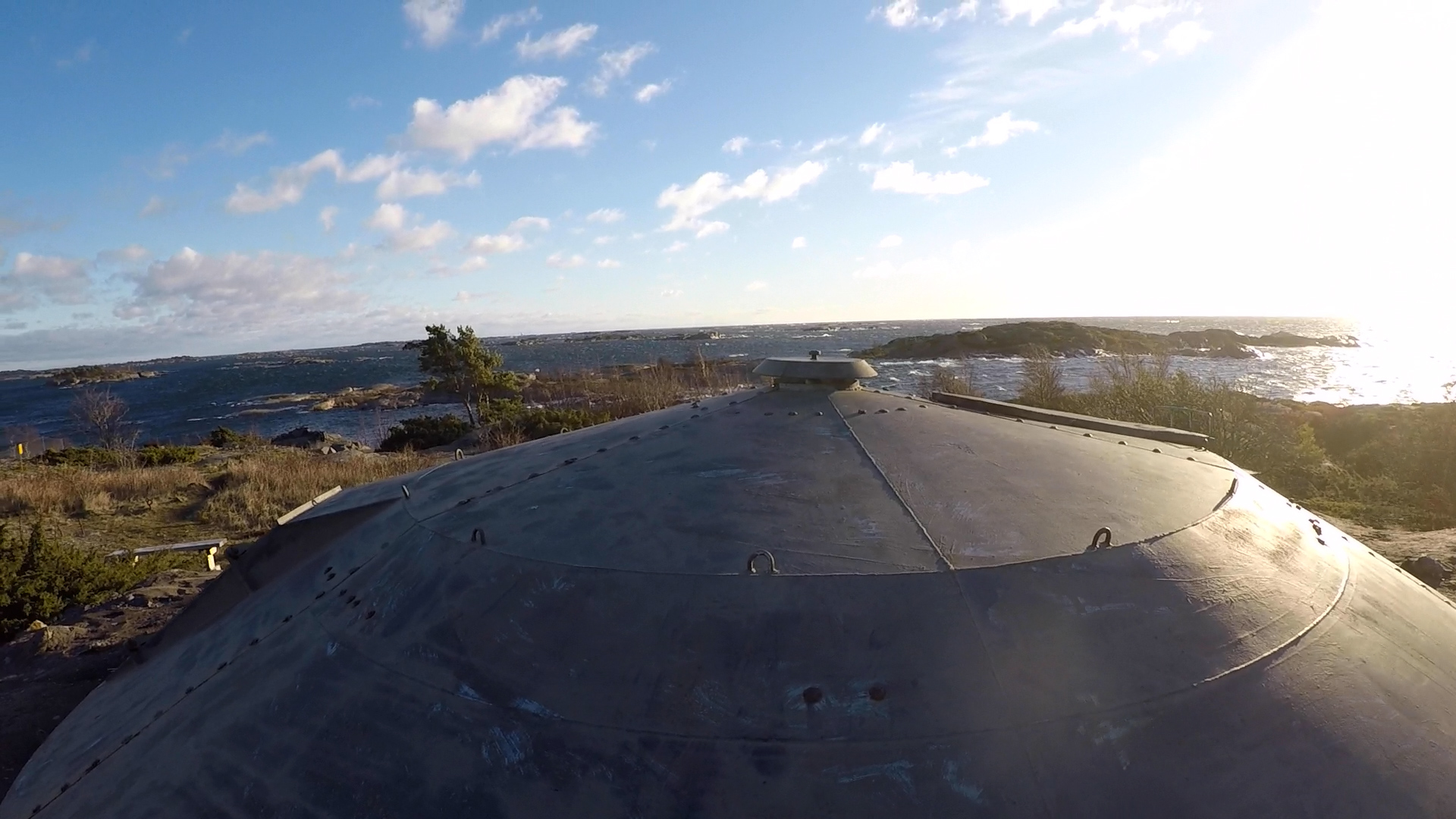


I am especially happy with the end of the last walk towards the north, because the video image has the horizon almost in balance, by accident. Because the camera is on my forehead I have no idea if it is sliding to either side, or what the image looks like while I walk. Something to experiment with in the future…

Autumn efforts
Time passes quickly, faster and faster the older you get, they say. Suddenly I noticed I have not recorded anything here in August and September, nothing since my time in Eckerö residency in July. Yes, I have written something about the events and exhibitions related to the project Meetings with Remarkable and Unremarkable Trees on the project blog, but what about everything else? Well, the most spectacular change this autumn has been the possibility to spend some time in Stockholm again, and I have decided to keep my small flat at least for one more year. If I spend two weeks a month in Stockholm, it makes sense. And yes, I have learned to travel to Stockholm the hard and relatively more climate friendly way, taking an early morning train to Turku harbour and then the day boat over to Stockholm, and vice versa. It takes a lot of time, and it is rather horrible to be mainly stationary on the ship for a whole day, but it is doable. From Stockholm I participated in CARPA 7 – elastic writing in artistic research and even held a small workshop next to a beautiful plane tree outside the Royal Library, right next to where I live. And it worked rather well, despite the rain. Speaking of conferences, I had the exciting experience of visiting Grenoble, in person or should I say in body, for a conference organised by the ResCam (Research Creation) network on the theme of temporality in artistic research. To travel again after the long Covid break seemed almost surreal, as was listening to a conference in French, where I could understand only single words, occasionally, and the references if people had Powerpoints to support their talks. The trip was nevertheless inspiring in many ways. I do hope to be able to visit Grenoble again. Besides these conferences, and an online talk in the context of the exhibition New Nature in St Petersburg, I have been teaching again, a little bit, for instance a lecture on performativity for students in photography. The two courses I am teaching, a doctoral seminar with Mika Elo at Uniarts Helsinki and a research preparatory online course with Synne Berndtson at SKH, Stockholm University of the Arts, have both begun in September and will continue all autumn. It is truly refreshing to engage in some conversations about “basics”, the things one tends to forget or take for granted after a while.
What prompts me to write an update right now, is the ending of the two summer exhibitions I have participated in. First the Artists’ Island on Harakka, which was easy to take down, because I had only to bring the TV and player from the library back to my studio downstairs. The video stills printed on aluminium shown in the Öres exhibition on Örö Island will be slightly more cumbersome to transport home. The real work, however, in terms of carrying, that I finished yesterday, was emptying the attic on Harakka (see image above). This has to be done before the end of October, and I realised I might not be in town in time before the ferry boat stops running on 24 October so better to do it now. I did it a little bit at a time, on three consecutive days, and now my whole theatrical past is back in my studio in the form of bags and suitcases filled with directing manuscripts, uhuh. I have labeled the bags so I can see which productions are where, but that does not help very much in deciding what to do with all the material. As always, the question is, should it go to the archive (for example the theatre museum) or to the dump? Right now the suitcases and bags are in a sort of limbo, waiting for their final destiny. But at least they are not abandoned and automatically destroyed when the attic is cleaned. The only thing I threw away, were synthetic textile materials that have served as some kind of curtains or the like, and I could not see why anybody would want to use them for anything, and then the wooden support structures that were built to keep the four small monitors in place under the glass table for the installation Rock Triangles 1 twenty years ago. Unfortunately the old Harakka artists webpages are gone, replaced with new and fancy ones, so the images of the old work ar gone, too. Luckily something remains on the research catalogue, here.
One more reason to write a note is my experience of joining a demonstration to support the Finnish extinction rebellion movement Elokapina, as part of a group of researchers. I ended standing in the front line with a banderol saying Researchers Rebel for Life and the same in Finnish for 90 minutes or so. When the police called for the gathering to disperse, we grown-ups quickly stepped aside, and tucked away the banderols. I was almost grateful that the police finally interrupted us, tired of standing and hurried home. The youth sitting on the street stayed to be arrested and transported away in two busses. I am still overwhelmed by the experience, how easy and natural it felt to be standing there, and how it was not at all as scary nd embarrassing as I had imagined. It seemed quite possible to contribute to the event and support the demands of the young activists without crossing the line, without breaking the law myself. Of course you could see that as a cowardice of sorts, but I prefer to congratulate myself for the courage to take the first step and to show up. Although I do not personally know what actually should be done, I trust the many environmental researchers and climate activists who say that the tools and solutions are there, they only need to be implemented by political decisions.
Now I am leaving these considerations for a week, returning to Örö to take down my images, and possibly to make new ones, as well as to visit my old pine friends on the island, the pine next door, which is not next door to the residency house but close to the house I lived in last January, and then the pine on the shore that I speak with in Swedish. All my encounters with both of them are documented as still images here. I also hope to meet some new pines for the series Wind Pines, which I began during my last visit. But that is already another story…

Eckeröstä Tukholmaan
Helteinen heinäkuu Ahvenanmaalla, Eckerön posti- ja tullitalon uudistetussa residenssissä on sujunut yhteistyössä pihapiirin vaahteran ja omenapuun kanssa:


Näiden puiden kanssa kuvaamieni tasapainoharjoitusten ja ”päiväkirjamerkintöjen” lisäksi olen vieraillut vanhan postilaiturin vieressä rannalla kasvavan saarnipuun luona ja kuvannut sitä eri kulmista, kirjoittanutkin sille. Lähikuva sen vihreistä lehdistä ja viime vuoden siemenistä, yllä. Olen viihtynyt hyvin ja nauttinut rauhallisen museomaiseman ja turistien täyttämän kesäparatiisin oudosta yhdistelmästä. Tähän idylliseen rauhaan syntyi katkos – lyhyt vierailuni Tukholmassa – joka oli samalla eräänlainen kohokohta ja huipennus.
Eckerö line vie tästä nurkan takaa Grisslehamniin Ruotsin puolella, josta bussilla pääsee samaan hintaan puolessatoista tunnissa Tukholmaan. Koronapandemian vuoksi en ole käynyt Tukholman asunnossani sitten tammikuun 2020, ja suunnitelmani on ollut lähteä sinne siivoamaan heti kun kaksi viikkoa on kulunut toisesta rokoteannoksestani. Sinänsä tartuntatilanne ei tällä hetkellä ole siellä sen pahempi kuin Helsingissäkään. Vaikka vuokraemäntäni on välillä tarkistanut että kaikki on asunnossa suurin piirtein kunnossa, ei huonekasvien kuihtumista ole voinut estää. Olin siis varustautunut pahimpaan. Ja kuten kuvista näkyy, tuho oli lähes totaalinen.


Kaikesta huolimatta muutama aavikkokasvi (aloe, euphorbia ja crassula) oli yllättäen säilynyt hengissä, ja siivottuani raadot pois tuntui kuin asunnossa voisi taas elää. Vietettyäni siellä yhden yön kotiin paluun tunnelmissa tulin kuitenkin ilolla takaisin nauttimaan Eckerön ylellisestä rauhasta vielä heinäkuun loppuun saakka…

Julivärme på Eckerö
Vilken lyx att tillbringa juli månad i det nyrenoverade residenset på Eckerö Post och Tullhus, på Ålands västkust! De gamla byggnaderna från 1828 är behagligt svala trots den ovanliga värmen utomhus. Min avsikt är att fortsätta projektet Möten med betydande och obetydliga träd, eller hur man nu vill översätta det (se presentationen på svenska här) och att skriva klart den första versionen av en bok med arbetsnamnet, ungefär ”Att uppträda och tänka med träd” i översättning. Men i motsats till bilderboken Att uppträda med träd publicerad av SKH i Stockholm 2019, blir det här endast text.
Än så länge har jag trots allt mest ägnat mig åt online-evenemang. Förra veckan var det i samband med Constellate programmet för PSi (Performance Studies International) och arbetsgruppen för konstnärlig forskning där (se här). Den här veckan är det online konferensen för IFTR (International Federation for Theatre Research) som jag försöker delta i (se här). Båda sammanhangen har inneburit även praktiska övningar, och jag har valt ett litet askträd intill postbryggan som min performance partner. För PSi gruppen gjorde jag två olika video performance, som respons på arbeten gjorda av andra i gruppen, dels On Vegetal Democracy och dels Askträdet på Eckerö – The Ash Tree in Eckerö (med text – with text) där jag faktiskt skrev brevet till asken på svenska. (Båda finns här.)
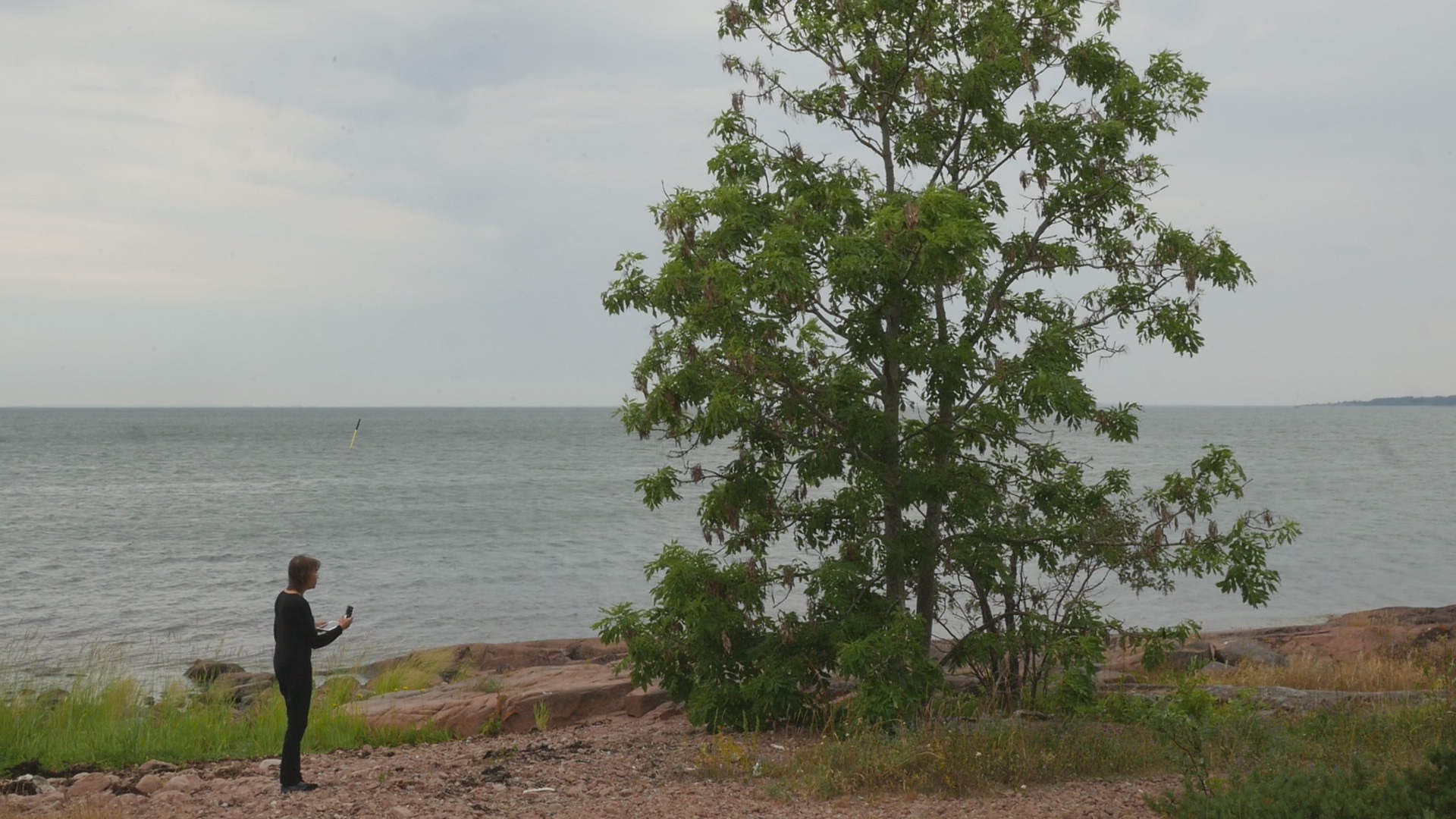
Den här veckan återvände jag till samma ask och gjorde dels en helt ”vanlig” video performance med den, som jag dessutom editerade flera versioner av (de finns på samma sida som de tidigare, här, bara längre ner). Jag försökte bland annat kombinera en närbild på asken och min performance med den till en så kallad split-screen video på två olika sätt:
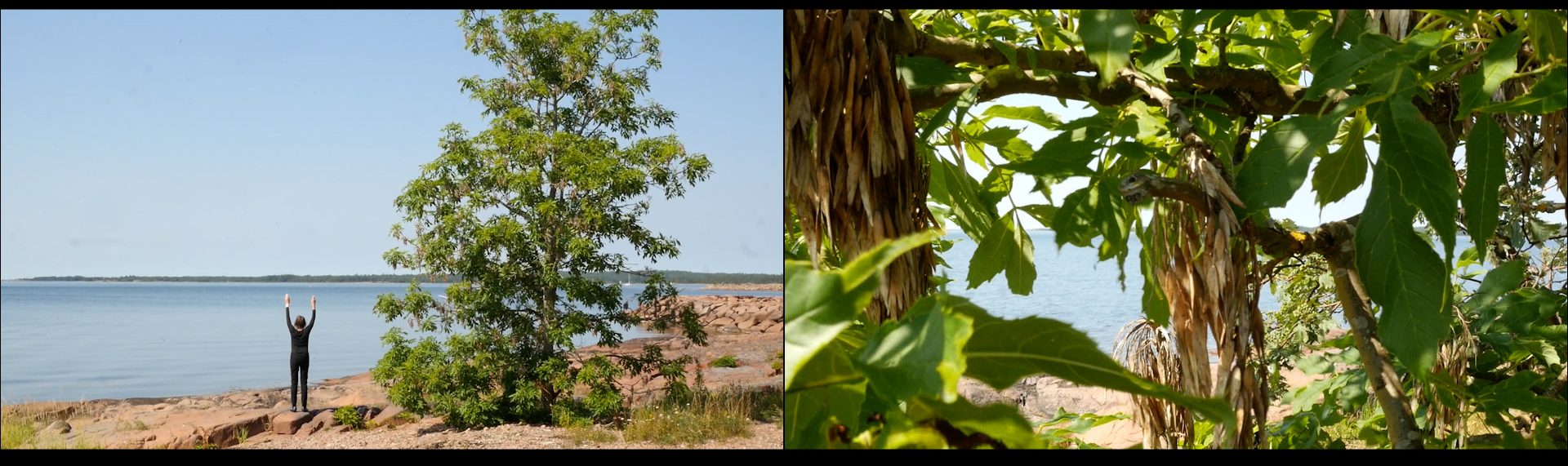
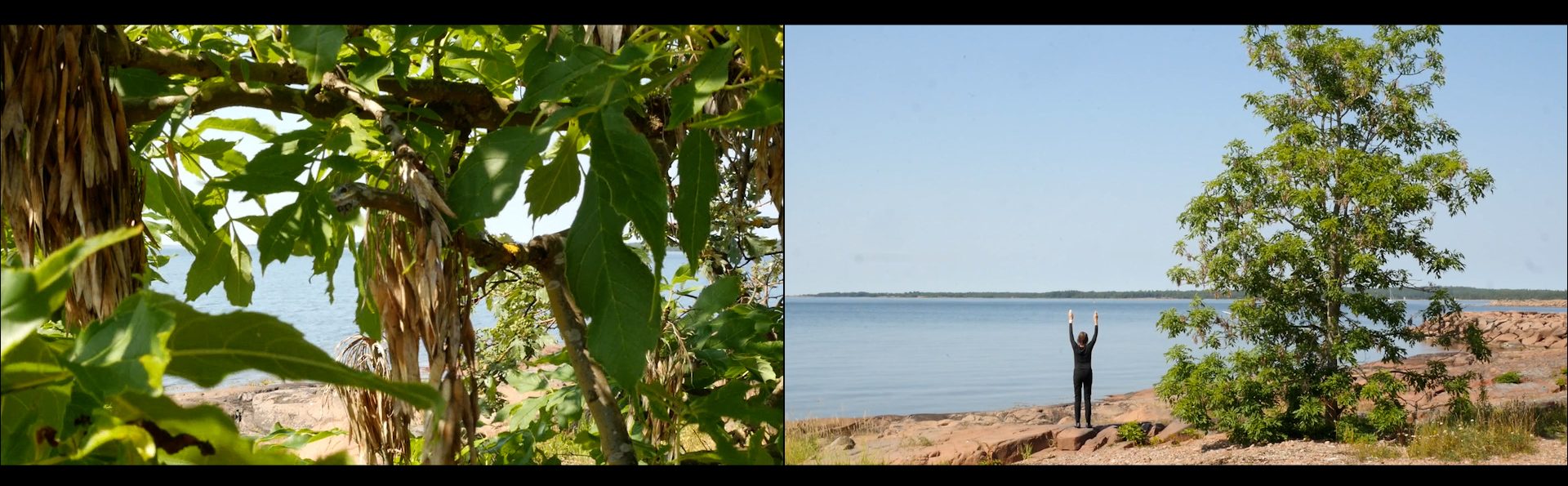
Dessutom gjorde jag en helt speciell videosammanställning för performance as research arbetsgruppen, Exercises with an Ash Tree (se här).
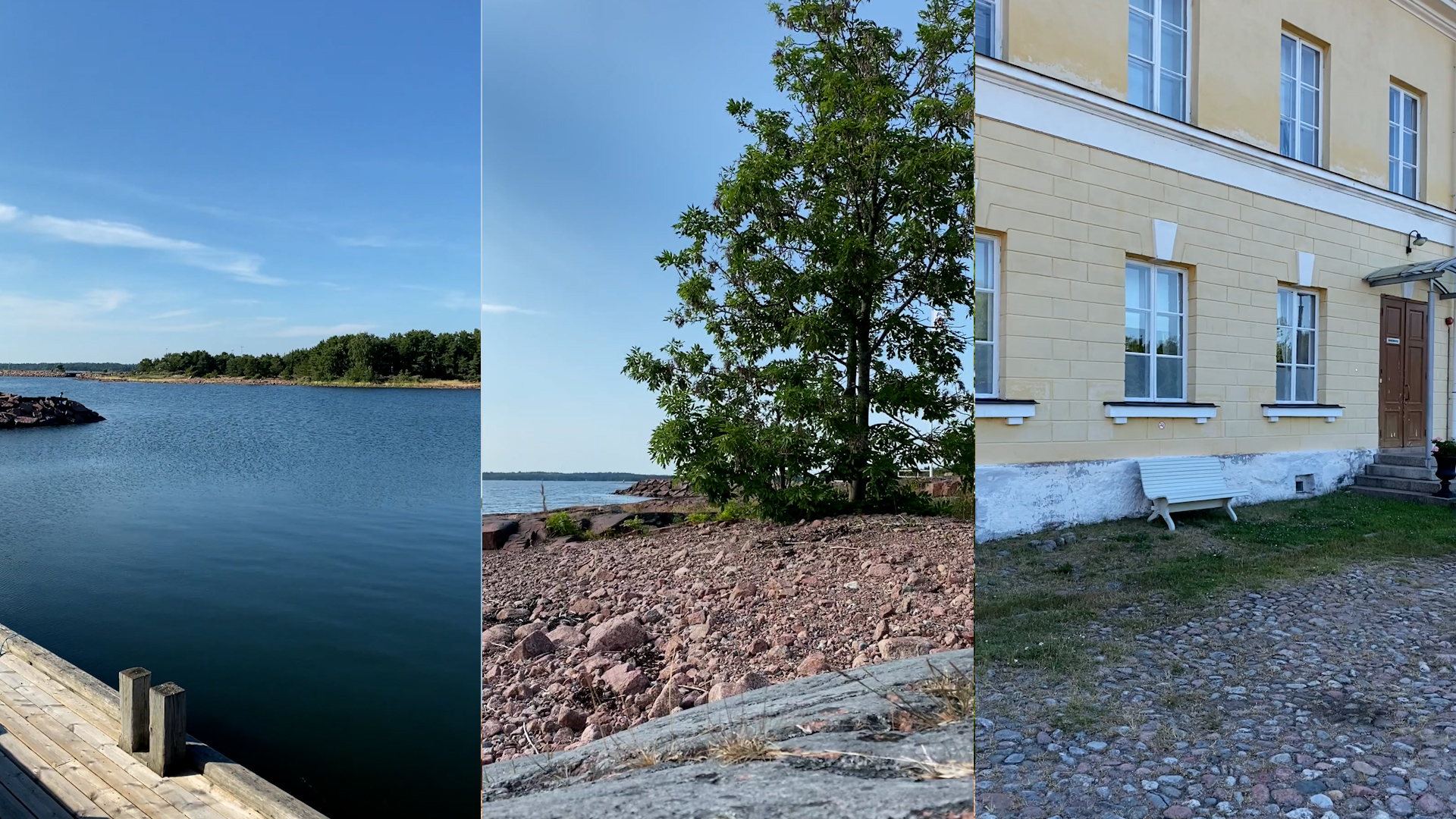

Förutom ovan nämnda försök att uppträda med asken vid postbryggan på olika sätt, fortsätter jag min dagliga praktik med två träd vid själva posthuset, en lönn på innergården och ett äppelträd framför huvudbyggnaden, som jag hoppas sammanställa till små time-lapse videon när jag återvänder härifrån.
Det finns givetvis många andra träd här. Jag har till exempel sett några inbjudande martallar under mina promenader, men vet inte riktigt ifall jag skall posera för videokameran med dem eller inte. Jag har umgåtts med så många tallar på Örö att jag gärna skulle hitta nya träd här på Eckerö. Men ifall det skulle bli så, att asken vid postbryggan förblir min huvudsakliga samarbetspartner, är det också helt i sin ordning. Onödigt att vara alltför glupsk på nya möten, hellre lära känna några träd lite bättre än hoppa från det ena till det andra… men vi får väl se…

