
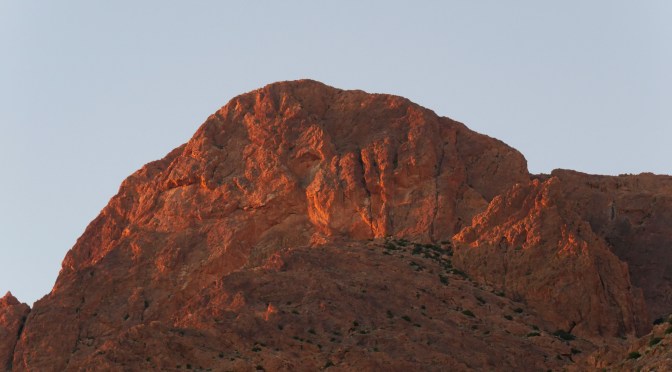
Man får betala för att lära sig, säger ett ordspråk på finska, och det stämmer precis på mina försök att bekanta mig med min nya superfina DSLM kamera, som fungerar som en vanlig kamera men gör dessutom video av hög kvalitet. Själva logiken är helt annan än i en videokamera som jag är van vid, och jag försöker faktikst lära mig den. Men för att kunna göra något smått, och inte bara sitta och läsa bruksanvisningarna, använder jag automatiken också. Mitt första egentliga försök gjorde jag i Tafraoute, en liten stad omringad av röda berg i det så kallade Anti-Atlas bergen i sydvästra Marocko. Jag åkte dit på ett par dagar från en semesterresa i Agadir, tack vare en vän som är bra på att köra bil och klättra i berg. Det är ett fascinerande ställe med många olika typer av bergsformationer. Berget på bilden i rubriken hör till kedjan Jebel El Kest norr om Tafraoute, närmare bestämt är det toppen som kallas lejonansiktet. Ögonen syntes från takterrassen där bilden togs, men det sträck som markerar munnen syns bara längre bort i dalen. Rubrikbilden är en av de första jag knäppte med min nya leksak, fascinerad av bergens förmåga att fatta eld av solnedgångens strålar.
Den första kvällen betraktade jag det hisnande spektaklet då bergen plötsligt flammade upp och såg hur ljuset sakta rörde sig upp längs sluttningarna tills bara en smal strimma av rött lyste högst uppe på bergskammen och hur skymningen föll då även den slocknat. Jag bestämde mig för att försöka återge förvandligen med video. Den andra kvällen var jag för sent ute med min kamera och försökte hitta rätt plats för kamerastativet så att inte byggnaderna i byn eller de stora akasiaträden skulle skymma utsikten, trots att flammorna redan slocknat. Jag insåg snart det fåfänga i mitt försök och vände istället kameran mot de sista strålarna vid horisonten i väst, satte mig iklädd min mörkblå sjal på en sten vid den nästan torra flodbädden, och smalt samman med skuggorna i skymningen, i stil med bilden här nedan.

Den tredje och sista kvällen var jag fast besluten att vara ute i tid och göra en video av hela spektaklet, de flammande bergen och deras gradvisa falnande. Jag började leta efter rätt plats i god tid och vandrade en bit längre bort längs flodbädden. Men den kvällen var himlen inte molnfri och skyarna vid horisonten försvagade solstrålarna så att flammorna uteblev. Jag inledde trots allt videoinbandningen, satte mig på en liten sten mitt i den torra flodbädden (onödigt långt borta från kameran, som jag senare upptäckte) försökte förbli orörlig på det minst sagt obekväma underlaget och betraktade förhoppningsfullt lejonansiktet och ljusets skiftningar omkring det. Jag insåg att det inte skulle bli något spektakel, men bestämde mig för att sitta där tills skymningen, eller åtminstone tills böneutropet vid solnedgången. Jag satt som förstenad och betraktade skiftningarna i klipporna och så plötsligt flammade bergstopparna upp i orange. I sista minuten gav molnen vika, solstrålarna brände på de övre klipporna och släcktes sedan gradvis, tills bergen återtog sin normala rosa färg nu i skymningens blåa toner. Långsamt steg jag upp från stenen, styv och öm men tacksam över att ha fått uppleva det hallucinatoriska skådespelet och återvände till kameran – som var avstängd.
Då jag såg att kameran slutat fungera trodde jag först att batteriet tagit slut. Jag visste ju att kameran hade vissa begränsningar jämfört med en gammaldags digital videokamera som jag är van vid. Den mest uppenbara och bokstavliga begränsningen – kameran kan inte spela in video av hög kvalitet mer än 30 minuter utan avbrott – hade jag givetvis glömt, och det var den påminnelsen som nu kom att stå mig dyrt. Kameran hade slutat fungera och stängts automatiskt just i det ögonblick då den absolut borde ha fungerat. Men strängt taget var det ju inte kamerans fel, utan mitt eget, emedan jag varit otålig och börjat inbandnigen alltför tidigt. Och jag hade ju inte heller räknat ut tidpunkten exakt.
En del av fascinationen i att göra performance för kamera ligger just i hasarden. Ibland har jag till exempel placerat mig så fel att jag inte alls syns i bilden. Den här gången dokumenterade kameran bara inledningen. Visst var jag besviken, men jag tröstade mig med att min upplevelse och det som kameran registrerar har oberoende av inte så mycket gemensamt. De bilder jag råkade ta med min telefonkamera innan inbandningen, dock inte från exakt samma plats, ger någotslags bild av spektret i förändringarna, även om de inte skildrar de magiska ögonblicken.
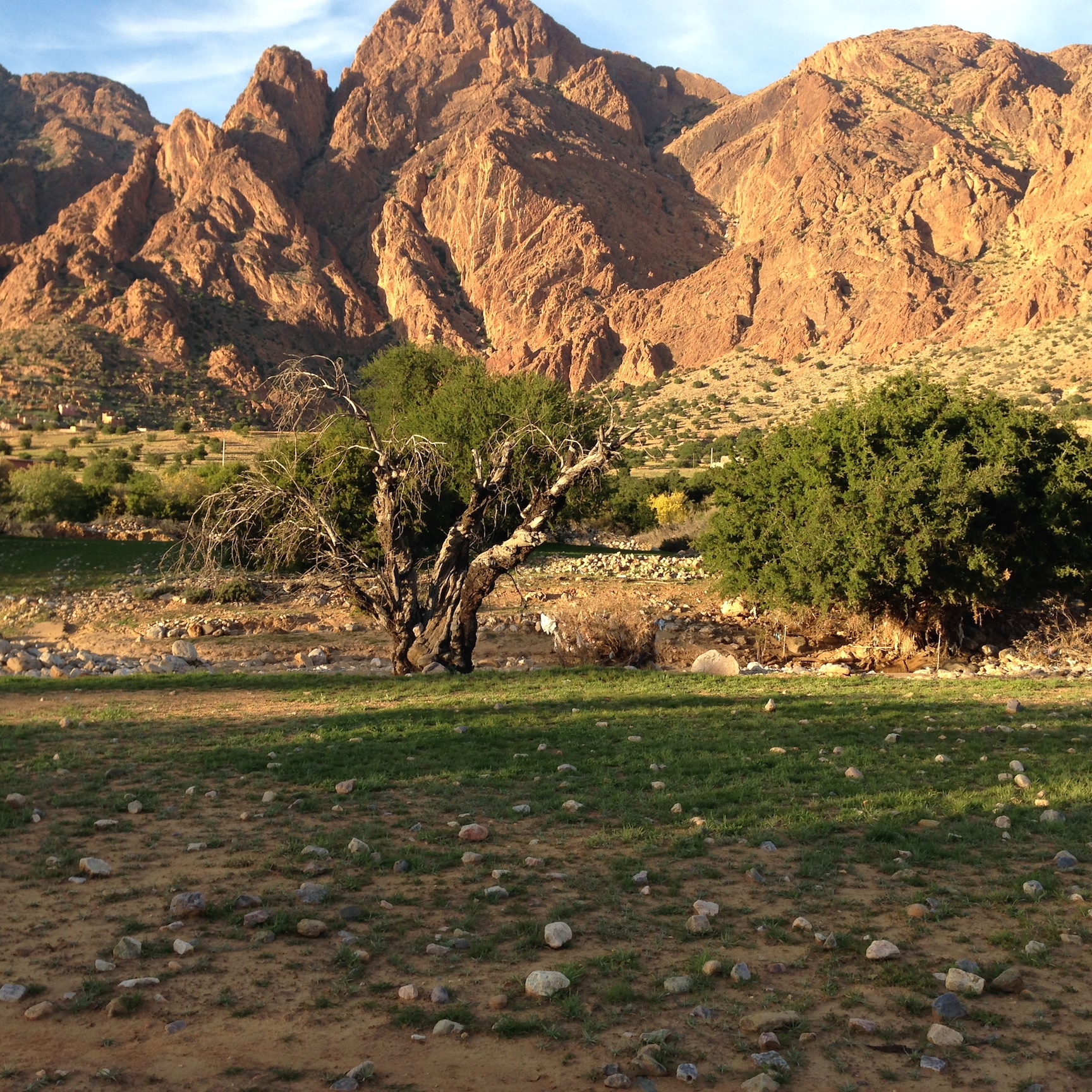
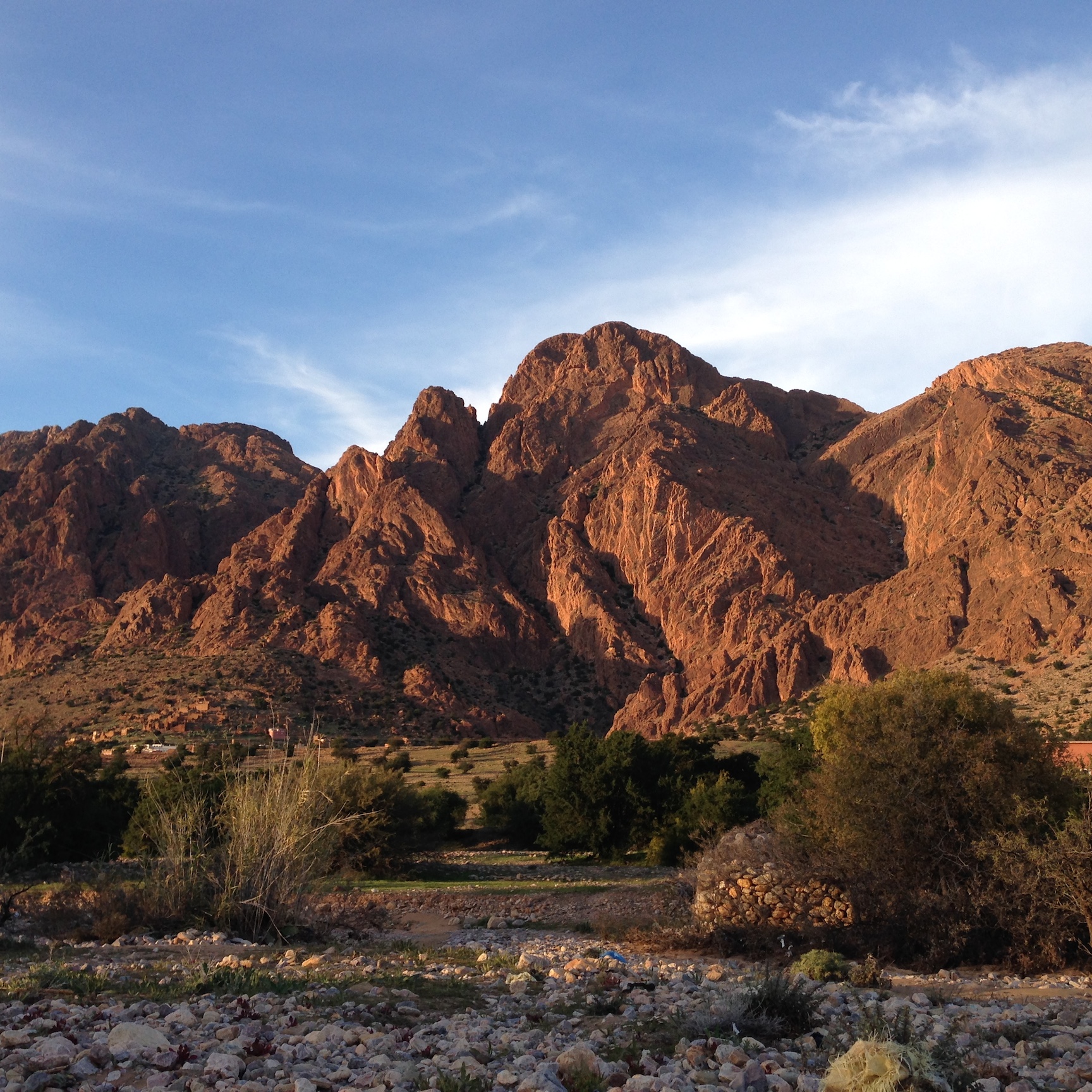
Kanske jag kan göra något av videomaterialet, kanske inte. Kanske jag kan klippa in en svart sekvens på slutet och försöka beskriva det jag såg, eller så inte. De bästa bilderna är de som man aldrig får se utan bara försöker minnas.
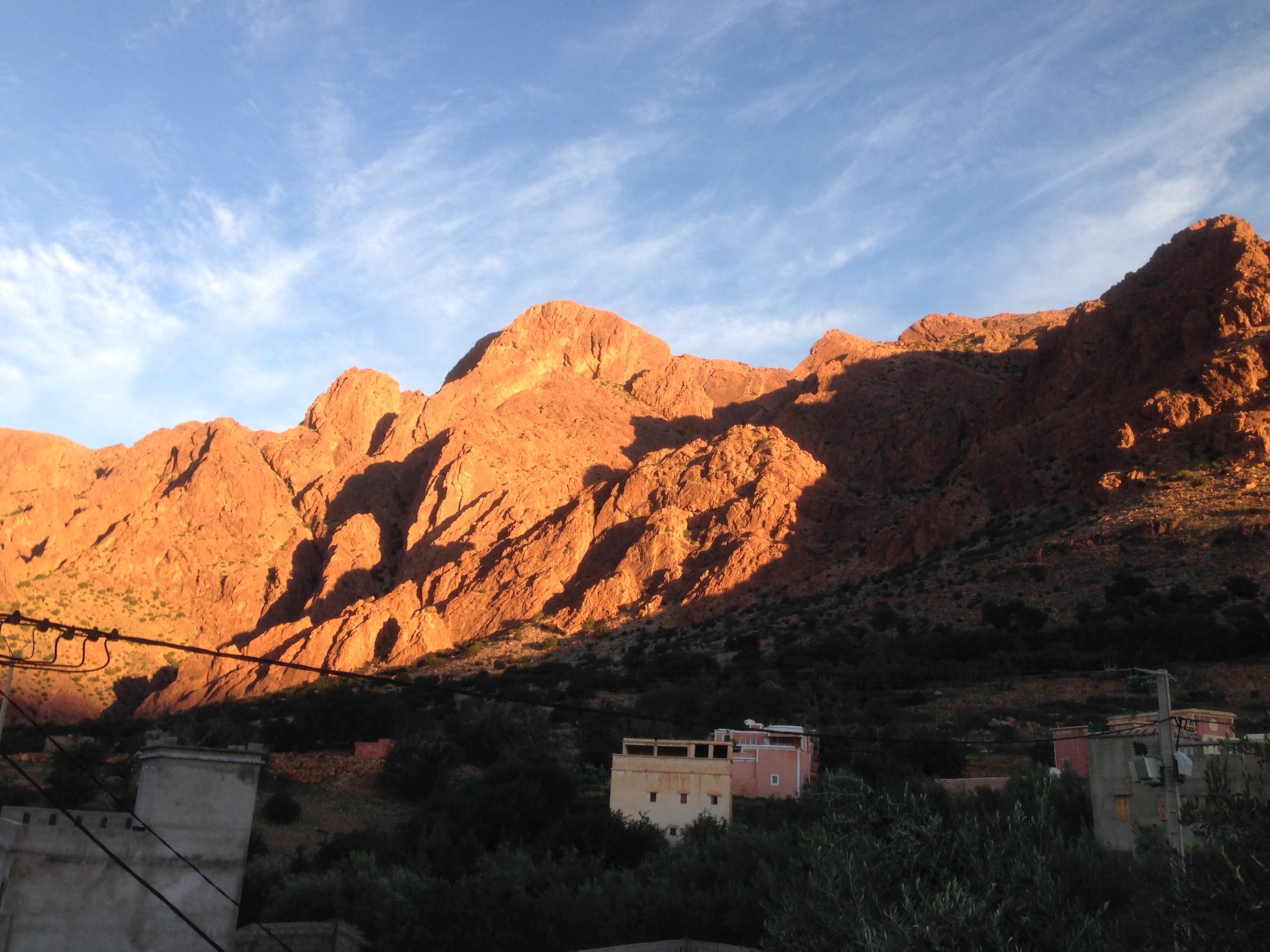
Som en tröst och en sista souvenir av bergen knäppte jag ännu en telefonbild av dem innan avfärden på morgonen, då de glödde i solens strålar från motsatt håll.
All posts by Annette Arlander
Between Storms in December
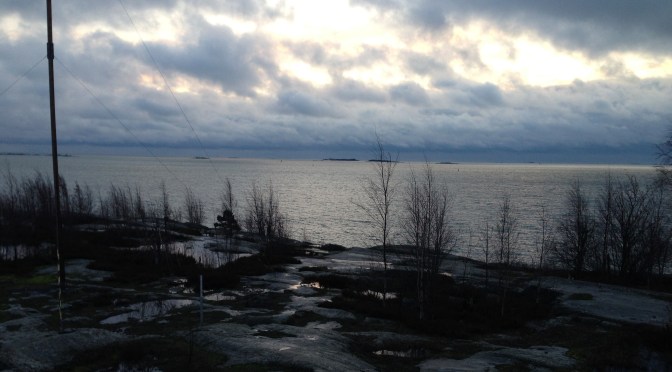
Last night some of the rainfall came down as wet snow, but nothing of it remained in the afternoon when I went down to the shore to empty my boat of water. The ground was as dark and gloomy as before, only more wet. To my surprise the wind was blowing from west-northwest in such an angle that there were no big waves between the mainland and the island. Thus I quickly decided to return and bring my things and to row across to record the December session of Year of the Horse now, and thus to have it done well before Christmas. I am visiting the same rock that I sat on once a week during the year of the horse 2002, but this year 2014 only once a month. And this session today was the next to last one. One more remains to be done in January, before the Chinese year of the horse ends and transforms into the year of the goat.
These days there is not much daylight; dusk sets in already at four o’clock. And on a cloudy day it feels like the day never really begins. In the city centre all the Christmas lights try to cheer people up to shop, but by the shore the occasional lights here and there feel dim. You would expect people living here for generations becoming somehow immune to the effects of lack of light, but no. Most people suffer, feeling constantly tired and slightly sad. I was energized by my dread for the strong wind, though. On the way to the island it was pushing me, but on the way back I really had to work hard against it. And nothing keeps you awake better than a kick of adrenaline.
Many performance artists work with that, I guess, when they experiment with risk or pain or hint at terror. Like Peter Rosvik with his blood soaked globe in flames in the rain last night at the event Tonight at Suomenlinna. Or Michelle Lacombe with her subtle mixture of saliva and tears in the strong and simple performance at the end of that same night. My small performances for camera do not involve any real risk, or even imagined dread, although I keep repeating the same actions as if forced by some mysterious trauma. No symbolic self-immolation or other type of violence is hinted at. The most scary part is often related to the unpredictability of the weather and is nothing the viewer of the artwork will encounter.
I recently read a dialogue between Borradori and Derrida called Autoimmunity: real and symbolic suicides, a dialogue with Jacques Derrida. The reason for engaging with a text that deals with the aftermath of September 11 was a recommendation by Rustom Bharucha. He visited Helsinki last week and gave a lecture on his book Terror and Performance, speaking admiringly of this dialogue. The debate on terrorism is not as heated as at that time, but much of the analysis is still valid. And with the situation in Palestine being what it is the discussion of state terrorism is as relevant as ever. Even a peaceful activity like performing landscape could turn into a dangerous affair if there are disagreements concerning who is entitled to use the land. Terror, territory and ‘terra’ go together.
Production of Space in November
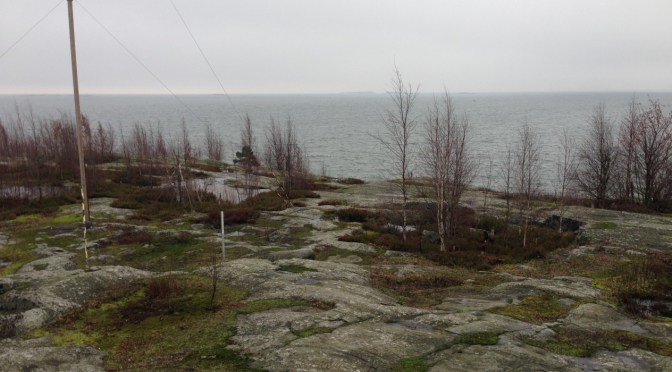
On returning to a damp and chilly Helsinki from the rainy but considerably warmer city of Porto I inevitably thought about the influence landscape and the environment in general has on our moods. After discussing various approaches to artistic research during a small well-organised and fairly informal event called Conversations on Artistic Research at the department of fine arts of the University of Porto, where I gave one of the keynotes with the title On Doing Research, it seemed almost an anti-climax to resume my modest research project on Harakka Island. The purpose of my quick visit to the island today was only to fetch some hard disks with videos now, while the wind was not too bad. While on the island I realized that it might be a good idea to perform and shoot the November image while I was there, so I did exactly that, standing on the hill and then sitting on the damp rock, listening to the howling of the small windmill. I have repeated the same action, which I used to repeat once a week twelve years ago during the year of the horse 2002, only once a month during this year of the horse 2014.
The notion production of space in the title of the blog note today refers to the classic work by Henri Lefevre The Production of Space, written in the beginning of the seventies (1974), which has been on the reading list of everybody interested in issues related to space ever since. Of course I had some brief references to his tripartite division of space into lived, conceived and perceived space, or to his slightly confusing distinction spatial practice, representation of space, and representational space, in my doctoral work called Esitys tilana (Performance as Space) in 1998. But I never really studied his thinking at that time. Now, almost twenty years later, reading him for a seminar on performance and the environment (and performance as environment) I realize that I really should have devoted more time to studying his work back then. Reading him now is fun in another way. His critical arguments against the proponents of the linguistic turn fashionable at the time and his ironical comments dircted at orthodox Marxists seem funny now, but many of his ideas on the production of space make sense today.
With the help of his ideas I could try to analyse how the particular place of Harakka Island has been produced, and is continually reproduced by the social practices of its various user groups, although understanding my own practice as part of that production is of course more difficult. Or perhaps not, if I decide that I don’t mind simplifications. In a very obvious way I am involved in a practice, which transforms our lived space into the conceived and percieved space of a video work. This spatial practice participates in producing the space of the island, and is also creating a representational space (the video work), which is at least partly based on and also to some minute extent influencing the prevalent cultural representations and conceptions of space. Rather than the different levels of representation, however, the notion of production seems most relevant today, and is also closer to something that could be called the performativity of space.
Appropriation and Invocation in October
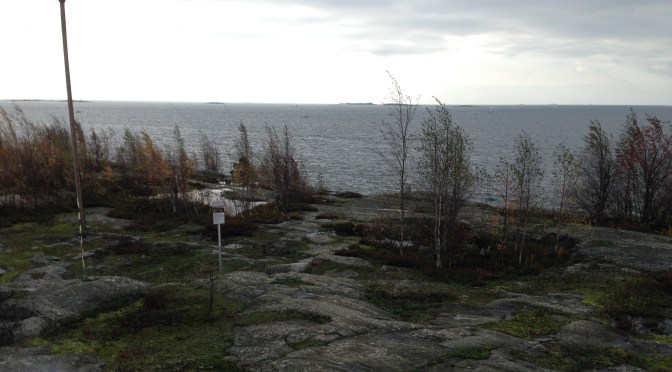
Revisiting the rock on the western shore of Harakka Island once again made me think of the materiality of this kind of reworking, remaking, returning, replaying of what was before. Although the rock, the wooden stairs, my scarf are all the same as twelve years ago, I have a hard time making the connection. I do not remember what I experienced in October 2002, rather, I have some vague images in my mind of the video thus created, Year of the Horse – Sitting on a Rock, which I saw recently. Probably the same goes for many memories, we do not remember the events but only our retelling of them.
In her paper at the conference New Materialist Methodologies – Gender, Politics and the Digital, Barbara Bolt spoke about her work based on Robert Motherwell’s paintings and mentioned a text by Jan Verwoert about appropriation and invocation. I was fascinated and found the text called “Apropos Appropriation: Why steeling images today feels different” on the web, published in Art and Research vol 1 no 2 summer 2007. He is discussing postmodern practices of appropriation in the 1980’s compared to appropriation today, and contends that invoking images involves dealing with ghosts, referring to Derrida, as well as the ceremonies involved in invoking them. He describes the move away from interest in the arbitrariness of the sign to the performativity of language, how things are done with words, how language through injunction and interpellations enforces meaning, like a spell cast upon a person. When you call up a spectre it will not be content with being analysed, it will have to be negotiated….
Invoking the spectre of German romantic painting, as I did in the year of the goat (2003) by trying to re-stage “Der Mönch am Meer” by Caspar David Friedrich on various shores besides Harakka Island resulted in the work Year of the Goat – Harakka Shore 1-3 and Three Shores, among other things. And in that context the idea of negotiation made sense. Referring to that painting evoked a whole legacy of idealist interpretations and also recreations.
But what about now? I am not appropriating a previous work of my own by recreating it, but I do invoke it in some way. And then I have to ask, why call up exactly these ghosts? Why sit on a rock again? Should I not rather consider what kind of ghosts could be worth calling forth at this moment, what spectres should be summoned for help right now? And in the spirit of acknowledging the performativity of all kinds of artistic practice, what kind of injunctions or spells should be used at this moment?

Puula ruskan aikaan
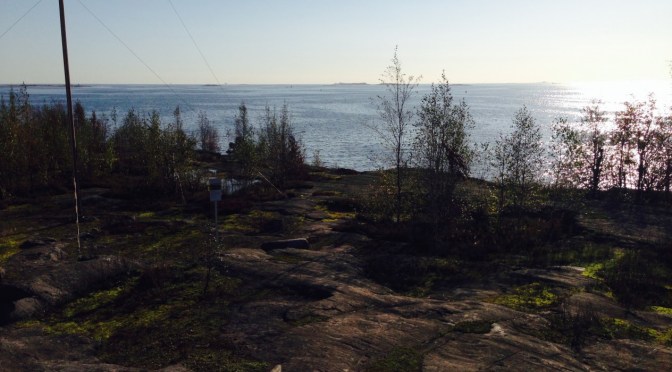
Puulaveden ranta ruskan aikaan loimusi ilta-auringossa, mutta enimmäkseen pilvisellä säällä maisema näyttäytyi keltaisen ja harmaan sävyinä. Istuin erilaisilla kivillä melkein puolihuolimattomasti ja etsin variaatioita vanhasta teemasta sama huivi hartioillani kuin kaksitoista vuotta sitten hevosen vuonna Harakan saaressa Helsingissä. Etsin aukkoja ja avaruutta maisemassa lähes hajamielisesti. Vaikka ympäristö ihmissilmälle oli avaraa ja selkeää, karun kaunista ja monimuotoista samalla kertaa, kameran eteen osui aina jotain turhaa pusikkoa tai männyntainta. Loivassa ja lämpimässä iltapäiväauringossa kaikki näyttää upealta, ja kuva jossa istun ranta-kalliolla kahden männynvarjon viistäessä kuvan poikki onkin kutakuinkin kiinnostava. Istuin kokeeksi eri kohdissa kuvaa ja variaatioiden välillä voi nähdä valon liikkeen.


Varsinaiset esityskuvat tein silti vasta pilvisenä päivänä läheisen niemen kärjessä: harmaita kallioita, harmaata vettä, kapea kaistale harmaata taivasta, jotain keltaista tai ruskeaa kasvustoa ja vastavärinä ihmisfiguuri sinisessä huivissa. Edvard Munchin maalaus Melankolia kävi mielessä, vaikka kompositio tietysti on toinen. Eikä kuvissa ole samanlaista surua, vain hiljaista haikeutta, niin kuvittelisin. Istuin värjötellen useammassakin paikassa kallioilla, ja tuulen suojassa unohduin välillä tuijottelemaan ulapalle enkä enää muistanut mitä olin tekemässä. Useinkaan en osunut siihen kohtaan kuvassa kuin kuvittelin, vaikka yritin arvioida ihmisfiguurin paikan ruohojen tai mättäiden tai kallion kuvioiden mukaan. Ystäväni ehdotti, että yrittäisin yhdistää kameran langattomasti tablettiini, ja käyttäisin sitä kontrollimonitorina sylissäni. Siten voisin tarkistaa kuvan komposition ja oman sijaintini kuvassa saman tien, ja välttyisin liian monilta erehdyksiltä. Innostuin heti ajatuksesta. Sinänsä osa tämänkaltaisen praktiikan viehätyksestä tietysti on yritysten ja erehdysten peli, tai sattuman oikut ja niiden mukanaan tuoma jännitys, mutta hiukan enemmän kontrollia sen suhteen mitä kuvassa lopulta näkyy ei olisi pahitteeksi.
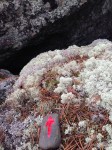
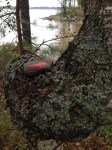
Esitysten lisäksi leikin pienellä nuolikivelläni ottamalla stillkuvia kännykän kameralla, kun taas varsinaiset esityskuvat on taltioitu videokameralla. Huomasin hämmästyksekseni, että maalipinta usein heijastaa valon niin, että nuolesta katoaa punaisen hehku. Ja silloinkin kun sain kiven sijoiteltua oikeaan kulmaan heijastuksiin nähden, nuoli jäi välillä toiseksi vaikkapa loistavan punaisen rahkasammaleen rinnalla. Kuvasin jäkälää ja kallioita, pahkoja ja puunkoloja, kaikkea pientä mikä ympäristössä osui silmään.





Indian Summer and Immaterial Land in September
Beautiful warm summer days in the middle of September are rare in Finland, and what we call ‘Indian summer’ always feels like extreme luxury. Very, very soon the dark, damp, stormy autumn is upon us. I went to revisit the slope and the rock I used to visit weekly in the year of the horse in 2002, and now visit once a month this year, and was surprised by the view. After a few days of rain the moss was light green on the cliffs, and all the yellow leaves of the birches were gone, so the few remaining green ones almost reminded me of spring. And it was warm!
I found my notes on a text called “Immaterial land” by Brian Martin in the anthology edited by Estelle Barrett and Barbara Bolt Carnal Knowledge (2013), which I read this summer. It is written from the point of view of the indigenous population in Australia and their view of art in contrast to western notions of art, representation, ideology, and enlightenment. The central notion for the indigenous worldview, according to Martin, is “country” or land, which makes the text sometimes hard to comprehend. It is clear that a more active and sensitive relationship to the earth, the soil and to the environment in general is needed, but too much talking about belonging and land sounds in my ears too much like ‘Blut und Boden’ ideology. Of course I do not mean that aboriginal ideas of land and landscape have anything to do with that, but for my European ears the association is inevitable. On the other hand the idea of a work of art as a map and a ritual aid as well as the materialization of memory is fascinating. And of course the point of refusing the binary between the material and the immaterial or spiritual, is fascinating, too. The few aboriginal works I saw in the last Documenta in Kassel were truly impressive, like huge shimmering colour fields of small ornamental patterns. But the works Brian Martin speaks about are more concrete, like two images of slightly ornamentalized fish. The idea behind them is great though. You catch a fish, you respect it, you eat it and then you paint it and bring it back to life in that way – absolutely perfect. I thought about my colleges who caught a lot of perch on the western shore here, simply by throwing in a fish trap with a sufficiently long rope down the slope, and served us a delicious soup.
I am still wondering, what to do next. Painting fish is not an option for me. Well, how about photographing what I eat? This remake of the Year of the Horse is like a small exercise once a month to keep me warm, while I wait for some new ideas. Perhaps I should simply move to another place, look at another kind of landscape, investigate a different environment…

The Little Bear’s Trail
The hiking path called the Little Bear’s Trail is a 12 km circular walk that touches the real 80 km Bear Trail in Oulanka National park. In Finnish it is called pieni karhunkierrosThe huge park is situated quite near the Russian border in Koillismaa (northeastern land) in the northeast of Finland. It is supposed to be one of the most beautiful national parks in the country, and yes, after seeing a small corner of it I have to admit that it is quite spectacular, especially now when the colours of autumn start to spread on the slopes. It has some beautiful gorges and river valleys with rapids that attract people engaged in white water sports. The small suspension bridges swinging with each step are quite scary for a person unaccustomed to them.
I came here following the suggestion of a friend, who thought this would be the right place for a one week hike. I quickly realized that sleeping in a tent in the forest in the autumn, when the nights are dark and chilly, was not such a good idea, especially since I have no experience of hiking or camping since the 1970’s. So I came here like an elderly tourist, staying at a local inn enjoying my warm bed and some good food, and experiencing the park in daytime only. I was not the only one to do that. This weekend the trail was absolutely packed with families and elderly couples who had estimated that the autumn colours would be at their best right now. Two weeks from now, with the first frost, might me even more beautiful, I guess.
I walked the Little Bear’s Trail twice, counterclockwise on Saturday, as suggested by the Forest Department, and clockwise on Sunday, as suggested by the locals. Of course the latter knew what they were talking about. And Sunday morning was quiet, too. I had the wilderness park (what a contradiction in terms!) almost for myself. Performing landscape on a popular trail in a national park is a weird idea, of course. Actually I brought my video camera and my scarf (my costume) with me more in order to reassure myself that I might do something useful, too, and not only enjoy myself by watching the arriving “ruska”, as the autumn colours are called in the north.
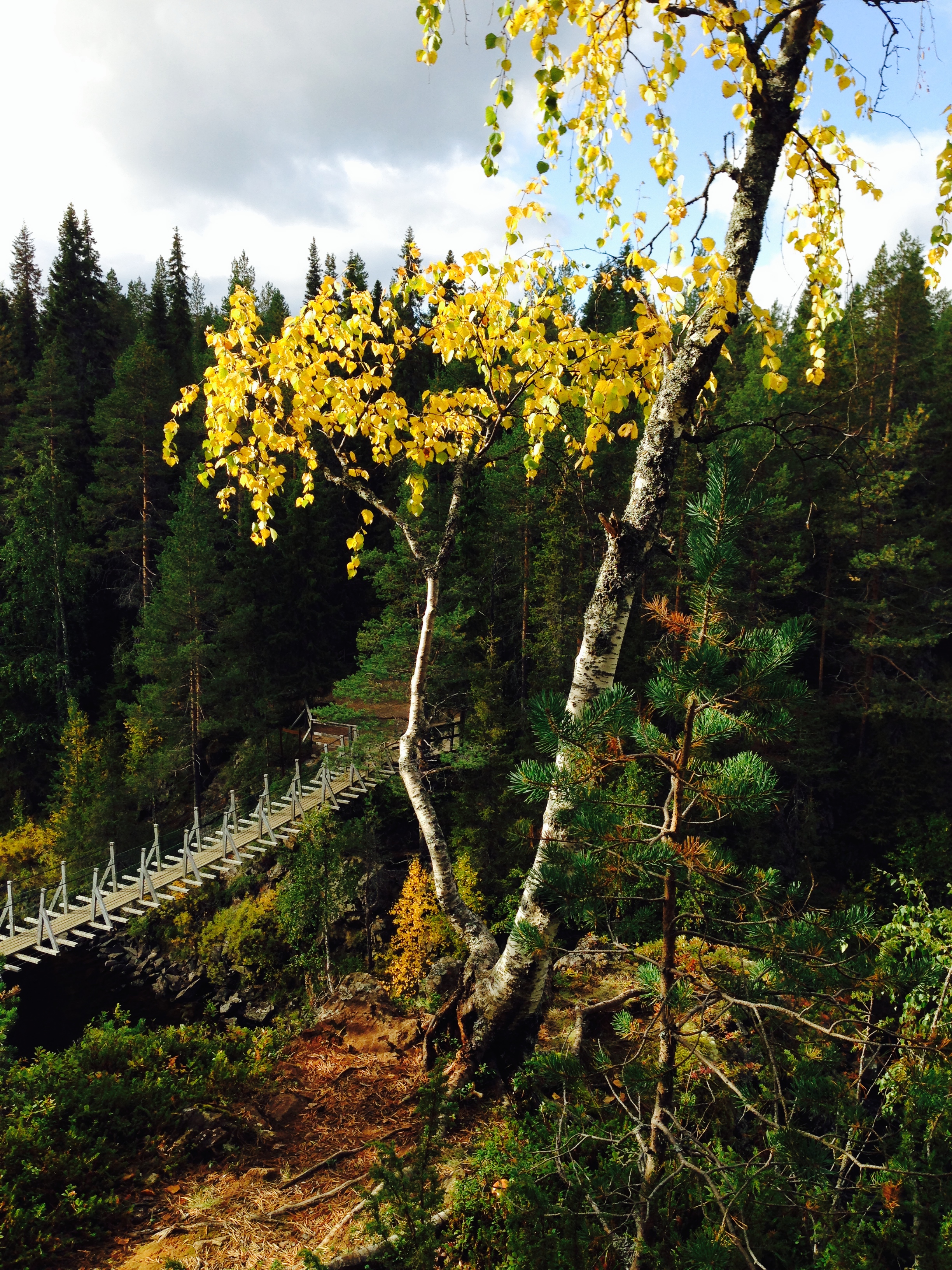
I made some small attempts at performing landscape for video camera on tripod, in my usual manner, sitting with my back to the camera, wearing the dark blue scarf of the year. And I quickly realized this was a vertical landscape, with the riverbed in the gorge, the cliffs on the banks, the tall trees. Everything suggested a vertical composition, so I simply turned my video camera sideways on the tripod. The most beautiful views with the rapids down in the gorge were difficult to record, but I made some small attempts anyway, relying on chance, as always. At least the image by Myllykoski, sitting near the water in the shadow of a cliff while the sun sparkled in the whitewater, should be OK. Sitting by rapids could be an interesting series to create, the sound of the water rushing through the rocks is fascinating and the forceful movement of the water is captivating and dramatic. Of course it is very romantic, too, so some form of antidote is probably needed. Or perhaps my presence is enough of an antidote, after all.
I also made some experiments with a small pebble I picked on Harakka Island earlier and painted a red arrow on, somewhat reminiscent of the double happiness sign I painted on a roof tile in Farrera in 1999, which resulted in the video work Double Happiness in Water (2001). This pebble with the arrow I placed in the corner of the image, pointing towards something worth focusing on. I soon realized that the only interesting images were again the vertical ones were the arrow points upward at the view. Much depends on the light, which I never know how to manipulate, I simply take it as given, and occasionally it is marvelous, though most often not.
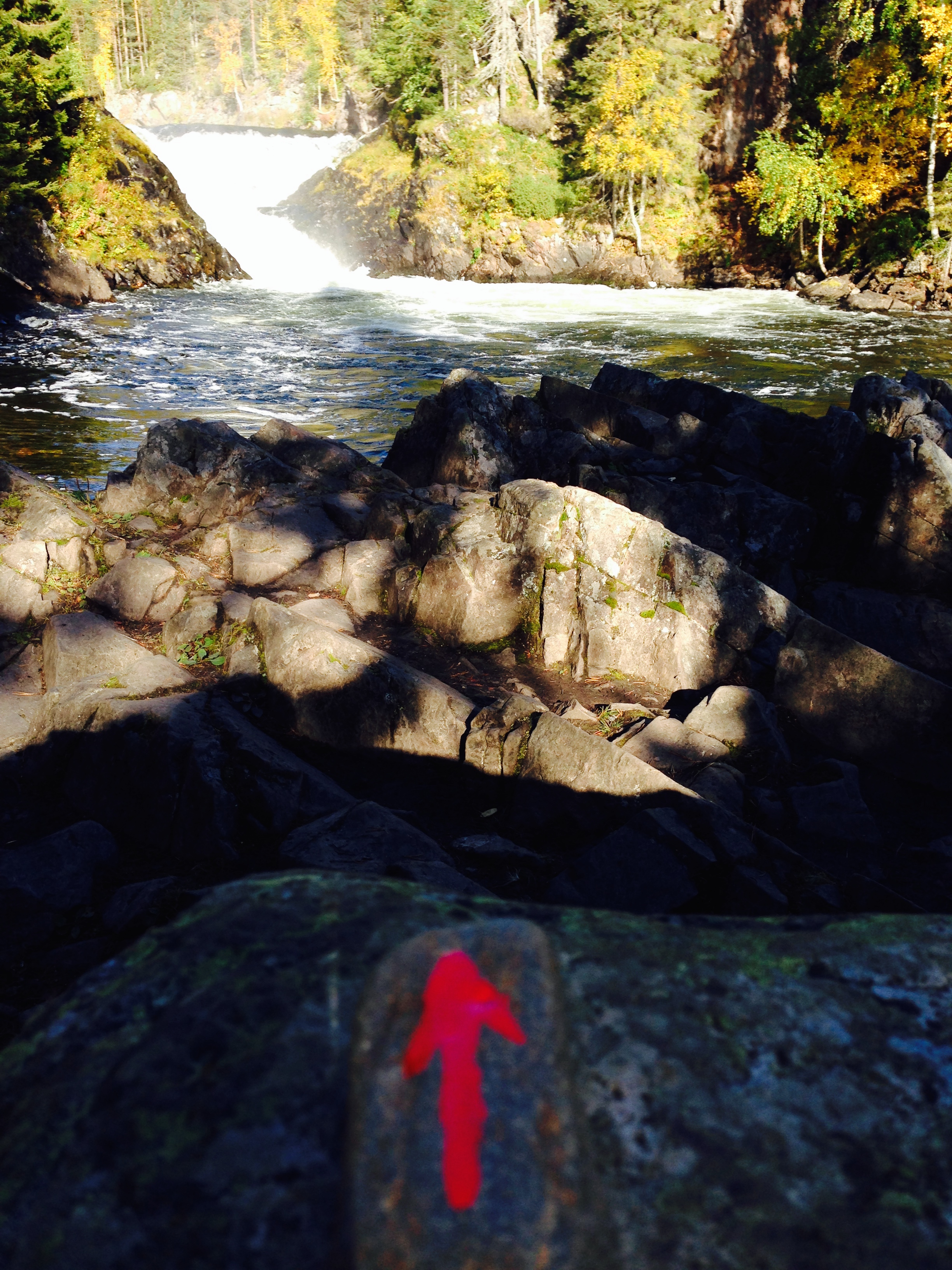
The images were more of a side effect of this trip, which after all was more about clearing my mind than filling my hard disk with images. Some ideas were emerging, however, grace to the refreshing environment, like experimenting with vertical composition, searching for rapids and playing with the arrow – and perhaps visiting more national parks…

Watching the Birches Suffer in August
After a long period of warm, dry weather the birches on the cliffs on Harakka Island, (which I visit once a month during this year of the horse 2014 as a remake of my weekly visits during the year of the horse in 2002) have been completely yellow, like in autumn, since there is very little soil on the cliffs and no water without rain. But today, after the rainfall last night I expected them to look invigorated. Because of the brisk wind, however, most of the dry leaves had fallen, so the landscape looked even more autumnal, despite some fresh greenery here and there.
Since my last visit in July I have participated in another conference, the world Congress of the IFTR (International Federation for Theatre Research) at Warwick University in the UK, with the theme Theatre and Stratification. The reason I visit that conference almost every year, despite my very limited interest in theatre, is the active and supportive Performance as Research Working Group, which I have been a member of from the start. Baz Kershaw and Jacqueline Martin started the group (the first official meeting took place in Helsinki in 2006), which I now co-convene together with Jonathan Heron and Emma Meehan. We had a great meeting again this year, or several meetings, during the conference.
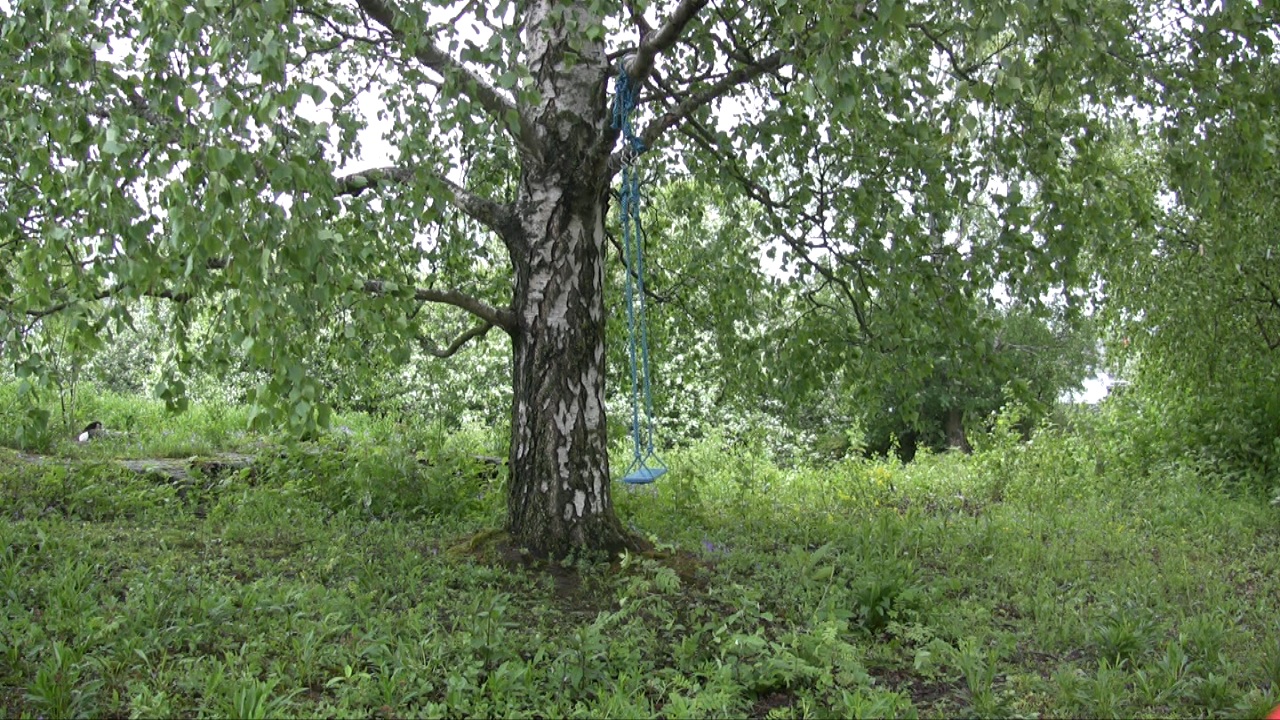
My paper for the working group was called “Performing with Plants – Challenges to Traditional Hierarchies?” and did not deal with this remake of the Year of the Horse at all. Rather, I focused on my work from last year, the year of the snake, which was all about swinging. And the assemblage formed by a plank and some rope attached to a tree called a swing, is of course a good example of how we normally take for granted the plants that support our activities. In a workshop organised together with Stefanie Bauerochse and Juan Manuel Aldape Munoz we invited people to swing from an old oak (me), to climb that oak and read some lines of Shakespeare (Stefanie) and walk into the art centre and watch a small performance with one of the volunteers (Juan). The book of abstracts, including these ones, can be found online here.
The huge oak I attached the swing to in Warwick (see video clip) resembled the tall redwood tree the swing was attached to at the PSi conference on Stanford University campus last year 2013 (see video clip). It was very different from the birch I tied the swing to at the opening of the Water Images exhibition here on this island this spring, and at the full moon party again last Saturday, 9 August. Or from the ash tree next to gallery Augusta on Suomenlinna during the t0NiGHt performance art event in May and again on 25 July. The mechanism was the same, though. I invited people to swing, video recorded them swinging, and then cut out the change beteeen peple so the movement of the swing continues uninterrupted, although the person swinging changes.
In my experiments here in Finland, which have been performances in the context of contemporary art rather than conference presentations, I have added another layer, by projecting the video back onto the same place and trying to swing together with the image as a performance of sorts. (see a very dark video clip of the beginning of the performance at t0NiGHt). The second experiment here on this island, Swinging in Moonlight, worked a little better, as you can see from this short video clip. An older birch is actually an ideal projection screen, with its white bark.
Att gunga med projektioner
Denna sommar, efter utställningen med Ormens år i Gungan på Muu galleriet i maj, har jag gjort några experiment med samma gunga på Sveaborg och på Stora Räntan. De har byggt på idén att bjuda publiken att gunga, banda in det på video, projicera en editerad version av denna video senare på samma plats och försöka själv gunga i takt med de som gungar på bilden. Tanken att kombinera en projicerad bild av en handling och en live version av samma handling är inte ny, jag har försökt med något liknande tidigare, men att projicera en tidigare inspelad bild på samma ställe har jag inte gjort förut. En beskrivning av Lorie Novaks arbeten i en text av Marianne Hirsch i antologin Interfaces, redigerad av Sidonie Smith och Julia Watson (2002) var en inspiration för dessa experiment. Hon projicerade bilder från sitt familjealbum, sin mors ansikte ifall jag minns rätt, på buskar om natten. Det lät spännande, så jag bestämde mig för att försöka projicera något på vegetation.
Det första experimentet inleddes under performance natten t0NiGHt på Sveaborg natten mellan den 23 och 24 maj. Då hängde jag min gunga i ett träd nära Galleri Augusta och bjöd frivilliga från publiken att gunga strax innan soluppgången. Senare editerade jag en video genom att kombinera all bilder av de gungande och klippa bort bytena dem emellan. Dessutom zoomade jag in bilden lite med hjälp av en effekt, för den ursprungliga bilden var tagen med kameran på ett onödigt långt avstånd från gungan, på grund av elsladdens längd. Denna “deltagande” performance skedde utanför det officiella programmet, men det oaktat tog Antti Ahonen några bra bilder som finns på evenemangets hemsida, här.
Den andra delen, som ägde rum den 25 juli var annonserad på förhand men är illa dokumenterad. I denna egentliga performance hängde jag gungan på samma plats och projicerade den editerade videon på det mörka hustaket, från en liten annan vinkel. Dessutom riggade jag min kamera på stativ för att dokumentera min performance, men av någon anledning spelade den in bara en minut från början, och sedan ingenting. Så vad gjorde jag då under föreställningen? Jag satte mig i gungan och försökte följa med rytmen hos de som gungade i bilden. Till en början bytte jag riktning och kopierade även på andra sätt de gungande, men efter några varv insåg jag, att det var viktigare att hålla rytmen. De mest våghalsiga bland dem som gungade vågade jag hur som helst inte efterapa. Allt som allt gungade jag i en och en halv timme, och det följande programnumret inleddes som överenskommet nere på gården medan jag ännu fortsatte. Efteråt var de några som kommenterade att bilden var fin, absurd och overklig, med en skugga som egentligen inte var en skugga. Jag antar att det blev ett slags palimpsest eller en bild med flera lager, som minnet. Den korta snutten från början, väldigt mörk, finns att se här.


Det andra experimentet inledde jag nästan samtidigt, under vernissagen för sommarutställningen Vattenbilder på Stora Räntan den 29 Maj. Den här gången hade jag möjlighet att välja ett bättre träd, en gammal björk mitt på gården, och jag presenterade projektet som en upplevelse att pröva på. Nu var jag också klokare såtillvida att jag bad de gungande skriva sina namn i en lista så att jag skulle kunna nämna deras namn på videon. Denna video editerade jag enligt samma princip, men nu behövde jag inte zooma in bilden. Ett tillfälle att projicera videon på björken fick jag i samband med månskensfesten den 9 augusti. Programmet finns här, tyvärr endast på finska. Först tänkte jag visa bara projiceringen, som jag kallade “keinutellen kuutamolla” (gungande i månsken), men inspirerades att göra en oannonserad performance med gungan och projiceringen, för kamera. Och den här gången fick jag något på bild också.
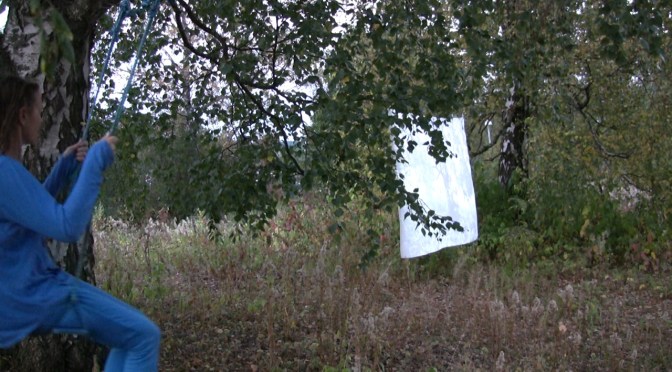
Tanken var att låta projektionen rulla från klockan åtta till midnatt, men åttatiden var det ju ännu ljust, så jag hittade på en nödlösning: ett gammalt vitt lakan, som jag använt som bordduk, på byksträcket mellan björkarna tjänstgjorde som filmduk. Det såg ganska fint ut när bilden så småningom började framträda i skymningen. Och gungans rörelse i bilden fungerade bra med den riktiga gungans rörelse i björken intill. Det var svårt att få båda med i samma bild, kamerans bildvinkel är mindre än ögats, ifall man inte använder vidvinkel objektiv. Dessutom varierar ljuskänsligheten på ett helt annat sätt. Ögat kan se både gungan och den skira projektionen, men videokameran kan urskilja bara någondera i taget.
När det väl var mörkt riktade jag, som planerat, projektorn mot den andra björken, vars löv sträckte sig ända ner till marken, men insåg snabbt att det var intressantare att projicera bilden mot samma björk som syntes i bilden. Björkens vita stam var tillräckligt tjock för att man kunde urskilja de gungande, och rörelsen syntes också tydligt i det belysta lövverket. Det såg ganska magiskt ut, åtminstone för blotta ögat, och nu kunde nog videokameran också urskilja något. Tyvärr bandade jag inte in hela videon från början till slut, utan bara ett fragment med lakanet och ett annat fragment med projektionen på björkstammen och med mig i gungan. En kort snutt finns att se här.


På det stora hela taget var jag rätt nöjd med det här senare experimentet och skulle gärna pröva på några fler varianter vid rätt tillfälle och rätt plats. Det där med att projicera en bild tagen på en plats på samma ställe är värt att experimentera vidare med. Gungandet är i och för sig en lämplig handling, för gungans rytm är rätt urskiljbar och kännspak även då projektionen är vag.
Returning to the Rock in July
Revisiting the same rock on Harakka Island in Helsinki, which I used to visit weekly in 2002 and which I now visit once a month as a kind of re-enactment of that previous year of the horse, feels like a relaxed return home after a trip to Shanghai in China. During the conference Performance Studies International 20 at the Shanghai Theatre Academy I actually showed a quickly edited version of the first part of these re-visits together with the original work in a small performance-presentation called “Revisiting the Year of the Horse”. Besides the original video Year of the Horse (12 min) from 2003 I also showed the work Sitting on a Rock (Rock with Text) (6 min.) which I made the following spring at Easter time in the same place. Moreover, I presented a work performed recently in Koivumäki after midsummer Sitting on a Rock in Rain, which I have described in the Finnish version of this blog and which I edited specifically to be presented in Shanghai. The occasion was an event organised by the artistic research working group Porous Studio Avant-Gardening.
Sitting on the same rock again, knowing that the second half of the year is still in front of me, feels both strange and familiar at the same time, like engaging with the remains of some ancient practice that does not really belong to me or my concerns at the moment any more. On the other hand I have not invented any significantly different approaches to performing landscape, not yet. In Shanghai not only the landscape and the environment are different, the temperature, humidity and consistency of the air is perhaps the most striking difference. The whitish fog in the hot and humid monsoon-time city is very different from the cool breeze on this semi-sunny afternoon here by the sea. In general a certain amount of warm humidity feels nice to breathe and soothes your skin. When it is combined with heavy pollution, the effect is not so nice, though. In Shanghai they seem to understand that oxygen must be produced, since they have planted lots of trees everywhere. And for the first time I really sensed how my body automatically started to navigate closer to trees and bushes in order to find more air to breathe.
In fact I did not sit on a rock during my performance in Shanghai, nor did I try to find a rock to sit on in the nearby parks or on campus. Although I carried my video camera with me, and unlike the sessions of the Porous Studio at previous conferences, I did not document anything on video or create any new work. I took a lot of snapshots with my phone, of course, but that was part of my duties as a tourist. Some of the rocks in the famous Yuan Gardens, which I visited already on the first day, would well be worth sitting on, although the classical Chinese garden is packed with people most of the time. While visiting a huge new recreational park in Chanzhou, a nearby city where we were taken for a “retreat” after the conference, I realised that the idea of combining natural and artificial elements and creating mixtures of nature-culture has been part of the Chinese civilisation from very early on. It is only the enormous scale that makes it scary.
For the presentation I tried to write a new version of the text “Sitting on a Rock”, without much success. I am not happy with the version I presented, so I will not reproduce it here, but only the informative text I began my presentation with:
The popularity of various forms of re-makes, reconstructions, re-enactments etc. has been discussed in recent years, for instance in the anthology Perform, Repeat, Record Live Art in History, by Amelia Jones and Adrian Heathfield (2012). And the fascination with all these repetitions (with variations) of classical performance art pieces could certainly be discussed in terms of the avant-garde (one of the themes of the conference) as a historical phenomenon, the radical gestures of which we can only repeat and rehearse with a historical interest for want of any real innovation or critical force in the current situation today. But what about revisiting your own work? Is that not the ultimate evidence of total stagnation, even stultification of what might have remained of a critical impulse?
In the year 2002 I decided to document changes in the landscape by visiting the same place on Harakka Island in Helsinki approximately once a week for an entire year. It was a development of a work called Wind Rail, where I visited the same place once or twice a day for two weeks to show the changes caused by changes in the weather. In that work I had placed myself in two different positions in the image space, first at the side in the foreground, like the marginal shepherd figure in classic landscapes, who is supposed to guide the viewer’s gaze into the landscape, and then further in the image more centrally, as a smaller figure embedded in the landscape. In both cases the human figure dominates the image. This dichotomy I wanted to exaggerate further and thus placed myself in front of the camera first in such a way that my shoulder covered half of the view, literally preventing the viewer from seeing the landscape. And secondly, as you will see soon in part two, I placed myself deeper in the landscape as a tiny figure sitting on a rock. My idea was to create a two-channel installation with part one, the shoulder, on the left, and part two, the figure on the rock to the right. Due to automatic light balance the colour and brightness of the images did not combine well; they change between the first part with the scarf covering half of the image and the second part with the view of the landscape and me sitting on the rock to such an extent, that presenting them next to each other as a two-channel installation was difficult. So the work turned into a single channel video, in two parts, one after the other.
To call the work Year of the Horse was almost a coincidence. While documenting a day and a night on the same rock the following spring, I realized it was the year of the goat. The size of the rock somehow worked with the size of a goat, and I liked the idea of years having names. Only much later did I learn more about the Chinese calendar and its twelve animals, and decided to try to document a full twelve-year cycle. Although I had started it in the middle, in the south, as it were, in the year of the horse, rather than in the year of the rat, in the north, as is traditionally done. I completed the cycle of years in the year of the snake in 2013 (actually January 2014, since the Chinese new year falls on the first new moon after the winter solstice). To accentuate the idea of cyclic return I decided to revisit the same site this year, in 2014, since we are living in the year of the horse again. But this time only once a month, to form a calendar of sorts.
Now, in the year of the horse 2014, I sit once a month on the same rock, with the same scarf, but with a new camera (HD) and new image proportions (16:9 instead of 4:3). The year is obviously not finished yet, so what you see is February, March, April, May and June, only. What you see is the “remake”, revisiting the same site. The small windmill is the only visible difference in the environment. I seem to repeat the original technical problems, too, however, because I still use only automatic camera functions. At least time is speeded up in this monthly version…
 Performing Landscape
.jpg)