
A text I happened to read, “The Art of Environmental personhood and the possibility of environmental statehood” by Devon Ward, published in Artnodes in 2023 contains an interesting analysis of two approaches to art. According to the abstract the text “examines the impact that the concept of environmental personhood has had on art and culture, and suggests that projects such as The Embassy of the North Sea hint at the possibility of environmental statehood” (Ward 2023, 2), which would potentially “provide greater protections for natural entities that span multiple countries” and theoretically “also provide greater representation in supra-governmental assemblies such as the UN General Assembly.” (ibid)
What caught my interest was a section called “A framework for the art of environmental personhood: the agency-personhood continuum (APC)”, where the author proposes “two typologies for artworks that amplify agency: agentials and performances of personhood.” (Ward 2023, 4) According to him “Agentials are works that amplify the ac¬tivity of a localised subject – an organism, object, or process – into our range of our sense perception. However, the agential subject does not have enough complexity to rise to the level of personhood.” (ibid) He uses as an example a project that amplifies microbic activities and translates them into sound audible for humans, thereby highlighting the activity and agency of the microbes. At the other end of the scale “performances of personhood are projects that amplify the agency of complex actor networks such as a river, swamp, or forest.” (ibid) As an example, he uses a durational video of a walk along a trail in a swampland speeded up to give a glimpse of the larger ecosystem. He emphasizes that “the APC is a sliding continuum in which complexity builds from left to right, from agential to performances of personhood.” (ibid)
Ward then presents two case-studies as examples of the latter strategy, Terra0 and The Embassy of the North Sea, and notes “three common patterns… in addition to the amplification of agency.” (Ward 2023, 5) First they “often rely on ephemeral performative acts created by humans or nonhumans… preserved using documentation strategies like photography, time-based media, and the presentation of artifacts.” (ibid) Second, audio-video representations …rely on time compression or expansion” which “translates the nonhuman timescale into the human umwelt” (Ibid.) And third, “tropes of metonymy are used: one part of an ecosystem stands in for the whole environmental entity.” (ibid). He concludes by emphasizing “the agency-personhood continuum (APC) as a fluid framework to or¬ganize and understand different creative practices, ranging from art¬works that amplify the agency of nonhuman actants to performances that embody notions of environmental personhood and environmental statehood.” (ward 2023, 9)
Terra0, “an artwork that proposes using blockchain technology and smart contracts to create an automated steward for a forest” (Ward 2023, 5) is based on “a thought experiment that investigated how environmental personhood might be achieved through market-based solutions.” (Ward 2023, 6) The Embassy of the North Sea, “a Dutch organization… founded by an interdisciplinary collective” with “the idea that the North Sea ‘owns itself’ and requires greater social and political representation”, basically “acts as an intermediary between the North Sea and the public.” (Ward 2023, 6) Ward focuses on some of its projects A Voice for the Eel and F/EEL (Ward 2023, 7-8). Overall, the examples he analyses rely on the idea of representation in both senses of the word, as audio-visual representation but especially political representation and the challenges arise from the extensive size and complexity of the represented entities. His main proposal concerns environmental statehood as a possible new stage.
My own interests fall outside these examples, but the scale seems nevertheless very useful, especially if we don’t think only in terms of size and complexity. If agentials are works that amplify the ac¬tivity of an entity into our range of our sense perception” the lack of personhood does not have to be the result of the lack of complexity in the agential subject, but rather in our attitude and approach. We “give” them agency rather than subjectivity or personhood by showing their activity. And performances of personhood need not be limited to projects that amplify the agency of complex actor networks but could include all kinds of works that either “subjectify” non-human entities or consider them as legal persons, or even anthropomorphise them in some manner. This latter approach I find relevant for my own work in writing to trees are talking to them, thereby emphasizing their personhood, which is so clearly distinguished from the mainstream of plant performances, which usually function like ‘agentials’.
Ward, Devon. 2023. “The art of environmental personhood and the possibility of environmental statehood”. In: Pau Alsina & Andrés Burbano (coords.). “Possibles”. Artnodes, no. 32. UOC. https://doi.org/10.7238/artnodes.v0i32.411208
All posts by Annette Arlander
Re-thinking methods
By coincidence I listened to Henrika Ylirisku, university lecturer in design at Aalto University, recount the research process for her doctoral dissertation Reorienting Environmental Art Education (2021). It was an interesting and visual presentation of her use of theoretical reading and orienteering practices to thoroughly rethink her approach from a traditional phenomenological humanistic ground to a relational, posthumanist one. She mentioned one text that had been influential during her process and had given it as reading material for the students; naturally I was curious and wanted to check it out. “On the Need for Methods Beyond Proceduralism: Speculative Middles, (In)Tensions, and Response-Ability in Research” by Stephanie Springgay and Sarah E. Truman. Published in Qualitative Inquiry in 2017 was easy to find and I read it in the evening.
Not that interested in the discussions within art education and not at all knowledgeable about the debates concerning qualitative methodologies in social sciences I found the text slightly tiresome, with the constant referencing and strong emphasis on reading, that is, with the authors showing how well they know what everybody else has argued before daring to share any of their own experiences. Some of the points seemed reasonable and familiar, like the “insistence that methods are generated both as a means to produce, create, and materialize knowledge and practices of dispersal, collective sharing, and activation of knowledge at the same time.” (Springay and Truman 2017, 9), which leads them to suggest the creation of research events rather than gathering data to be analysed. This can be useful in many types of community art and educational contexts and for contemporary forms of performing arts that try move beyond showbusiness. In my own work participatory events or performances, which could be understood as producing knowledge and disseminating it at the same time, are rare. Usually I “generate knowledge” or make art on my own, and what I then show to others, even if “traces from the process” or variations rather than finalised artworks, is nevertheless something else than what happened “in the field”.
The following section (from the middle) of the article could serve as a kind of summary:
Regardless of what methods are incorporated, they (a) cannot be predetermined and known in advance of the event of research; (b) should not be procedural, but rather emerge and proliferate from within the speculative middle, as propositions, minor gestures, and in movement; (c) should not be activities used for gathering or collecting data. Instead methods must agitate, problematize, and generate new modes of thinking-making-doing; and (d) methods require (in)tensions, which trouble and rouse ethical and political matterings. (Springay and Truman 2017, 9)
As an artist my relationship to methods is somewhat different, even though I feel that methods are the core of what I can try to develop and contribute to other researchers, besides the artworks themselves. Insisting on ‘how’ questions easily lead to methods as results or outcomes. I have often repeated the idea that artists already have their methods, they have their practices, and should develop or articulate those practices into research methods. This means, however, that the methods dictate what kind of questions can be asked or what kind of problems can be dealt with using those methods. If I take Springgay’s and Truman’s proposal seriously, I should not only rely on my old methods and practices, my accustomed and familiar ways of working, but try to develop new methods, experiment with new ways of working, or “thinking-making-doing” and clarify the “(in)tensions.”
References
Henrika Ylirisku, 2021. Reorienting Environmental Art Education. Aalto University Department of Art https://aaltodoc.aalto.fi/items/51f412c0-45be-42cc-b5d3-293918ae9f65
Stephanie Springgay, Stephanie and Sarah E. Truman. 2017. On the Need for Methods Beyond Proceduralism: Speculative Middles, (In)Tensions, and Response-Ability in Research.
Qualitative Inquiry Vol. 24. Issue 3. https://doi.org/10.1177/1077800417704464
Research Notes
This will be a separate blog for research notes and reflections on texts that I have read.

Animal Years and QR codes
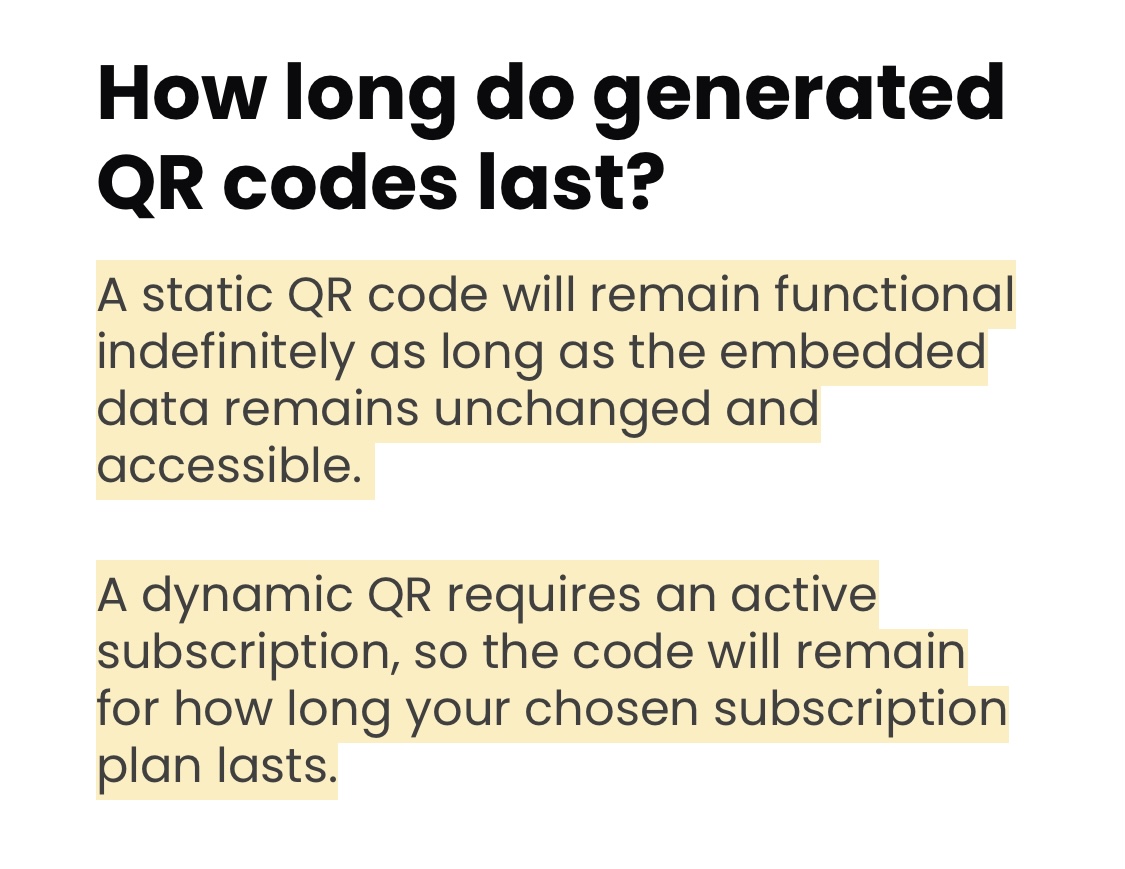
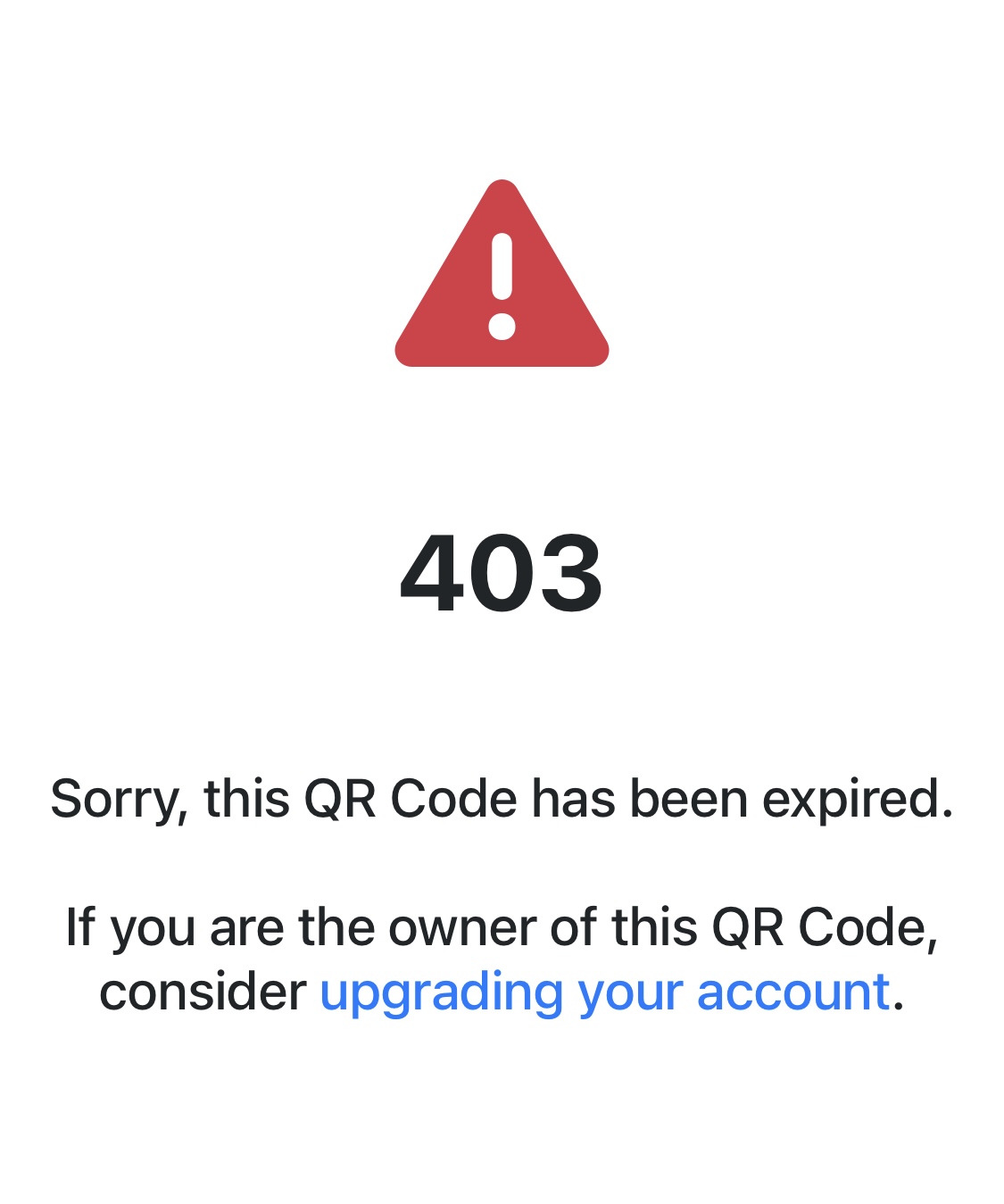
QR codes are supposed to be reliable and practical but I have encountered some problems, again. This time, to my surprise, the free QR code generator program that I used in 2023 has changed owner or policy and now want to lease the QR codes for quite a sum each month, which is not an option in this case. Probably they have changed the static codes to dynamic codes (see screenshot blow) but how you can do that in retrospect, I cannot understand. Anyway, before I can make new metal signs and place them on top of the old ones, probably only next spring, the videos are temporarily visible on this page
Screenshot
‘Djuråren’ och QR koderna
QR koder skall vara pålitliga och praktiska men jag har stött på problem med dem, igen. Den här gången var överraskningen den, att det fria programmet för att skapa QR koder som jag använde 2023 har bytt ägare eller verksamhetsprincip och vill nu hyra ut QR koderna för en ansenlig summa per månad, vilket inte är ett alternativ i det här fallet. De har antagligen förvandlat de statiska koderna till dynamiska koder (se bilden nedan) men jag förstår inte hur de kan göra det i efterskott. Hur som helst, innan jag kan göra nya metallplattor och fästa dem ovanpå de gamla, förmodligen först nästa vår, finns videorna tillfälligt att se på den här sidan
Screenshot
Eläinvuodet ja QR koodit
QR koodien pitäisi olla luotettavia ja käytännöllisiä mutta olen taas törmännyt ongelmiin niiden kanssa. Tällä kertaa yllätys oli se, että ilmainen QR koodeja tekevä ohjelma, jota käytin 2023 on vaihtanut omistajaa tai toimintaperiaatetta ja haluaa nyt vuokrata QR koodit huomattavalla summalla kuukaudessa, mikä ei onnistu tässä tapauksessa. Luultavasti he ovat vaihtaneet staattiset koodit dynaamisiksi koodeiksi (katso kuva alla) mutta en ymmärrä miten sen voi tehdä jälkikäteen. Oli miten oli, ennen kuin voin tehdä uudet metallikyltit ja kiinnittää ne vanhojen päälle, luultavasti vasta ensi keväänä, videot ovat tilapäisesti nähtävillä tällä sivulla
Screenshot

With a Pine
In the year 2023, as part of the project Pondering with Pines, I conversed repeatedly in English with a pine tree in Kaivopuisto Park about my current concerns. A series of video works of the conversations Pondering with a Pine in the Park 1–22 is shown in the Telegraph Gallery on Harakka island from 20 August to 1 September 2024, Tue-Sun noon to 5 pm. For more information, see https://ponderingwithpines.com and https://harakka.fi/annette-arlander-2/

Männyn kanssa
Vuonna 2023 keskustelin toistuvasti Kaivopuistossa kasvavan männyn kanssa englanniksi ajankohtaisista ajatuksistani, osana hanketta Miettii mäntyjen kanssa. Keskusteluista koottu sarja videoteoksia Pondering with a Pine in the Park 1–22 on esillä Harakan Lennätingalleriassa 20.8.-1.9.2024, ti-sun klo 12-17. Lisätietoja https://ponderingwithpines.com
ja https://harakka.fi/annette-arlander-2/
Med en fura
I samband med projektet Funderar med furor samtalade jag under år 2023 upprepade gånger på engelska med en fura i Brunnsparken om mina aktuella funderingar. En serie videoarbeten sammanställd av samtalen Pondering with a Pine in the Park 1–22 visas i Telegraf galleriet på ön Stora Räntan 20.8.-1.9.2024, Tis-sön, kl 12–17. För mer information https://ponderingwithpines.com och https://harakka.fi/annette-arlander-2/

Ett nytt liv med två katter
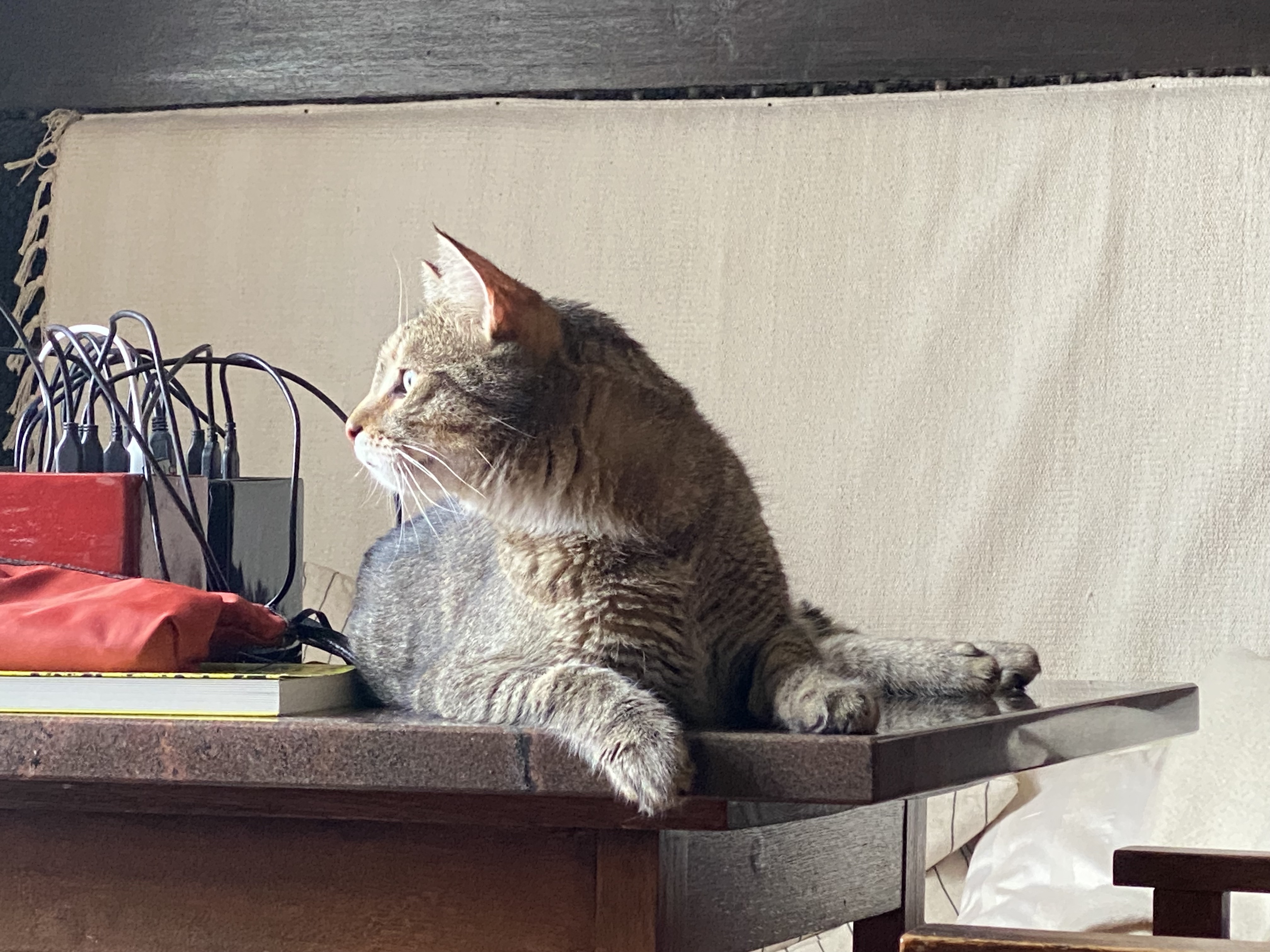
Två fullvuxna hankatter från Åbo, Pipo och Pompeo, lever nu hos mig och har redan förändrat mitt sätt att leva. Troligen kommer de i något skede också att förändra mitt sätt att göra konst. Just nu försöker jag lära mig hur jag bäst kan ta hand om dessa vidunderliga varelser:

Pipo
Pompeo
 Performing Landscape