

Nyt ne toimivat taas, QR koodit jotka vievät valikoimaan Eläinvuosien (Animal Years) videoita, jotka esitettiin ja kuvattiin Harakan saarella 2002-2014. Ne ovat samoilla paikoilla kuin ennenkin. Osa on helppo huomata, osa on hankalammin löydettävissä. Tässä lähikuvat kaikilta paikoilta, alkuperäisessä esitysjärjestyksessä:
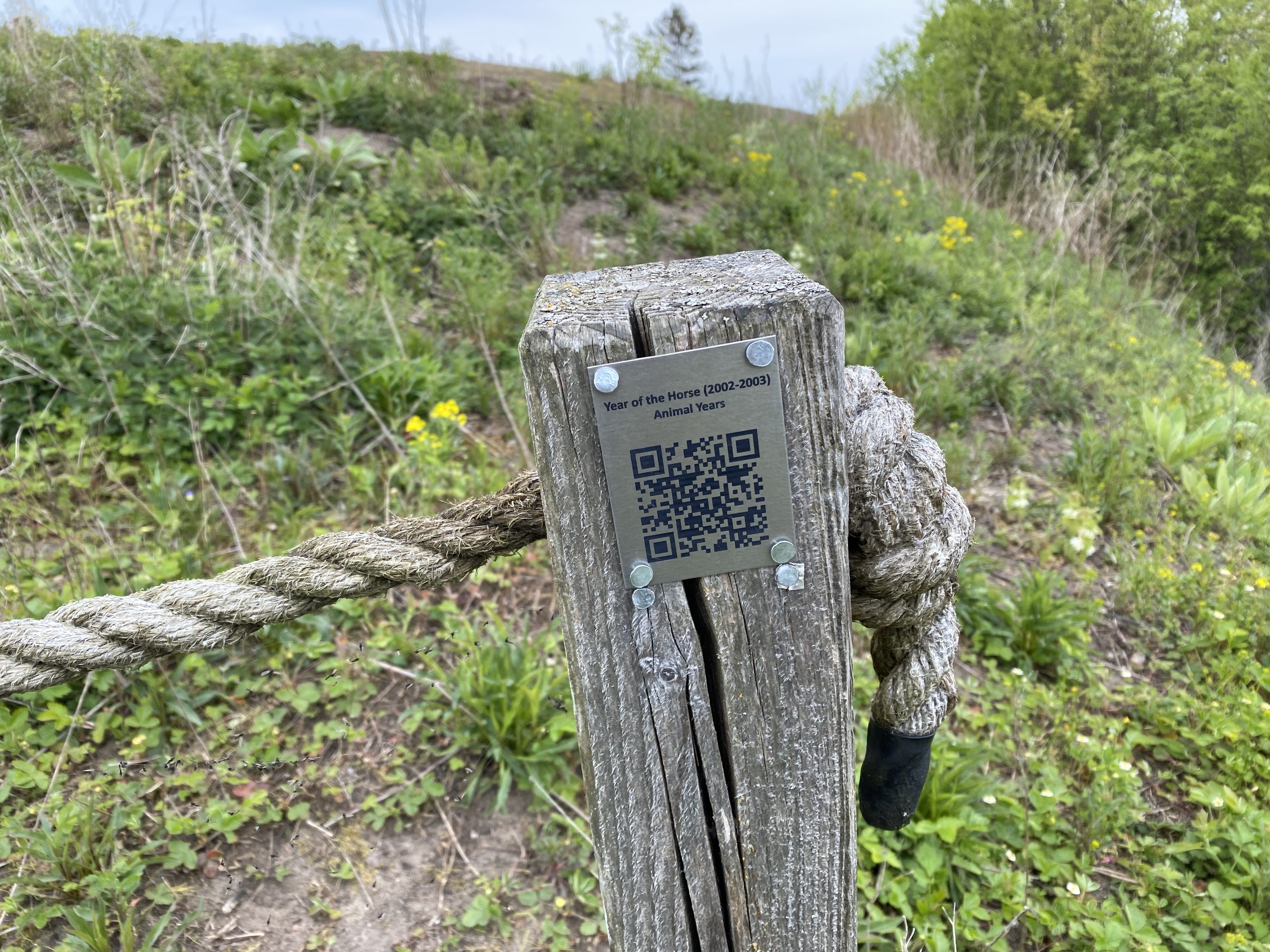
Year of the Horse 2002-2003
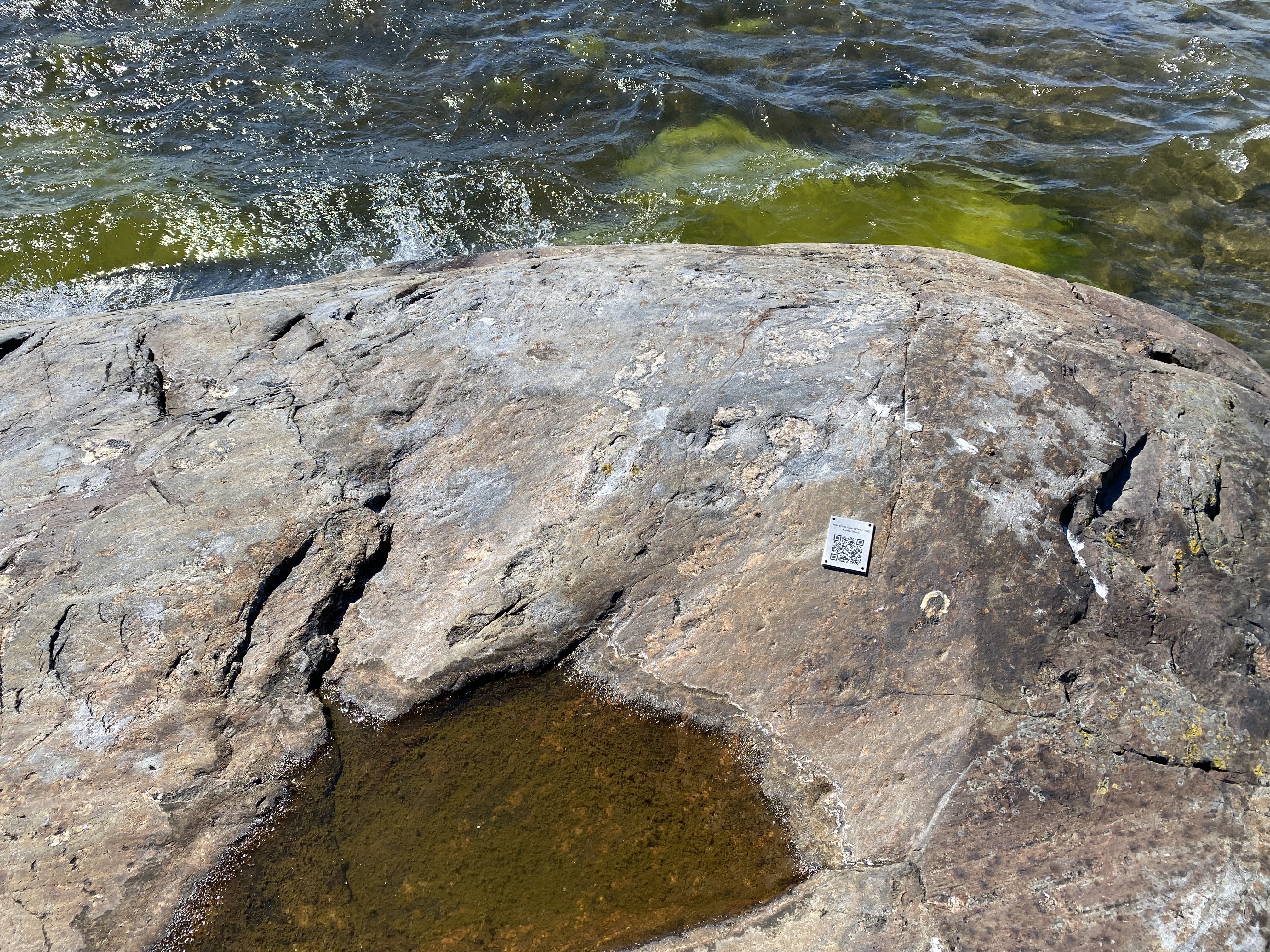
Year of the Goat 2003-2004

Year of the Monkey 2004-2005
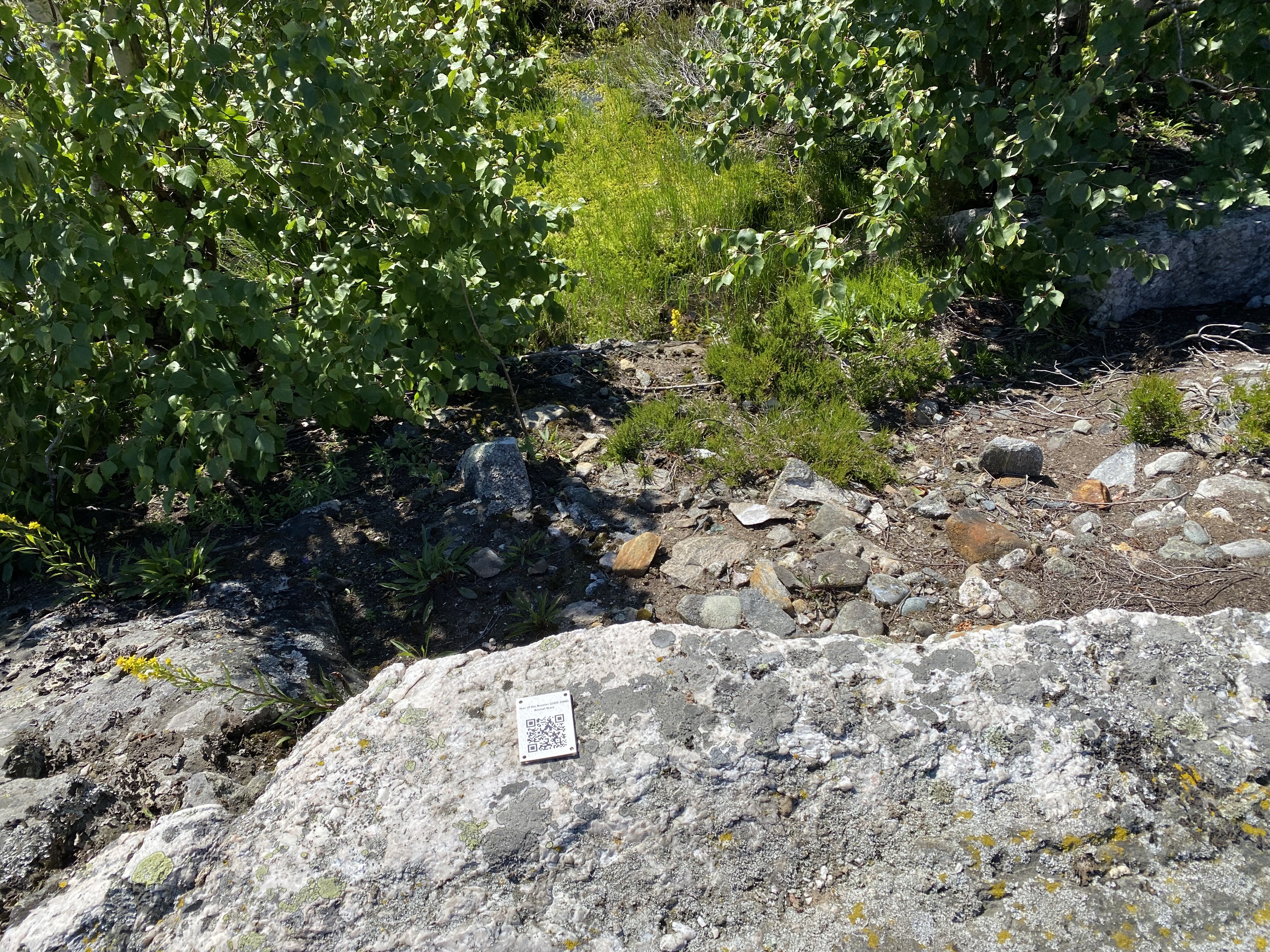
Year of the Rooster 2005-2006

Year of the Dog 2006-2007
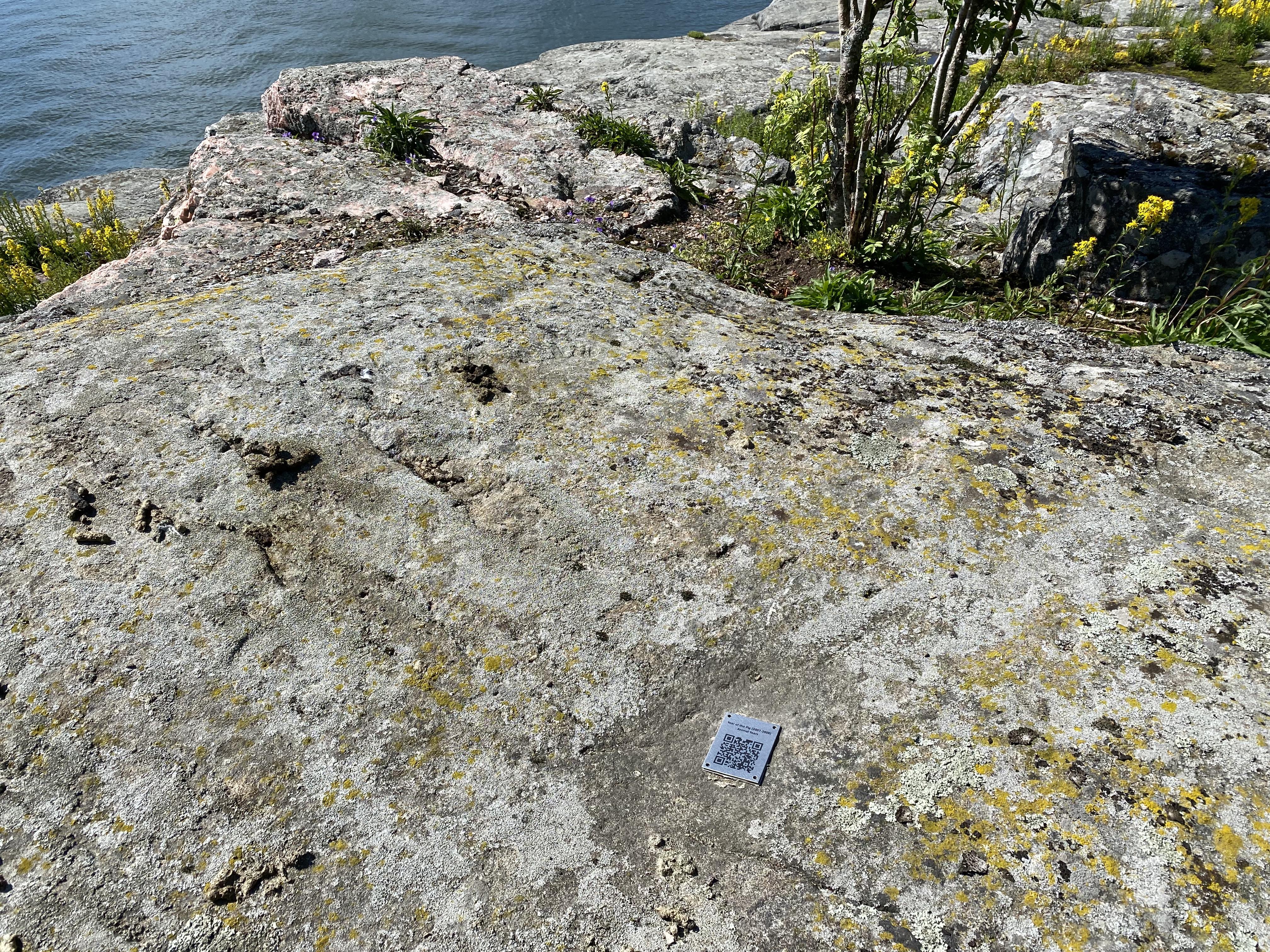
Year of the Pig 2007-2008
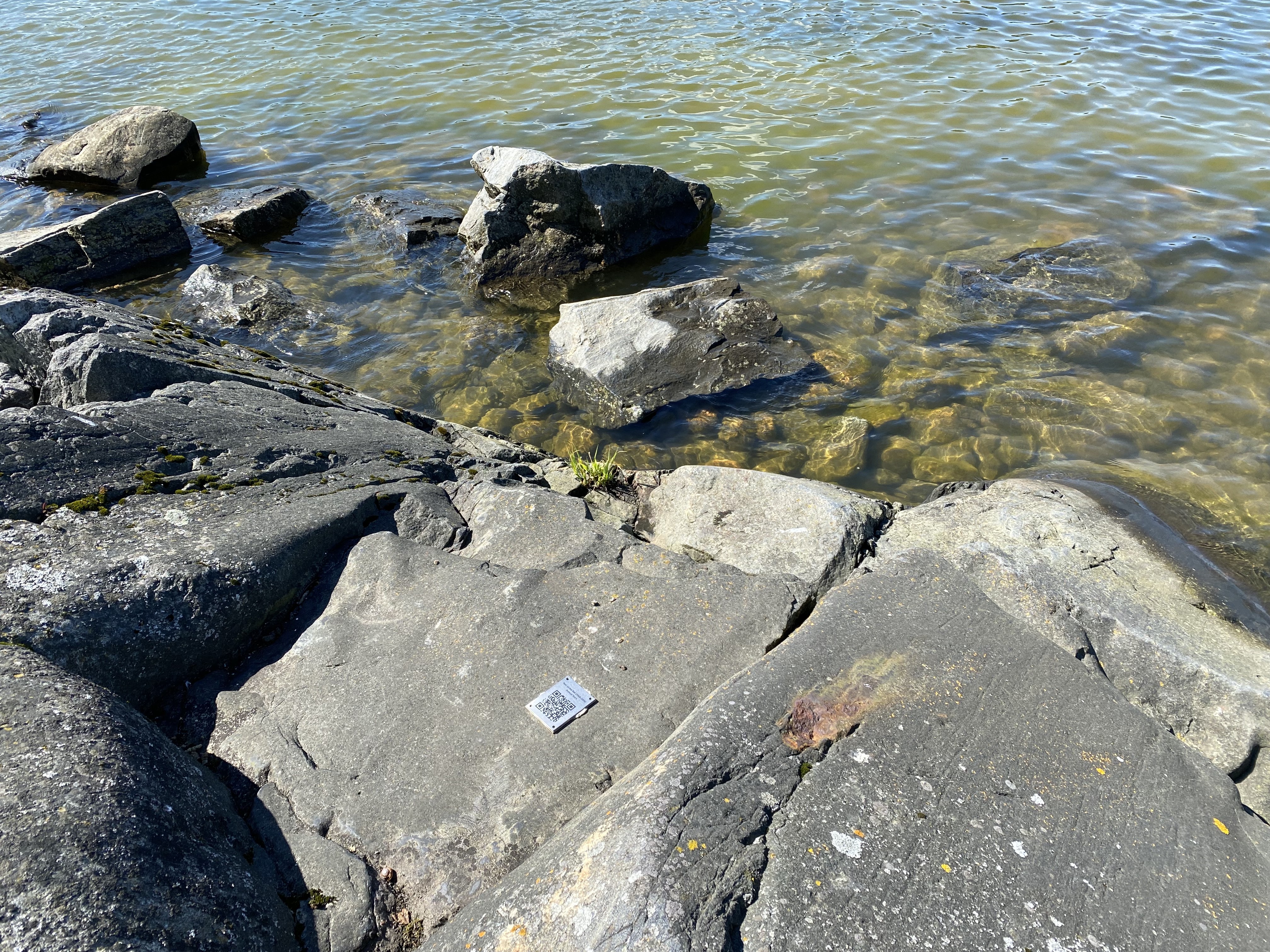
Year of the Rat 2008-2009
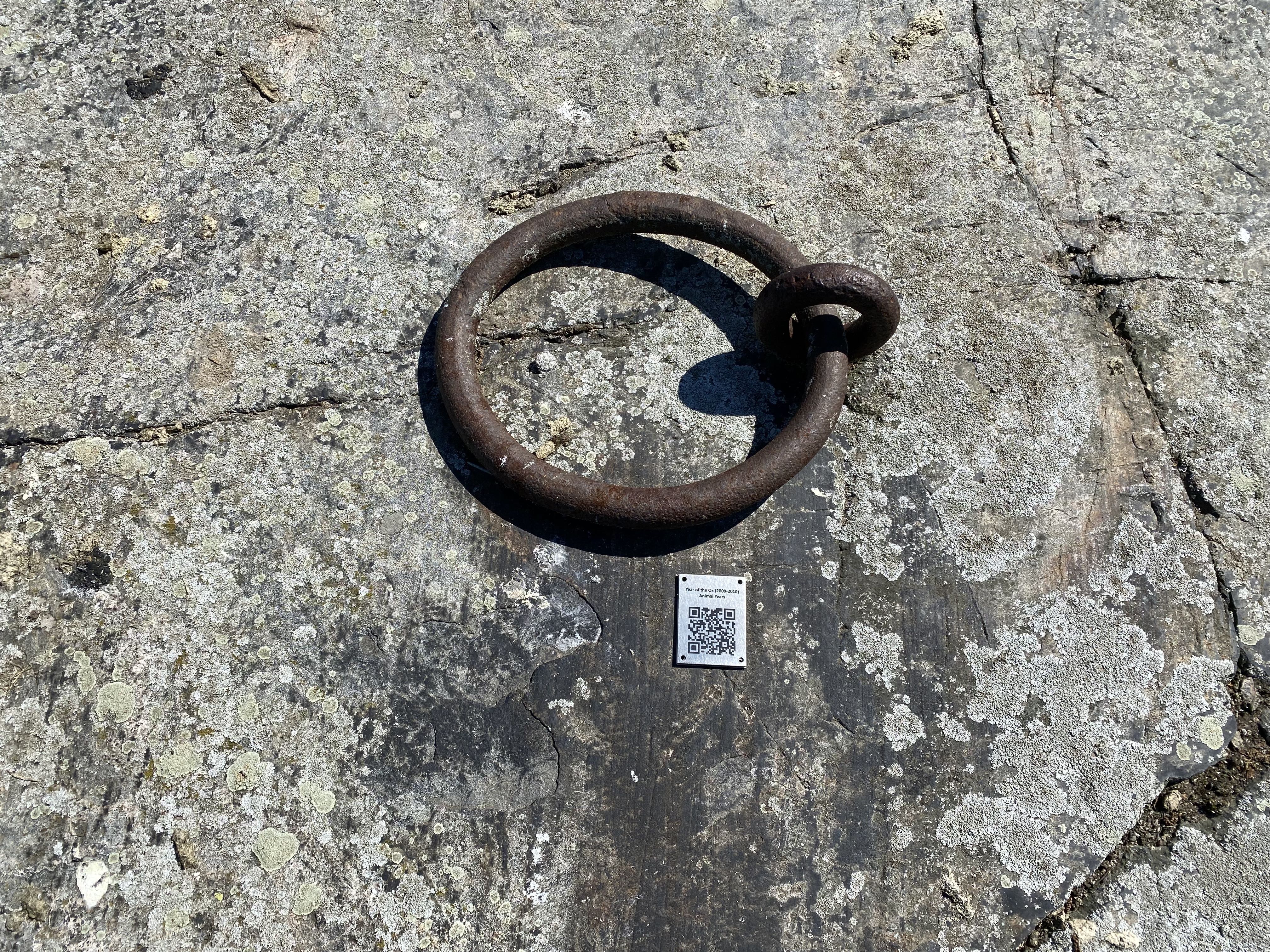
Year of the Ox 2009-2010

Year of the Tiger 2010-2011

Year of the Rabbit 2011-2012
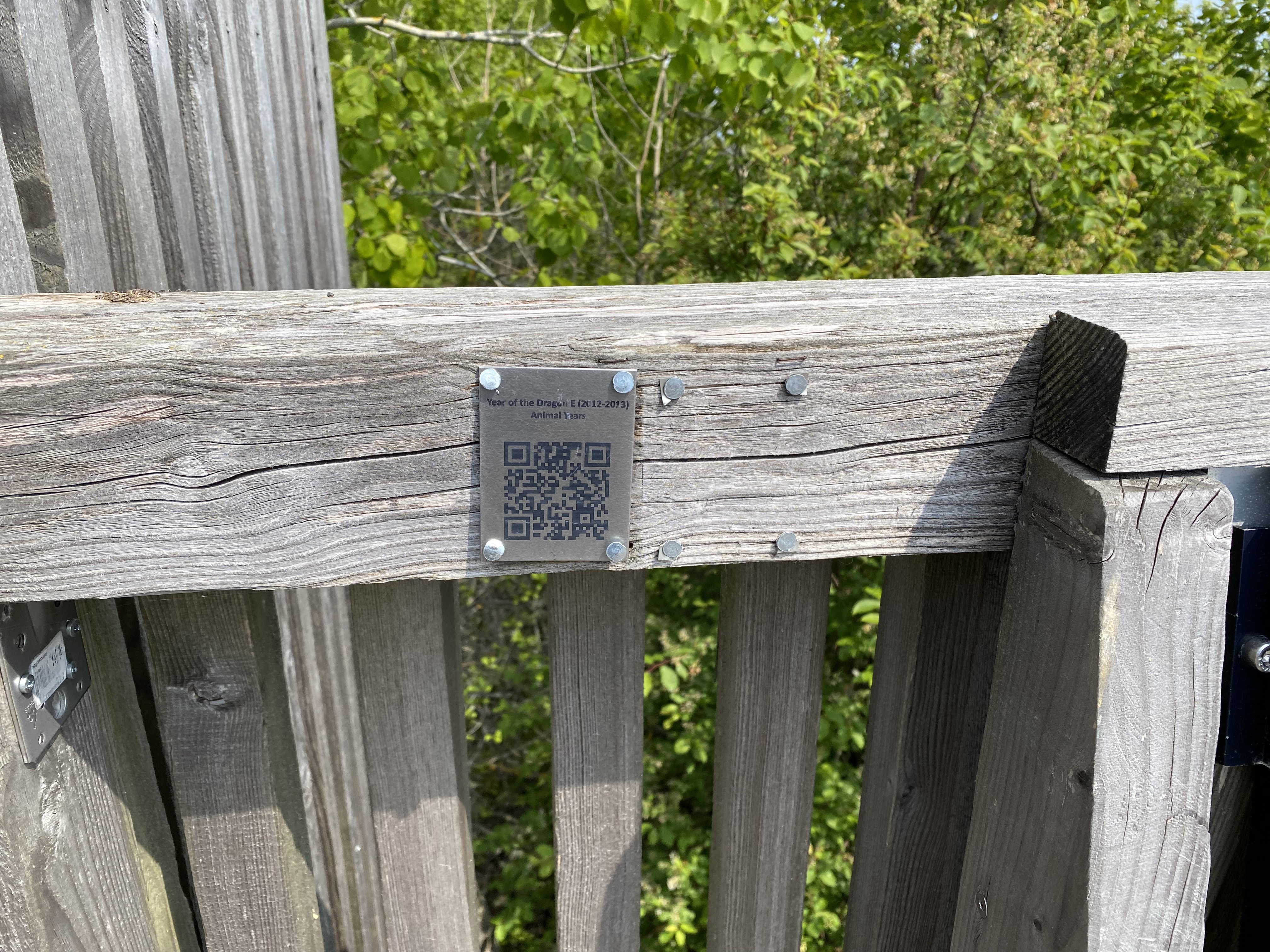
Year of the Dragon 2012-2013 (East)

Year of the Dragon 2012-2013 (South)
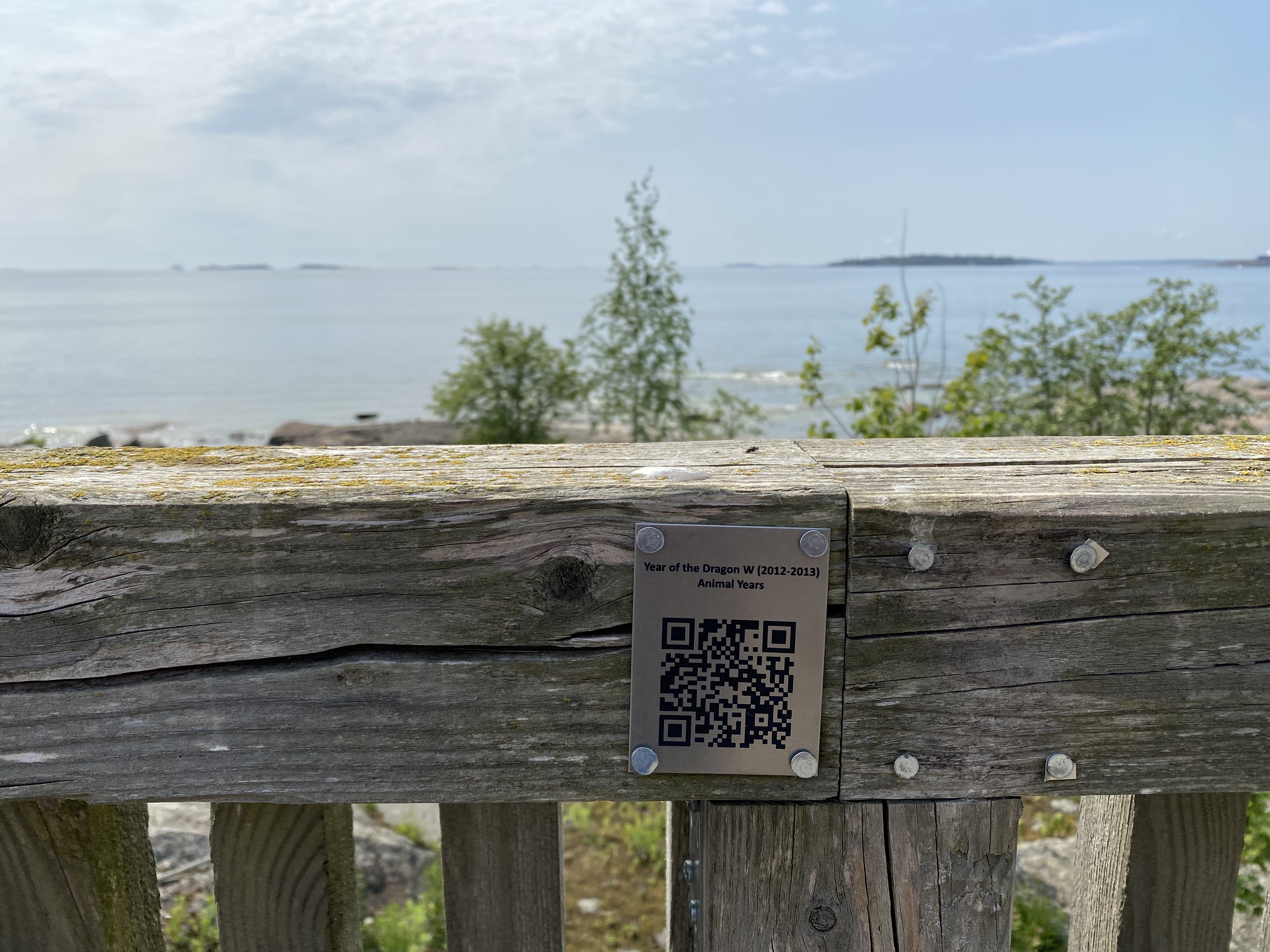
Year of the Dragon 2012-2013 (West)
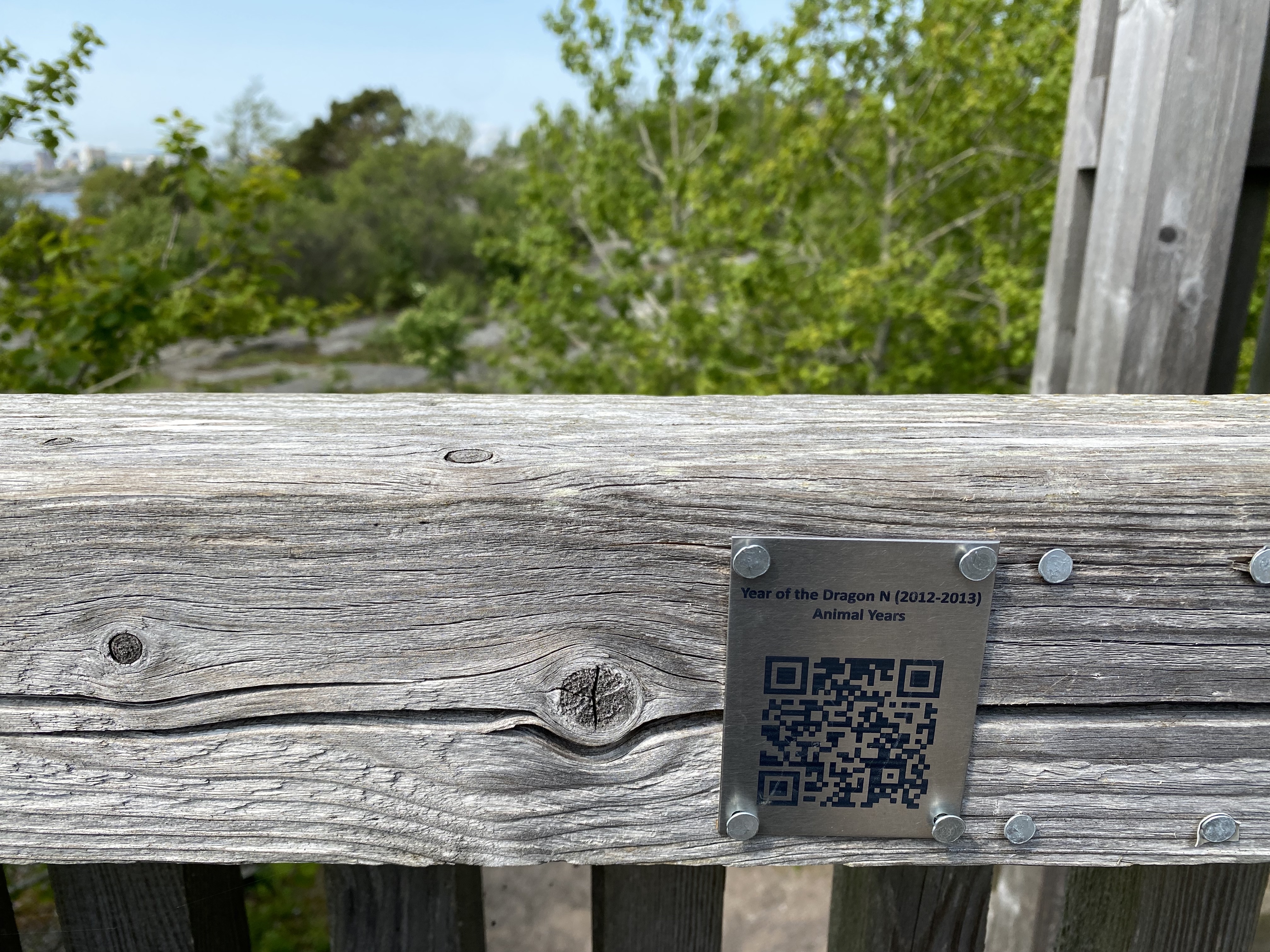
Year of the Dragon 2012-2013 (North)
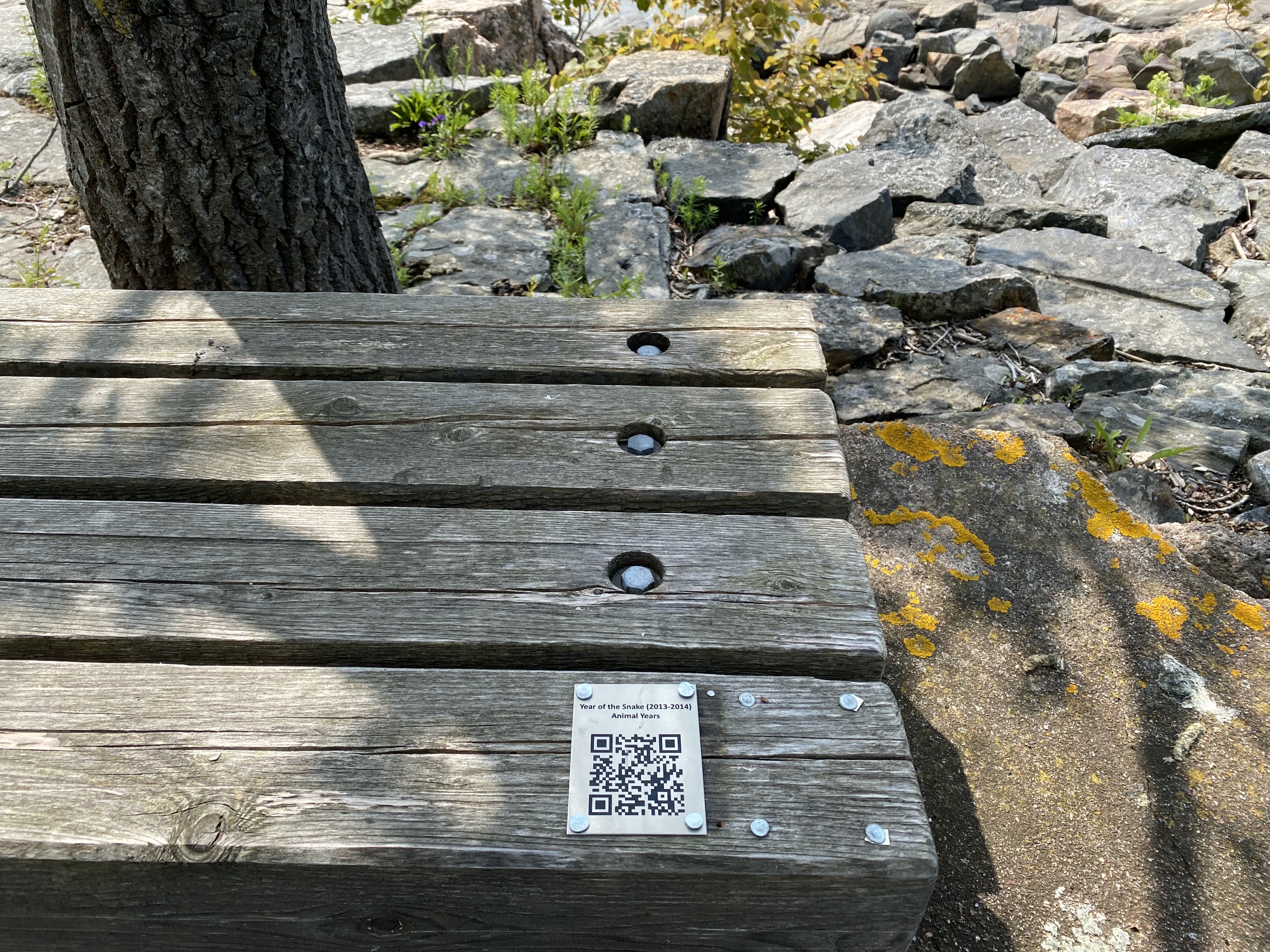
Year of the Snake 2013-2014
All posts by Annette Arlander
QR -koderna är åter på plats!
Nu fungerar de igen, QR koderna som leder till ett urval videon från Djuråren (Animal Years) som uppfördes och spelades in på Stora Räntan 2002-2014. De finns på samma ställen som förut. Vissa är enkla att upptäcka, andra är svårare att hitta. Här är närbilder på platserna, i den ordning de ursprungligen uppfördes:
Year of the Horse 2002-2003
Year of the Goat 2003-2004
Year of the Monkey 2004-2005
Year of the Rooster 2005-2006
Year of the Dog 2006-2007
Year of the Pig 2007-2008
Year of the Rat 2008-2009
Year of the Ox 2009-2010
Year of the Tiger 2010-2011
Year of the Rabbit 2011-2012
Year of the Dragon 2012-2013 (East)
Year of the Dragon 2012-2013 (South)
Year of the Dragon 2012-2013 (West)
Year of the Dragon 2012-2013 (North)
Year of the Snake 2013-2014
Film and Plant-Thinking
When working on a text for journal on film I remembered a text I read a few years ago linking film and vegetation through the dependence on light. And I found a scanned version of the text by Graig Uhlin in my files. The author is impressed by Michael Marder’s at the time fairly recent book on Plant-Thinking (2013) and uses his ideas to compare the ontology of film and plants. In the subchapter titled Photosynthesis he writes: “Both plants and film are defined by their receptivity to light” (Uhlin 2015, 203) and “Like the plant’s conversion of solar energy , film carries out a photosynthesis of light.” (Ibid) He further notes how “movement is integral to defining both film and vegetal life” (204) and despite their seeming motionlessness “plants exhibit movement not only through growth but also directed motion toward sunlight.” (Ibid) He argues that “The expressivity of plants, communicated by film, allows for a renewed relationship between humans an plants, one not based on the instrumentalization of vegetal life.” (Ibid). In the subchapter Filming without a head he compares film’s relationship to the specificities of vegetal being in detail, beginning with André Bazin and Gilles Deleuze, before ending his text with three examples Andrei Tarkovsky’s Reed, Chris Welsby’s Branch and John Smith’s Flower. Of these very different approaches to the vegetal, I guess Tarkovsky’s emphasis on “the time running through the shot, to its internal rhythm, which he called its ‘time-pressure'” (211). The idea that “Respect for the time-pressure of the shot … renders material reality expressive” (Ibid) comes closest to my heart, although Welsby’s technical experiments involving “the autonomy and particularity of plant being” and the “depiction of the world from the perspective of a tree branch” by “direct exposure to natural elements” (213) are fascinating and go much further conceptually. Uhlin summarises: “Vegetal filmmaking is not concerned with the thematic or symbolic use of plants in cinema” but aims instead at “the incorporation of the perspectives of plant-thinking as a structural mechanism in the production of images.” (215) Well, that is indeed a challenge.
Graig Uhlin “Plant-Thinking with Film: Reed, Branch, Flower,” in Vieira, Patricia, Gagliano, Monica & Ryan, John Charles (eds.) The Green Thread: Dialogues with the Vegetal World. Lexington Books, 2015, 201-217.
Place-thought & agency?
While preparing for the online meeting of the Artistic Research Working Group of PSi (Performance Studies international) on my way home from the meeting of the Performance as Research Working Group at the conference of IFTR (International Federation for Theatre Research) in Cologne, I came upon an interesting text. The author, Vanessa Watts, was mentioned by Denise Ackerl whom I am supposed to respond to. I had downloaded a text by her, and on the train from Cologne to Frankfurt I had finally a chance to read it. The text deals with the distribution of agency in the human and non-human world from an indigenous perspective, and provided an eye-opener for me, because I have not read much about indigenous thought, although I have encountered the creation story of Sky Woman. The idea of place-thought seemed important; plants and place are connected and through them we can learn about place, I thought.
In her article Watts goes much further and writes: “Place-Thought is the non-distinctive space where place and thought were never separated because they never could or can be separated. Place-Thought is based upon the premise that land is alive and thinking and that humans and non-humans derive agency through the extensions of these thoughts.” (Watts 2013, 21) She argues that “habitats and ecosystems are better understood as societies from an Indigenous point of view; meaning that they have ethical structures, inter-species treaties and agreements, and further their ability to interpret, understand and implement. Non-human beings are active members of society.” (Watts 2013, 23) She compares the Christian origin story with Eve, the apple and the serpent with the story of Sky Woman, the birds and the turtle and shows how they lead to very different relations to the non-human world. “In the latter, the relationship between animals and this female is regarded as sacred and ritualized over generations” and “becomes the foundation for future clan systems, ethics, governance, ceremonies, etc.” (Watts 2013, 25) By contrast, “In the former, the female becomes responsible for all the pain of childbirth and resentment for being cast out of paradise” resulting “in shame and excommunication from nature. Additionally, future dialogue and communication with animals becomes taboo and a source of witchcraft.” (ibid).
Watts also analyses western feminist attempts at rethinking agency for example by Donna Haraway, Stacy Alaimo and Vicki Kirby and notes that there is a hierarchy of agencies. “These levels of agency are a product of the epistemology-ontology paradigm” and “the idea of human ownership over non-human things, beings, etc.” (Watts 2013, 30) For example, “although the dirt/soil has been granted entrance into the human web of action, it is still relegated to a mere unwitting player in the game of human understandings.” (ibid) Watts explains that “if we think of agency as being tied to spirit, and spirit exists in all things, then all things possess agency.” Because spirit is contained in all parts of nature “we, as humans, know our actions are intrinsically and inseparably tied to land’s intentionality” and this is “quite a counter position from notions of diluted formulations of agency.” (ibid) She further analyses the problem of essentialism in combining the feminine with land in an interesting way. And she concludes with a call to indigenous scholars by asserting the “need to continue to resist the growing tendency to both be subsumed into de-essentialized epistemological spaces as well as fight against the dislocation of our thoughts from place.” (Watts 2013, 32-33)
As a non-indigenous woman thoroughly steeped in western epistemology and ontology I cannot claim that land is speaking to me and I find it hard to understand spirit literally. When talking to trees I am not addressing a tree spirit but a tree subject of a kind. Thinking of spirit as the breath and life of a being might be one way to avoid the split into matter and spirit that is so deeply ingrained and so difficult to resist. In any case I cannot simply try to appropriate indigenous thinking nor can I easily reclaim the folklore of my Finnish and Swedish ancestors. But I can note the need to study and learn from other forms of thinking including pre-colonial thought.
Watts, Vanessa. 2013.”Indigenous place-thought & agency amongst humans and non-humans (First Woman and Sky Woman go on a European world tour!)” in Decolonization: Indigeneity, Education & Society Vol. 2, No. 1, 2013, pp. 20-34.

More Pines – Lisää mäntyjä – Mera tallar
More Pines, video works of performances and conversations with pine trees in the Telegraph Gallery on Harakka Island 12-17 August 2025 noon to 5 pm. See also
Lisää mäntyjä, videoteoksia performansseista ja keskusteluista mäntyjen kanssa Lennätingalleriassa Harakan saarella 12-17.8.2025 klo 12-17. Katso myös
Mera tallar, videoarbeten om performance och samtal med tallar i Telegrafgalleriet på Stora Räntan 12-17.8.2025 kl 12-17. See också
Information in Finnish – lisätietoja – info på finska.
Works – Teokset – Verken:
For the Pine of the Year 2024
36 m 57 s, orig. 4k
With the Pines 1-12 2024
3 h 9 m 38 s, orig. 4k
Solarity?
A small booklet that I received at a seminar in Tallinn a few years ago, Solarities by After Oil Collective ended in my handbag because of its small size and I now finally read it. The many short texts bring forth different aspects of the turn from fossil fuels to solar energy and all the hopes for another kind of society that the transition includes. Solarity without solidarity does not change much. I picked up the fragments directly related to plants, of course, and obviously the focus and basis of vegetal life, and thereby life for the rest of us is the sun.In the chapter Solarity as solidarity the writers quote Natasha Myers and “the photosynthetic ones – those green beings we have come to know as cyanobacterial, algae and plants”, noting how “‘those sun worshippers and world conjurers’ reveal another mode of engaging with the sun – through nothing short of magic, they transform the world to a hime for the rest of us.” (p 27) They quote Robin Wall Kimmerer’s point that “plants tell their stories not by what they say, but by what they do”, and note that “plants are world creators in all senses and across scales. They weave and endless symphony from sunlight, water, and air, alchemically communing with one another and with insects, birds, and other animals that live with and among them.” (p 27)
In the chapter Decolonial and Feminist Solarities the writes “If solarities are to be just rather than unjust, they must be generated from below rather than from above; solar energy must be dispersed as the sun’s rays, refusing the kind of concentration that petrocapitalism has engendered.” (p 40) And they state the obvious: “Light and heat come freely from Earth. They are the basis for planetary life. /–/ Left to itself the sun models an economy based on abundance, on gifting, on interconnection, on multi species flourishing. This is an economy of cycles, diurnal and seasonal.It is a dynamic economy of constant circulation…” (p 40) The writers note that there can be scarcity, like in seasons without rain, and competition, as between light seeking saplings in the forest. “But at its core, the solar economy is one of a abundance and renewal, of plenty.” (p 40)
In the chapter on The Work of Solarity the writers emphasise that liberal political theory has no answer to scale. “Yet many of us hang on to the little gestures of agency that liberalism offers” (page 58) Yet they make clear that this is not enough. “Solarity in the age of global warming (if it is to carry forward the project of democracy) requires something different, something to meet scale with scale, something to level this uneven playing field /– solidarity must scale up.” (p 58-59) They insist that “Solarity means that we matter only by relation.” (p 59)
In the chapter Storytelling and Worldmaking, the writers turn to Donna Haraway and suggest that we look beyond work and labour towards games and play. (p 65) “If the promise of solarity is a promise of better relations between different humans and nonhumans, it must be accompanied by stories, arts, tools and crafts that celebrate and sustain collective flourishing.” (p 65) They further note that we must learn to listen, to admit that we will make mistakes. “We require stories that move away from solitary individual heroes to multi species stories that are grown over time, stories that are intertwined wit other beings and celebrate not individual feats but the the mutual creation of new ecosystems. To thrive collectively requires listening, learning and making collectively.” (p 66).
Touché! But, that is easier said than done, at least for people like me who are impatient and like to work on their own. It is not impossible, though…
After Oil Collective. Ayesha Vemuri and Darin Barney, editors. Solarities – Seeking Energy Justice. University of Minnesota Press, Minneapolis, London 2022.
Kudzu vine – friend or foe?
An interesting online lecture in the series Plant Lives – Critical Plant Humanities organised by Wits University in Johannesburg featured a talk by Yota Batsaki titled “The Plant at the End of the World: Invasive Species in the Anthropocene”. It was based on the paper we could read in advance “The Plant at the End of the World: Precious Okoyomon’s Invasive Art” in Critical Inquiry vol 50. The article is a real treasure in terms of references to classics related to plants. It is interesting in its focus on the changes in the relationship to a specific plant, the kudzu vine both geographically, over time and in a contemporary art installation. The relationship to kudzu in the cotton belt in USA and the changes from possible solution to pest is fascinating to read. And the issue of invasive species overall, how to define and understand them, combat them or live with them is fascinating. The use of the exuberant proliferation of a living plant to create an immersive installation is a great topic, too, although not contextualised as thoroughly as the history of the vine. The subtitles give an idea of the width of the discussion, where descriptions of the artworks of the Nigerian-American artist Precious Okoyomon are framing and alternating with a historical account of the plant in the cotton belt. After a lengthy introduction comes “Invading the Gallery: Earthseed (2020)”, then “A Cultural History of Kudzu in the American South” and finally “Beyond the Apocalypse: To See the Earth before the End of the World (2022)”. To include at least one quotation, I add here the last words of the article: “By giving a plant invasive free reign in the gallery, institutionalizing its growth where it doesn’t belong, Okoyomon instantiates a new aesthetic that takes shape around uncontrolled abundance, troubles notions of home and belonging, and generates new landscapes that may or may not be hospitable to human presence — imagining new potentialities and coexistences.” (Batsaki 2024, 609)
From the discussion after the talk I remember the usual question: what happened to the plants after the exhibition (they were burned), and also a reference to the idea of invasive species as the new wild, the solution to damaged soils and the beginning of new ecosystems slowly evolving. The two time perspectives, the deep time of evolution and the historical time of human culture coexist, but can be difficult to relate to. Even though the idea that life will continue evolving over deep time can be a consolation, it cannot remove the grief, guilt and shame for the destruction of lifeworlds and the loss of species that we have brought about and continue with at a growing speed.
Yota Batsaki (2024) The Plant at the End of the World:
Precious Okoyomon’s Invasive Art. Critical Inquiry, volume 50, number 4, Summer 2024. Published by The University of Chicago Press. https://doi.org/10.1086/730350 (p 585-609)
The Diminishing Darkness
Now when spring is approaching, or already here, with increasing light, it feels strange to mourn the diminishing of darkness. It is not the changes in light through the natural cycles of the seasons that is dimin fishing, but our ability to witness it fully due to manmade artificial illumination. In the Darkness Manifesto – Why the world needs the night, first published in Swedish as Mörkermanifestet (2020), Johan Eklöf describes the many ways that the diminishing darkness is detrimental to plants and animals and whole ecosystems. His main topic is bats, which of course are night creatures, but many insects, too, and the plants they pollinate are dependent on darkness. Especially the disappearance of the stars and the night sky in many places, for human eyes, stayed in my mind. And the need for some time of darkness or semidarkness for human eyes to get accustomed to seeing in the dark, which takes place with different receptors than the ones distinguishing colours in bright light. One can actually see quite a lot at night outdoors, in areas without streetlights, provided one does not use a torch, which blinds those other receptors. One has to get quite a distance outside the city, to get rid of all human lights that are reflected in the clouds. I remember walking on Örö Island in the dark and experiencing the feeling of total darkness around the bright light of a torch, in contrast to walking in twilight, letting the eyes adjust to the darkness slowly.
The book consists of short chapters and is written, and translated, in a reader-friendly way. The only chapter I have marked is called False summer, and deals with the problems plants face when illuminated, like illuminated trees in cities, which do not shed their leaves in autumn. Eklöf tells about the poet Robert Hunt (1807-87), with one foot in art and the other in science, who studied photography and “discovered that different parts of the light spectrum affected plants in different ways. The shorter wavelengths of sunlight, the blue and violet light, are usually the ones signalling to seeds to germinate, while redder light with longer wavelengths normally initiates the flowering phase.” (p 83) The ‘phytochrome’ pigments or proteins that control this process were discovered only in the twentieth century. (ibid). The context affects how they react, of course, and “plants react to both intensity and colour”. (ibid) LED lights are usually white or bluish, resembling morning sun, while older streetlights are more yellow like afternoon light. When specific plants do not bloom at their usual time because of the lights, they do not attract the usual insects, which do not provide food for the birds that usually feed on them and so on in a detrimental chain reaction. The book is full of concrete examples from various parts of the world, including the sea, but the main point is clearly to wake us up to protect darkness and to be careful with the light we so easily spread around also when unnecessary. Like pollution and smog can dim the sun, light pollution hides the starry sky and deprives us of the experience of the immensity of the universe.
Johan Eklöf: The Darkness Manifesto – Why the road needs the night Vintage. Penguin Random House 2023
Tree spaces as holding spaces
I encountered the text “‘A Holding Space’ – Emergence and Entanglement in Tree Spaces” by Victoria Hunter because I had my text in the same book. Participating in Routledge Companion to Site-Specific Performance edited by Victoria Hunter and Cathy Turner was an honour, although I am not so proud of my own contribution “Trees as experts in Site-specificity”. Other writings from Örö, like the old text which was peer reviewed and rejected several times “Writing with a Pine: Addressing a Tree as Audience” (2023) and the recent text “Pondering with Örö Pines: Talking with Trees as an Undisciplinary Method” for Plant Perspectives were also made in collaboration with the pines on Örö, but they are more carefully maintaining a balance between theoretical references and my own reflections, I think. The handbook is certainly an interesting collection of texts and the section related to ecological themes where my contribution is placed as well ends with Vicky Hunter’s chapter ‘Holding Space’, which I was immediately interested in. The focus on a participatory dance performance as a healing experience after the traumatic lockdown experiences during Covid makes it more distant to my concerns. The strong emphasis on touching and being touched and especially the idea of ancient yew trees providing an example of another kind of temporality I could immediately relate to. To my delight she mentions my old work Tree Calendar together with Nigel Stewart’s piece The Dusk Wood with Ellen Jeffrey as a performer in a footnote to complement some recent outdoor performance works. She does not refer to any publication, though, not even “Becoming a Tree with a Tree” published in JDSP, Journal of Dance and Somatic Practices, which might have had some relevance. Or then not. Site dance is probably a world of its own, as is the UK scene of site-specific performance, at least to some extent. It is funny to think how that discourse has evolved during my time in scholarly contexts. In the 1990’s when I searched for the term site-specific for my doctoral work the only thing I found was a text about street theatre and buskers. And now, after years of much site-work, emphasising the physical site seems almost old fashioned when many scholars focus on virtual reality, migration and digitalisation. The key observation by Hunter that trees provide a ‘holding space’ is nevertheless relevant, I think. She writes:
The notion of a holding space stems from Donald Winnicott’s (1958, 1960) work in psychotherapy and describes the entwined, subjective and objective mother-child relationship. According to Winnicott, the mother holds a space in which the child is nurtured and makes discoveries whilst contained within a safe, nurturing (yet not overly controlling) environment. Whilst there has been a subsequent feminist critique of Winnicott’s work and its essentialising approach to mothering (Barlow 2004; Hollway 2011), the model of a holding space is useful to describe a temporary, malleable and ongoing space of process in which relationships are forged and self-identity and self-awareness fostered. (Hunter 366)
She further notes:
In this project, a holding space refers to the encounter between body and site in a tree space demarcated by the temporary form of the trees and the clearings made as part of their natural formation.The living form of the tree is defined by its ongoing-ness; trees are not static entities; however, tree time is so slow that their evolution is not overtly perceptible, and the slow evolution and retrenchment of trees are not always apparent./–/ Tree time sits in opposition to human-made measurements of time… as Sumana Roy observes ‘it [is] impossible to rush plants, to tell a tree to hurry up’ (Roy 2017: 3). Tree time is both ancient and evolving… (Hunter 366-367)
Yes, tree time… Perhaps I should turn to Sumana Roy’s book next. The title at least is alluring: How I became a Tree.
References:
Arlander, Annette. 2025. “Trees as experts in Site-specificity”. In Hunter, Victoria and Cathy Turner (eds.) Routledge Companion to Site-Specific Performance, London & New York: Routledge, 318-328.
— 2025. “Pondering with Örö Pines: Talking with Trees as an Undisciplinary Method”. Plant Perspectives. https://doi.org/10.3197/WHPPP.63845494909748
— 2023. “Writing with a Pine: Addressing a Tree as Audience.” Näyttämö Ja Tutkimus, 9, 103–120. Retrieved from https://journal.fi/teats/article/view/127615
— 2022. “Becoming a Tree with a Tree”. Journal of Dance & Somatic Practices Vol. 14 Number 2 2022, p.231-248. https://doi.org/10.1386/jdsp_00081_1
Hunter, Victoria. 2025. “‘A Holding Space’ Emergence and Entanglement in Tree spaces”. In Hunter, Victoria and Cathy Turner (eds.) Routledge Companion to Site-Specific Performance, London & New York: Routledge, 361-373.
Roy, Sumana. 2017. How I became a Tree. New Delhi: Aleph Book Company.

Joining Junipers
When my three-year project Pondering with Pines officially ended at the end of the year I was already fairly sure that junipers would be my next companions, and I started a small tumblr-blog called Joining Junipers. I’m not going to form any other separate blog for junipers, but I did create a media archive with the same name on the RC platform, Joining Junipers. Although this is not a formal project I will gather material about my encounters with junipers there. I’ve already chosen three junipers to have conversations with, two in Helsinki and one in Stockholm. With the juniper in Stockholm I speak Swedish, with the Juniper on Harakka Island Finnish and with the one in Suomenlinna English, in a series called With the Juniper in Suomenlinna. The project as a whole is called Joining Junipers, because Joining the Junipers would assumably mean linking together junipers rather than me joining them.
 Performing Landscape