
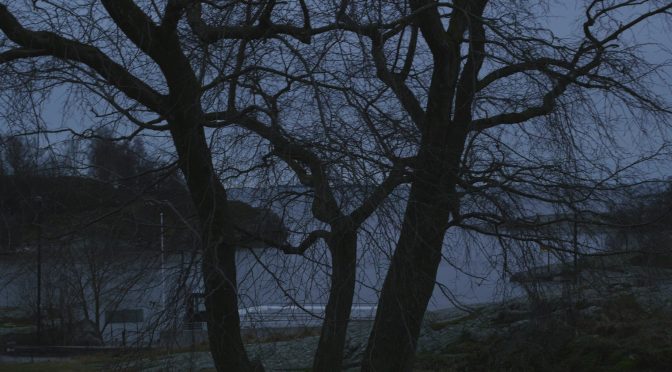
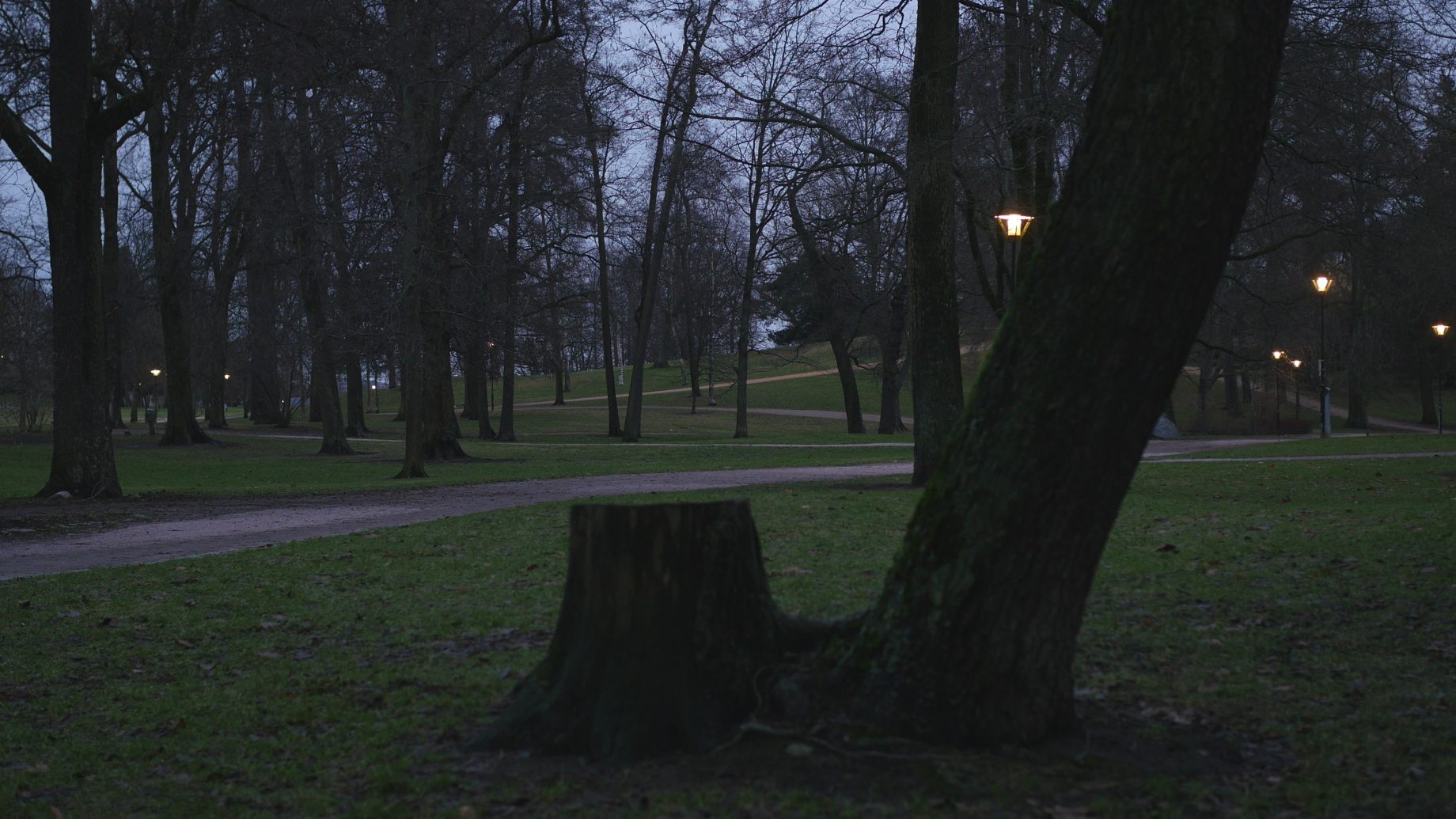
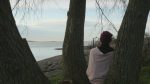
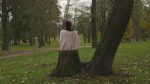
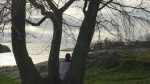
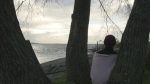
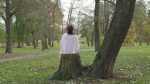
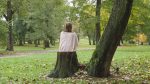
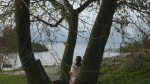
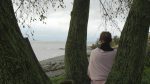
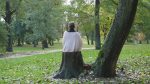
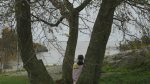
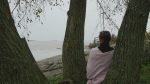
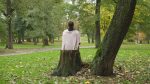
This afternoon, three o’clock, at sunset, I went to visit the trees in Kaivopuisto Park for one last time. The reason for ending this year so early, is a holiday trip which will bring me back only after New Year. My visits have not been that regular, anyway, sometimes only once a week, sometimes twice or three times. And there have been breaks for travels. I have been sitting on and with a group of elm trees up on the hill, with a view overlooking Harakka Island, Uunisaari and the strait Uuninsuu between them. And I have also sat on the stub of an alder on the other side of the park.
These visits to the trees in Helsinki are documented as video stills on the Research Catalogue, on a separate page, here. (Scroll down the page for the last images). Yesterday I did my last visits to the trees in Stockholm as well, and they are documented in a similar manner in the same exposition, on another page, here. The actual material recorded of all these visits is moving images, videos, and they will be edited into rough time-lapse videos later. Now I am more concetned with the shock of how quickly time passes; one year is not that long, really.
Next year I will spend more time in Stockholm, and will probably not choose any trees to visit in Helsinki. There are my house plants to take care of, however, both at home and in my studio on Harakka Island and they are the plants I am performing with daily. I am not posing for camera with them (except the ivy, once), nor thinking of our living together that much, unless they get ill or seem to suffer somehow. They are my “house gnomes”, “hustomtar” in Swedish or “kotitonttuja” in Finnish; they demand that I return home to take care of their basic needs. But they seem to thrive without my presence, too. I probably give them too much water, sometimes…

Category Archives: with trees
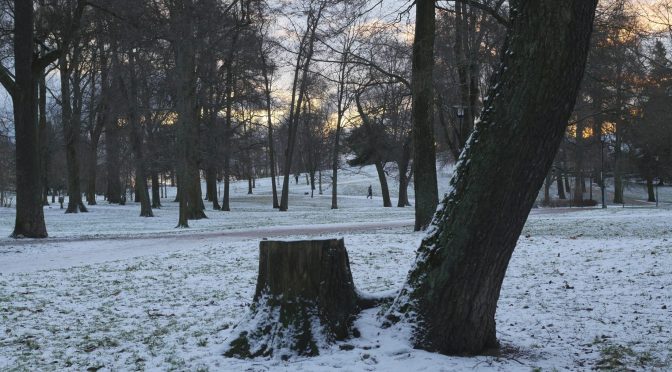
100 years of winter mornings
In the wake of independence day celebrations, sitting in the snowy Park, I thought of how much harder the winter mornings must have been without our modern comforts. Independent or dependent, well. I remember Karen Finley giving a public performance lecture at Theatre Academy many years ago and speaking of her work within the dependent cinema, because that is what the so-called independent cinema of course is, dependent on all kinds of factors, like the enthusiasm of its makers. And the same things goes for many fields. This came to mind because of the 100 years independence festivities yesterday. There is much to celebrate in our 100 years of independence, including the right to vote for women etc. but that does not mean we cannot acknowledge our total dependence of so many things, among them the trees. The Swedish language local newspaper Hufvudstadsbladet had a series of articles on the major factors in the shaping of Finland and the first, the absolutely most important one, they suggested was the forest!
On Friday the world had changed again, rain, rain, drizzle and rain again. Around 1 pm when I went out the rain had stopped for a while but the wind was strong. Using a rock in a plastic bag as a weight kept the tripod standing, but the wind shook the camera and made it slide to the left, a funny panning movement. I decided to be content with that, perhaps it adds some documentary feel. And the mud! Rotting leaves and wet soil, uh. But then I remembered that these were one of my last visits to the trees. Next week I will visit them once more, or perhaps twice, but that is all. A holiday trip takes me away from Helsinki for the end of the year, so my last visits will take place at mid December.
What to do with the material, how to edit it, will be something to think about after Christmas. It is of course possible to make time-lapse videos with fairly short clips like twenty seconds each, or so, and also to try to synchronise the same images with and without the human figure, as I have done before. What I thought of when beginning the visits and recording my sitting with the elms from two distances, was of course creating a two-channel installation with both versions synchronised. But since there is quite a lot of material, around five minutes of each session, I could also try extra long cross fades to see what that could give…
The Tree calendar, my “hobby” during this year, I finished last week, with the last tree, an elder, in the same park as my “ordinary” trees. For the HCAS blog, or Helsinki Collegium for Advanced Studies, where I have spent this year, I wrote a summary of sorts about the calendar, including a map of the trees I visited for the calendar, here. But those trees I of course visited only once each of them, unlike the elms and the alder stub that I have come to know quite well after visiting them a few times a week for a year now…


Elder in December
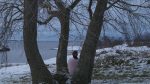
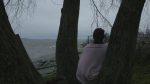
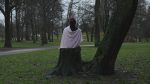
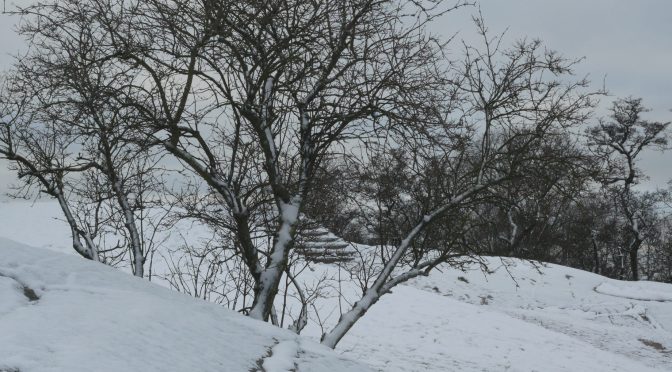
For the last performance in my Tree Calendar (working title) I planned to look for an elder somewhere in the eastern part of Helsinki, which I hardly know compared to the central or western areas. Searching on-line I found a mention of an elder (Sambucus nigra) in Kivikko near a dog park, and aimed to go there after visiting the trees in Kaivopuisto which I have visited regularly this year. While there, I remembered the red-berried elder (Sambucus racemosa) up on the hill, which i have passed so many times, and decided to try if I could find a suitable framing of that one. The day was rather cold, which meant that finally the snow stayed on the ground, instead of immediately turning into water. The landscape looked great, and everybody else seemed to have notices that, too. The park was full of people jogging or walking their dogs, enjoying the fresh air after days of rain. And they all wanted to follow the path next to the elder, so they ended in my video. The passers-by fire prominently in the images, because I am – for once – barely visible sitting on the low branches of the elder, partly covered by the cliff. I made an other session standing next to the elder, leaning on it lightly, just in case. Both videos, Elder in December 1 (13 min. 38 sec.) and Elder in December 2 (8 min. 59 sec.) are available on the Research Catalogue, here.
The Elder is the tree of the thirteenth month in the ancient lunar Tree calendar of the Celts and the dates for the month of the elder are, according to the source I have used, 24 November to 23 December. There is something fascinating in the idea of naming a calendar after trees, and you would expect there to be some connection to the time of year that tree would be particularly beautiful or useful, blooming or breaking fruit etc. But I have not really found much connections, perhaps because the climate is different here in the north. The elder is connected to death and renewal, and in that sense suitable for endings as well. Perhaps I will create another tree calendar in Stockholm next year…
November – Month of the Reed
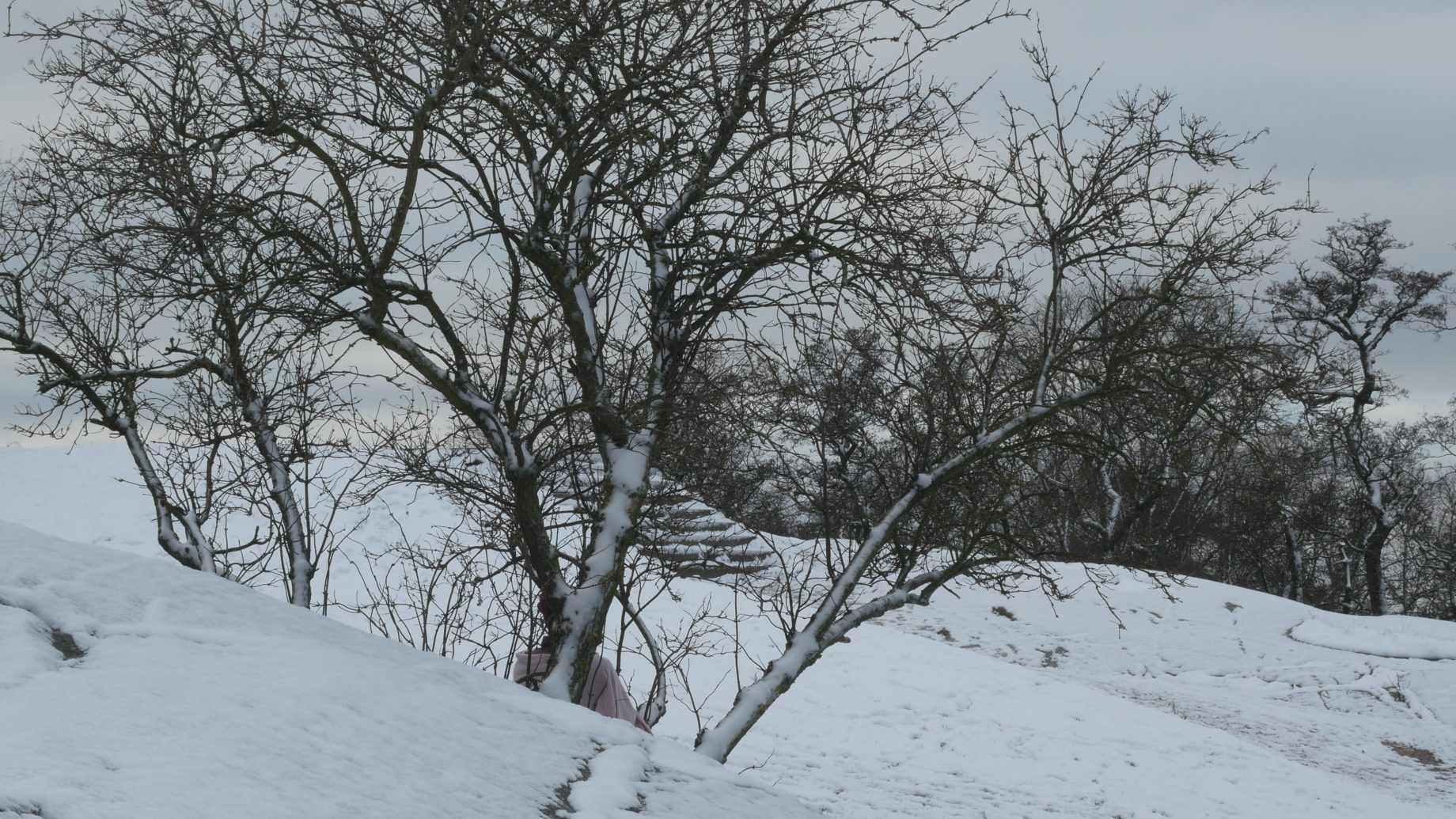
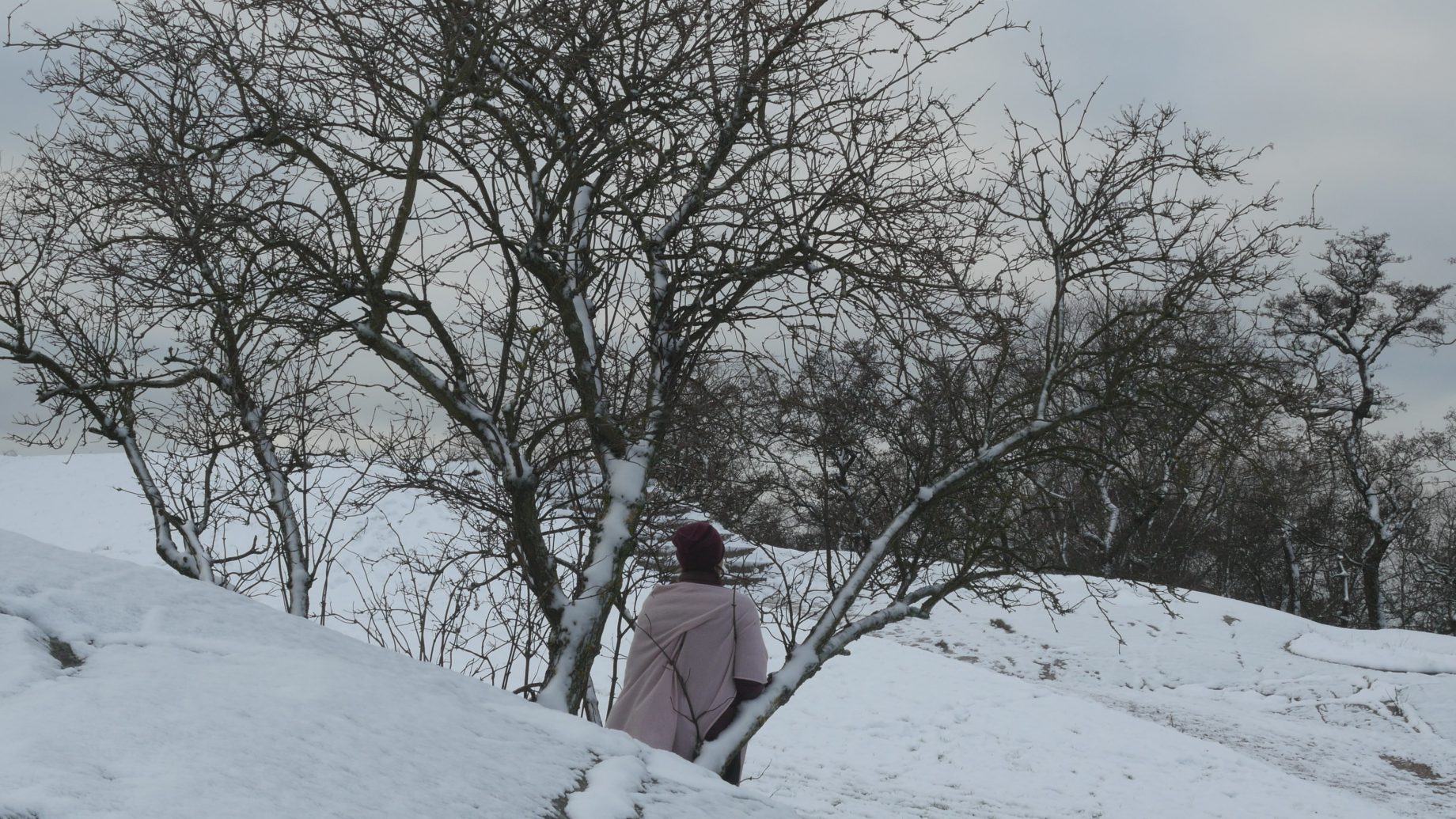
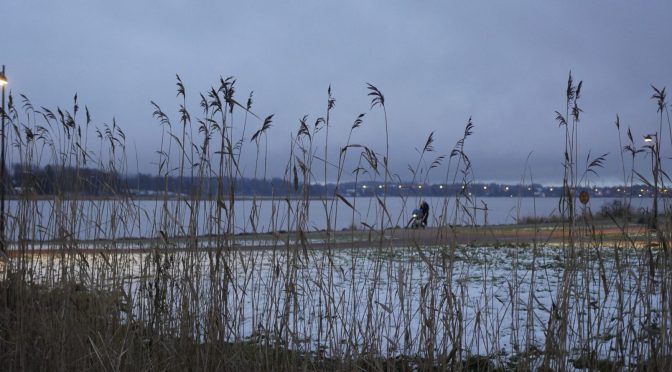
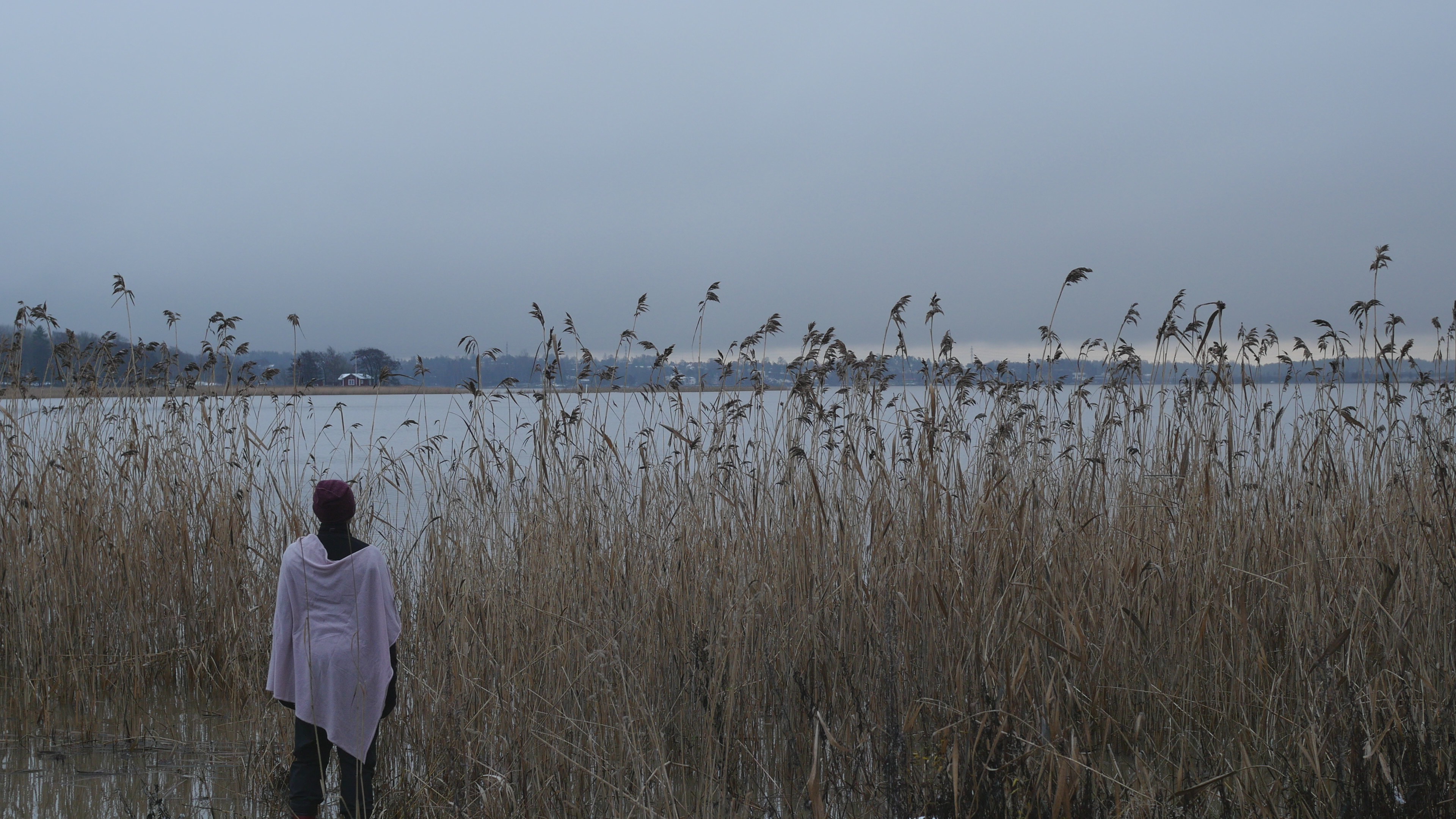
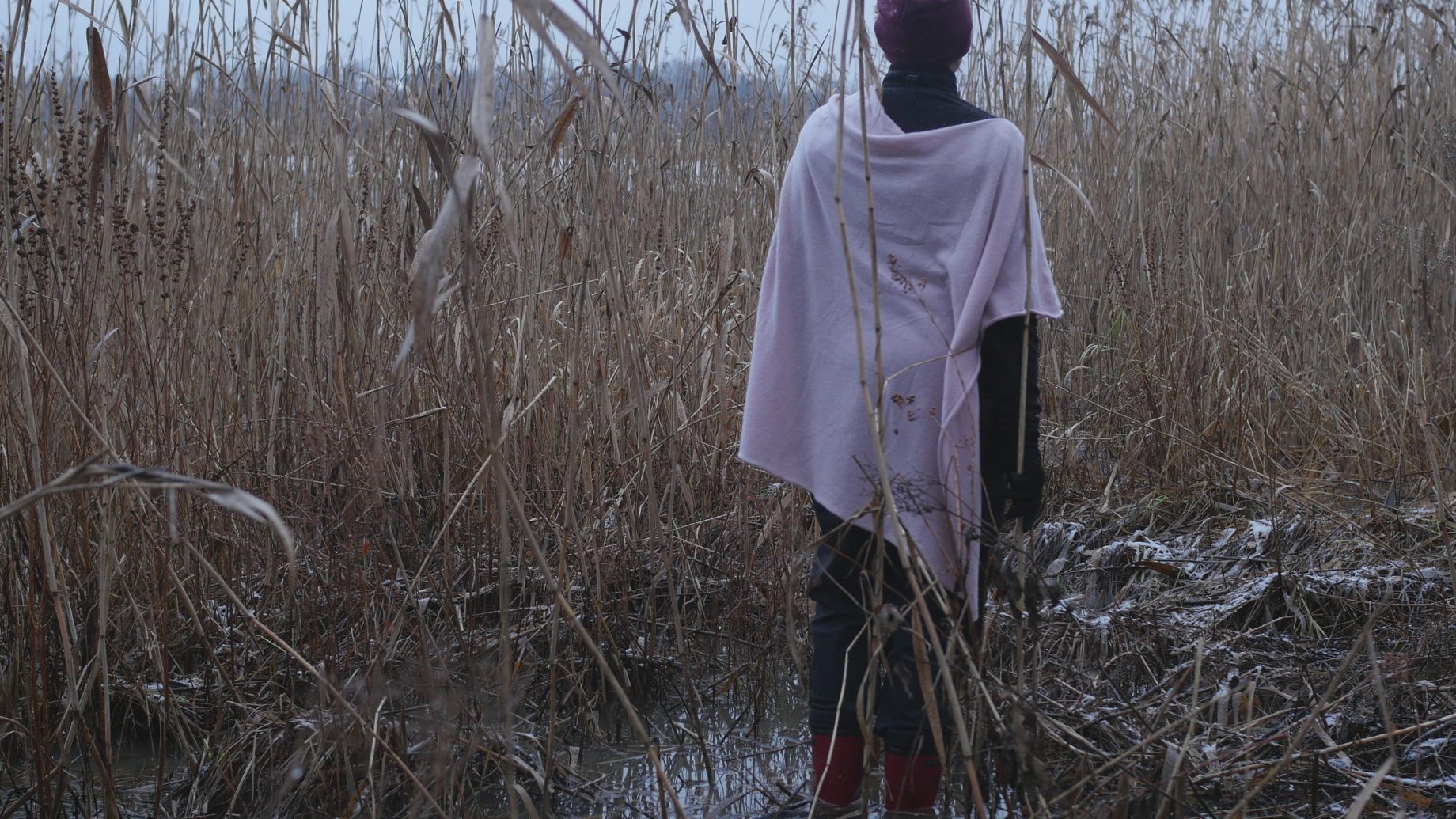
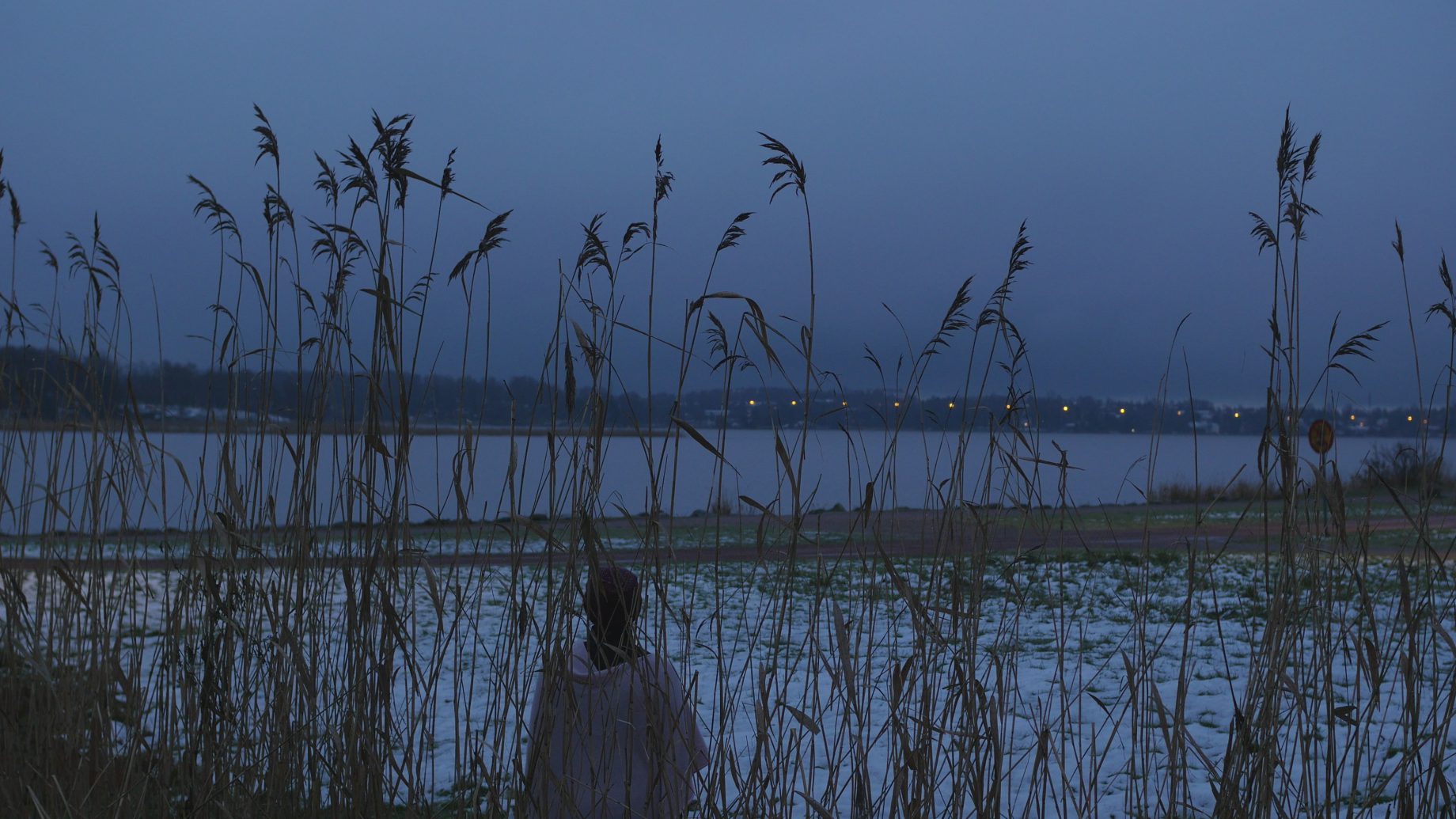
The Month of the Reed in the Celtic Tree Calendar, at least in the one I have been following this year, ends today, on the 23rd November. Luckily I managed to pose for camera with some reeds at the Arabianranta shore in Helsinki yesterday afternoon. I remembered the reeds from walking there in the summer looking for a holly, in vain. Reeds are everywhere on the coast, of course, but around Arabianranta there are extensive areas with reeds. Funny to think of reeds as trees, although I have learned to understand that the ancient Celts obviously were very liberal in their definition of trees, if the Vine and the Ivy are considered trees as well. Reeds can be quite high, actually, and they can form a thick forest, for sure. I would not try climbing a reed, though.
The reeds at the shore looked fine but the high sea level was a problem, however, since it prevented me from walking out among the reeds. I had rubber boots, but they were not high enough. Something resembling those boots that fisher men engageing in sports fishing wear when standing in the rivers would have been good. Now I had to stand close to the shore, in front rather than among the reeds. I made three attempts, or let’s say that I performed for camera for more than a minute as a tryout only in three places. In the third place the reeds were growing in a dike or small trench, which meant that I could stand behind them on the other side and thus among them in some way. Unfortunately the afternoon was quickly turning into evening, so the third image is all blue, with the street lights colouring the snow (see above). In some manner that is a suitable image for November in Helsinki; daylight is grey and dusk comes very early. If reeds really are associated to the dead and the underworld, this way of ending the image in near darkness is perhaps rather appropriate. I edited the material into three videos, Reed in November 1, 2, and 3, all of them 8 minutes and 22 seconds, and uploaded them on the RC, here. They can be seen in context in the exposition performing with plants as well.
November feeling
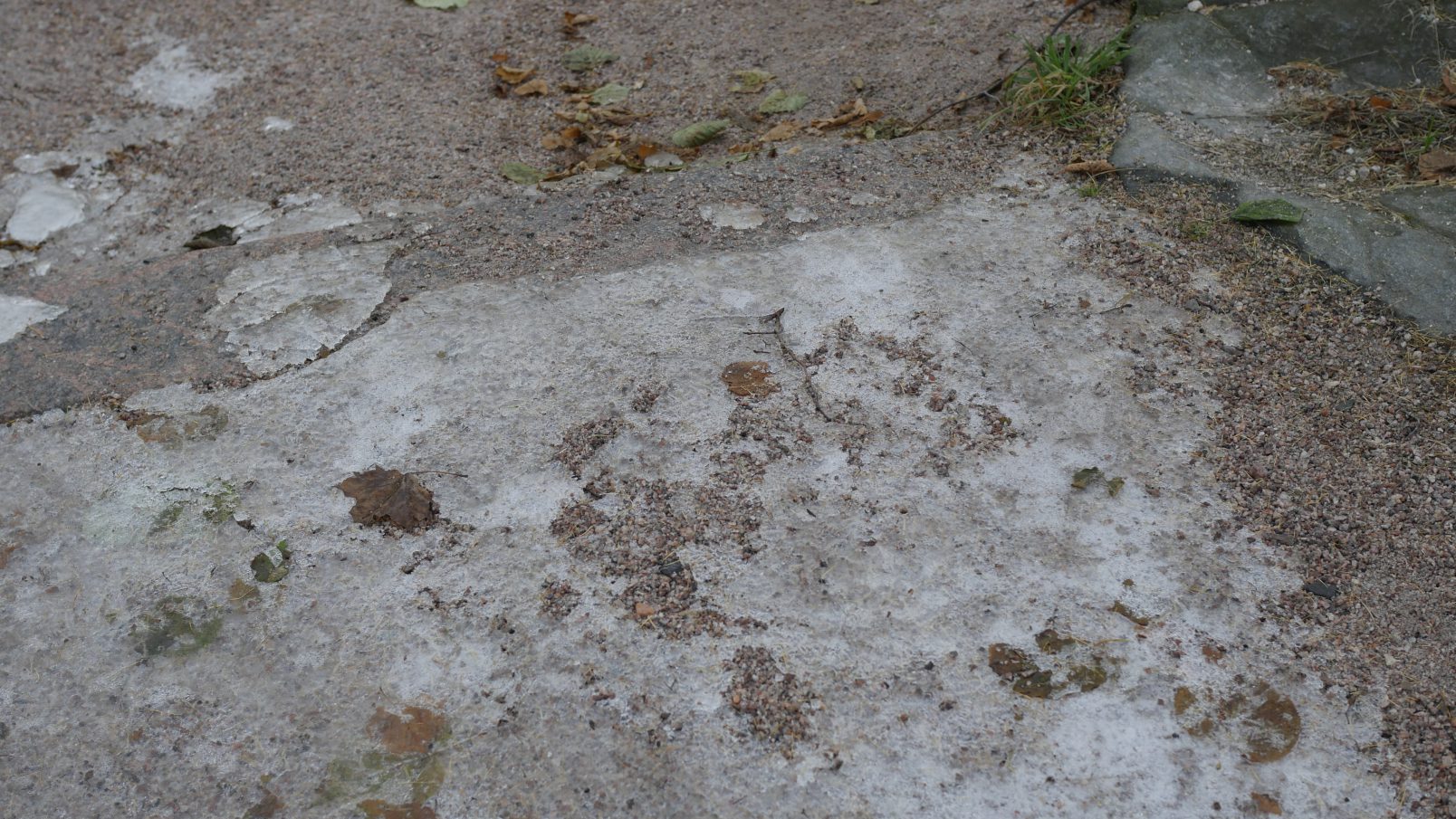
Three days of crispy cold weather and almost clear skies, occasionally, even moments of bright cold sunshine – that is not what one expects of November in Helsinki. Usually it is damp and dark and windy and generally depressing – well, November has only just begun! On Thursday and Friday I was out sitting with the elm and the alder in the morning; today I visited them after noon, and noticed that the weather was getting warmer again. The ice forming on the puddles on the paths in the park yesterday (see image below) was gone today. Not many people out in the middle of the day, despite Halloween. But some with their dogs, still. Some of them show openly their surprise, when they notice a human being behaving in an unusual way, and so do children, while adults walk past as if they would not notice. Probably they avoid being embarrassed on my behalf that way, or perhaps they simply try to ignore noticing unusual details for some other reason. It is a way of being polite, I guess. Like when somebody is being drunk and behaving badly, most people try to look away as if not noticing, so they would not have to intervene.
Yesterday we had an interesting conversation with the visiting curator Irini Papadimitriou at Muu gallery, see info here, with some fascinating comments from people in the audience as well. I have not looked at the video documentation yet. The problem of inviting people to abandon representations of the environment and go out to experience the outdoors themselves, but doing that with the help of representations, is one thing. Another paradox or problem is the use of technology, which seems so immaterial and light but is actually draining lots of resources and creating much problematic waste as well. And there are other problems, too, like the illusion of continuity created by time-lapse imagery, which gives the impression of a durational performance while being produced by a series of short repeated performances and thus being “fake” in that sense.
The Muu exhibition, called Once Again, shows old works from Harakka Island, Year of the Horse (2003) and Year of the Horse – Calendar (2015) – they are available as small files on the RC, here – as well as several works created during the Arsbioarctica residency in Kilpisjärvi in 2014, with documentation on the RC as well, here. I am using the same principles in these visits to the trees, but for some reason I am not treating my tree companions with the same respect as Malla Fell; I am somehow taking them for granted, it seems. And the images are framed in a way that shows only a tiny fraction of the trees. Hm. Something to think about…
October – Month of the Ivy
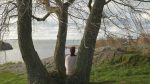
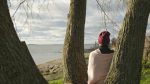
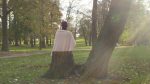
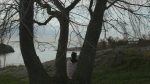
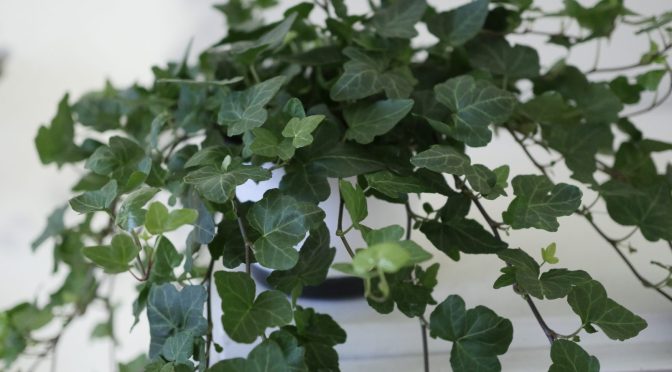
One could assume that the ancient Celtic idea of a tree is rather strange, at least if you look at the so-called tree calendar. The vine in September, the Ivy in October and the reed in November are not what first comes to mind when thinking of trees. The real problem with the vine and the ivy is the same as with the holly, they do not grow as high up north as Helsinki. Some singular examples can be found, and since the ivy is a rather common feature in outdoor flower arrangements I expected to find some ivy climbing along a wall or around a tree somewhere, but no. At the Kaisaniemi Botanical garden I found an ivy growing near the entrance, as a low shrub barely succeeding in climbing up the wall, nothing to perform with, really. And I was already a few days late in the calendar. The month of the ivy extends from 30 September to 27 October at least according the version of the calendar that I have followed during this year. So yesterday, on the first November I decided to quit searching and went and bought myself a new house plant, an ivy in a pot. I would have preferred a larger one, but this was as big as they had them at Stockmann, and that would have to do.
The next problem was where to place it, or myself together with it, where could I find some form of neutral background? The wall in my home are covered with bookshelves or furniture; my study at the Collegium did not have enough light; to take the boat to my studio on Harakka seemed cumbersome and if I bought a house plant I should perform with it at home, I thought. The cupboard doors in my bedroom are white, and by moving away some large plants from the window I could get almost enough light for the video camera, which was sitting on a tripod in the middle of the room. The first attempts in the morning where oddly unsharp, probably due to lack of light, or then some mistake, so I tried again in the afternoon. This time I placed the tripod on my bed and moved two strong lamps from the kitchen and the living room to assist the cloudy daylight from the window. I also went through the automatic functions of the camera, and yes, now the image was at least sharp. Because the tripod was on the bed the horizon was not exactly horizontal, however, which would not have mattered if not for the vertical line of the cupboard door, which was clearly leaning. How easy it is to work in harsh circumstances outdoors, where you accept what is and that’s it. Indoors, when everything has to be arranged the whole thing is immediately much more challenging. But perhaps some small miracles could be done while editing. Usually I am not using any after effects and my main tool is a dissolve. But to brighten the image a little and add some contrast I could try. It helped a little, but not that much, as you can see below.
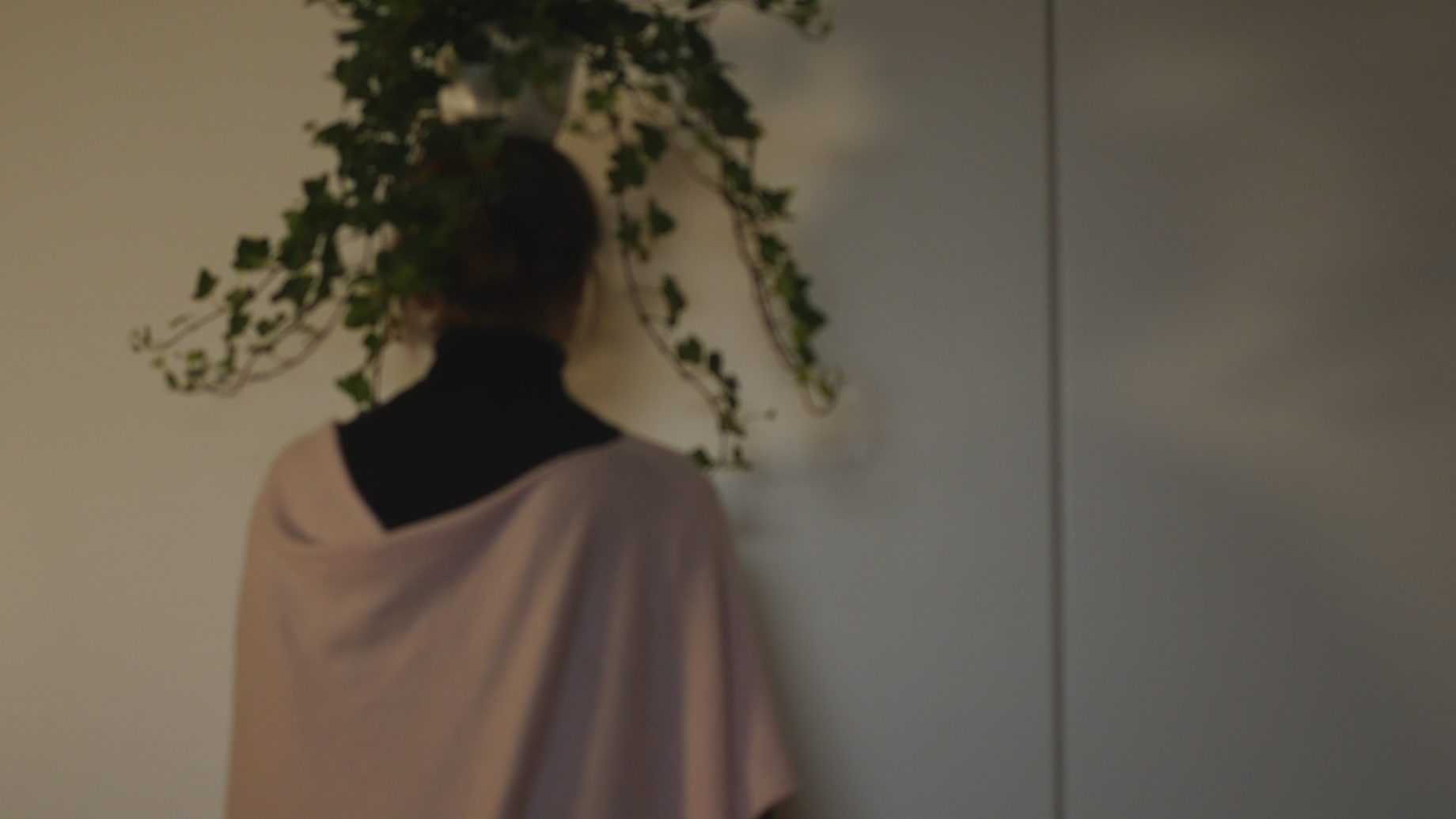

I also remembered straightening the horizon in one clip once, but could not remember how to do it any longer. I searched through all kinds of weird effects until I resorted to google, and immediately found a detailed reply to somebody’s desperate plea, and managed to sort it out with that advice. The difference is clear. Thus, not only did I change the rules by missing the proper time of the month, October, using a houseplant and performing indoors, I even used editing tools to correct the image, well, well. One can only wonder where I will end if I continue down this road…
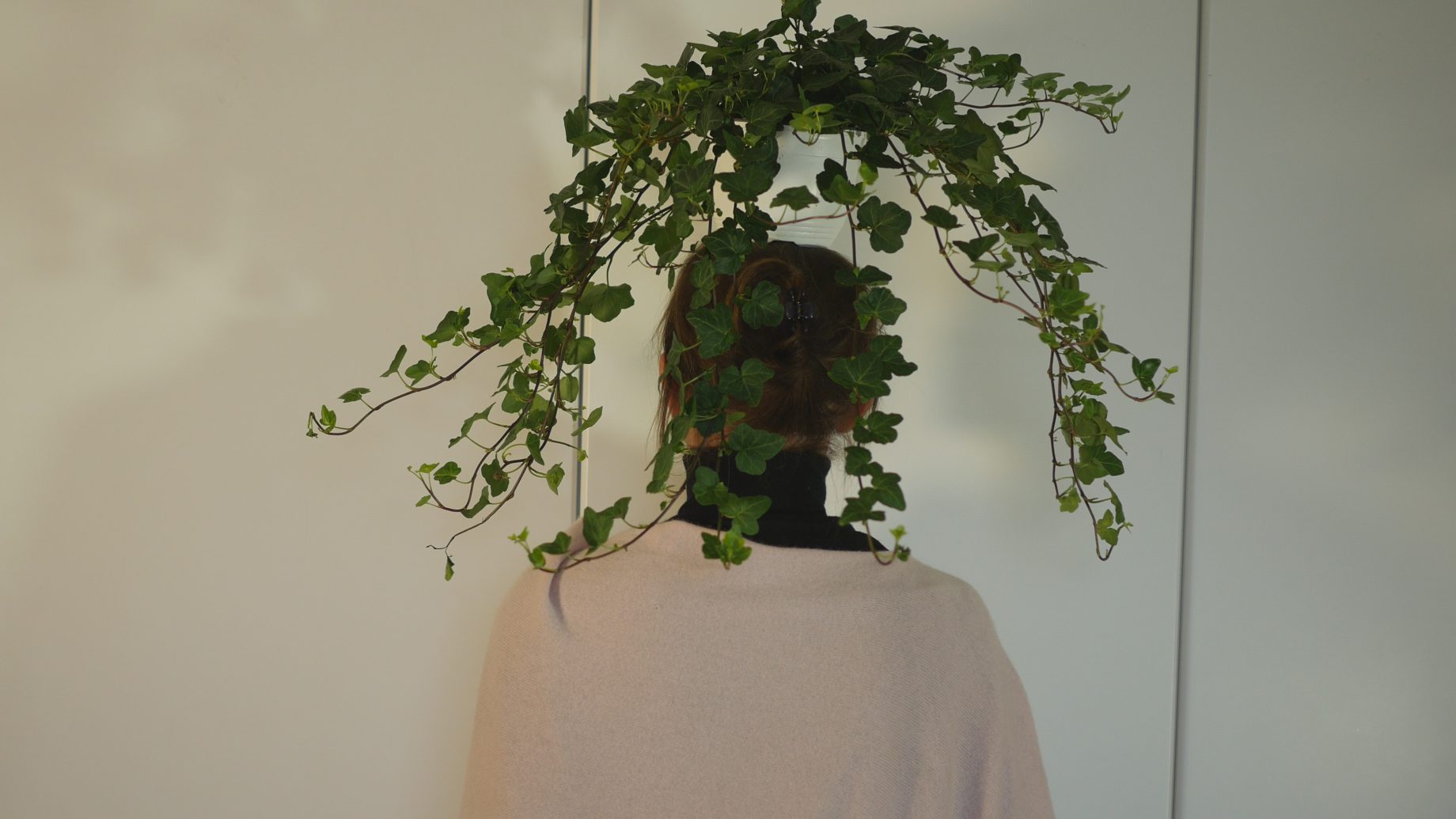

The first version is murky and rather unpleasant to watch, although the composition and the fold of the scarf looks much nicer than in the second image, which is fairly sharp and “normal”. Both versions are available on the Research Catalogue, as small files, here. The interesting thing in the second version is the constant movement of the plant, due to my shivering. I remember it was painful to balance the pot, I had some strange cramp in my neck, but I could not imagine that I would be shaking that much. It looks funny, because it is as if the ivy would be shivering, trying to tell me to rest it on a more stable surface. After this ordeal it found safe place on top of a chest of drawers with some light, too.
A seminar on working with plants
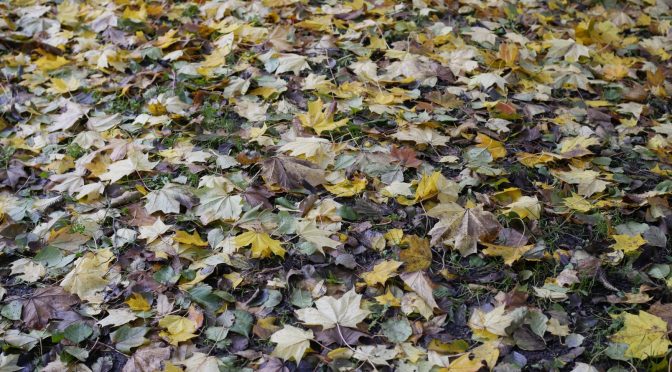
Three mornings, after the rain, before the rain and – in rain. On Thursday morning the microphone was out-of-order, the battery was finished; luckily there was no wind, so I could record without it. I was surprised to see how the elm tree on the hill had lost a large part of its leaves, lying beneath it, brown and wrinkled, while other trees in the park were beautifully yellow or red. Many are still green, like the alder; the leaves will fall green, I suppose. On Friday the weather was almost clear, more chilly with a cold wind; water in pools on all the paths. And today, on Saturday the sky looked grey again. While I was walking down to the alder the drizzle started, and by the time I sat with the elm the rain was pouring down. On the way back I realised I had an umbrella with me, after all. My plan had been to continue to Harakka Island and revisit the cliff where I recorded Year of the Monkey in 2004-2005, and perhaps record the view on video, to use as the basis for a small essay. The rain made me change my mind. The ferry-boat will continue until 22 October, and I would like to record the cliff before that, so as to be on the safe side regarding possible storms. I hate the idea of having to row in rough sea. Anyway, there is still time. The essay is for the upcoming Research Day, on 8 November, organised by the project How to do Things with Performance. The call can be found here, and soon also the program. Before that there will be an other research day, more informal, on 27 October, called “With Plants”. There is no website, but the call is simple:
With Plants
A seminar on working with plants 27 October 2017 10 am to 6 pm.
Helsinki Collegium for Advanced Studies, Fabianinkatu 24 A floor 1, room 136.
This multidisciplinary and interdisciplinary event is aimed at artists, researchers and scholars who are working with plants in various ways. You are cordially invited to share your experiences. Please send the title of your presentation, an abstract and a short bio no later than 15 October to annette.arlander(at)uniarts.fi.
Vine in September
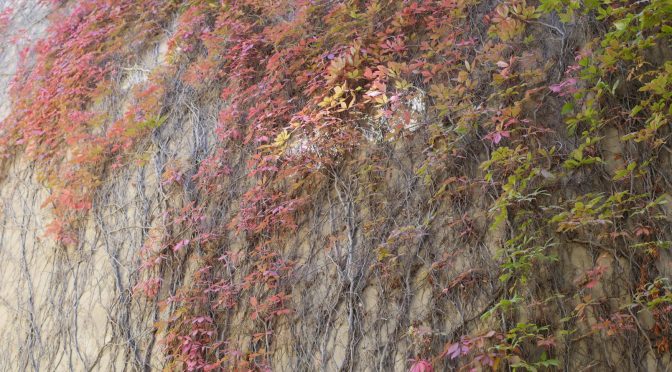
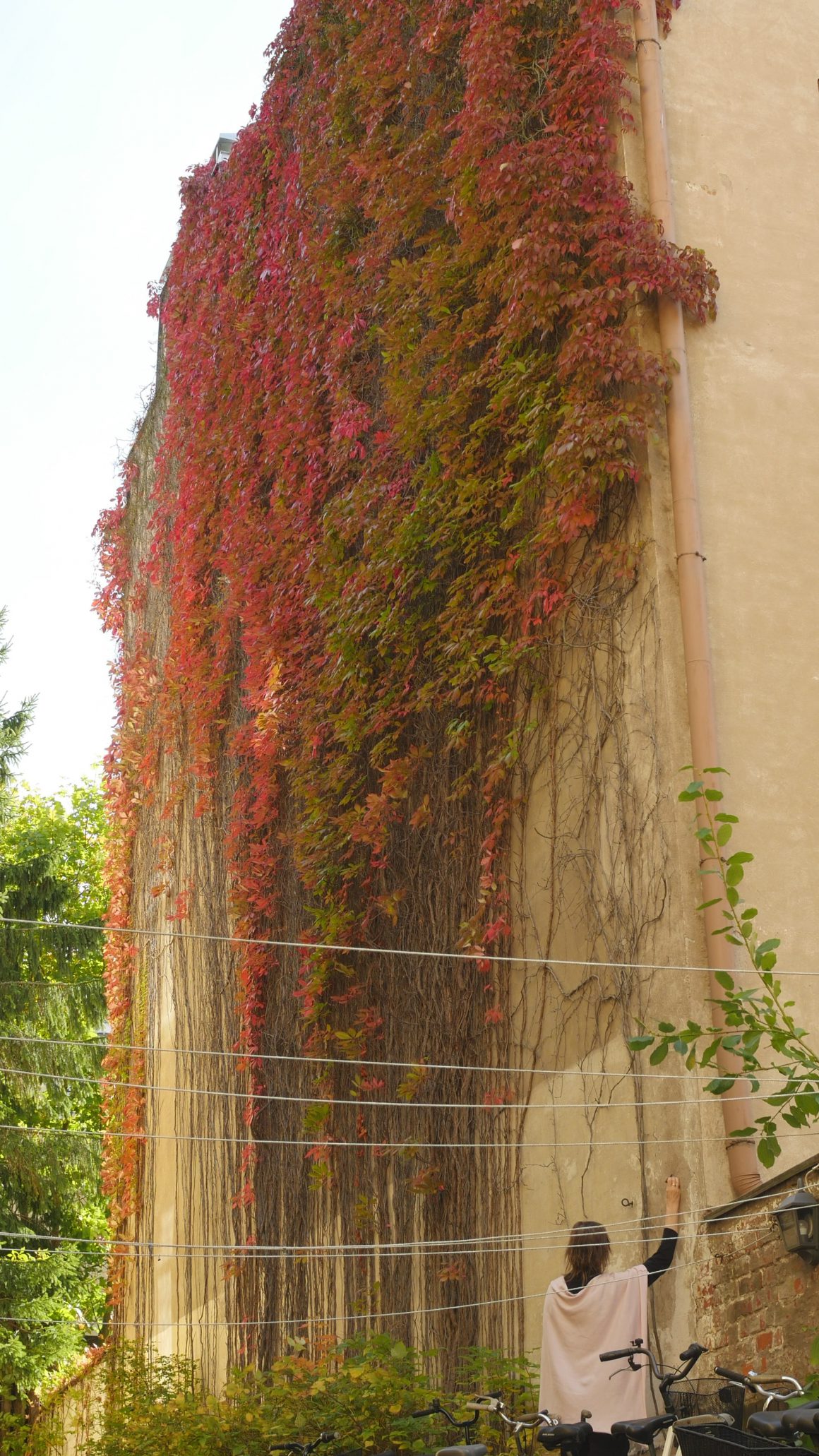
The month of the vine in the Celtic tree calendar extends from September 2 to September 29, at least according the version of the calendar that I have decided to follow for my attempt at creating a brief video with the tree of each moth, in Helsinki. The place is a crucial restriction, since not all of the trees or plants in the calendar grow in Helsinki. Besides the holly, which I found in a botanical garden, the vine and the ivy are posing problems. It is possible to grow grape vines in southern Finland, and I looked up a potential site in Helsinki, the Annala Garden. Before I learned about the possibility of finding grape vines in Helsinki I had thought of the popular creeper or vine called “villiviini” (or wild vine) in Finnish. In the backyard of the house where I live there is a huge vine or actually a whole group of vines climbing up the wall of the neighbouring house, and I have considered the possibility of trying to somehow record them for quite a while. Today when returning from my regular visit to the trees (the alder and the elm) in Kaivopuisto Park I decided to take a look. After all, I had my black clothes on and my camera and tripod with me, and I had an hour before I would have to leave for the airport, so why not? When I saw that the vine had already turned red I realized this was the moment to do it; two weeks later when I would be back from my trip it might be too late.
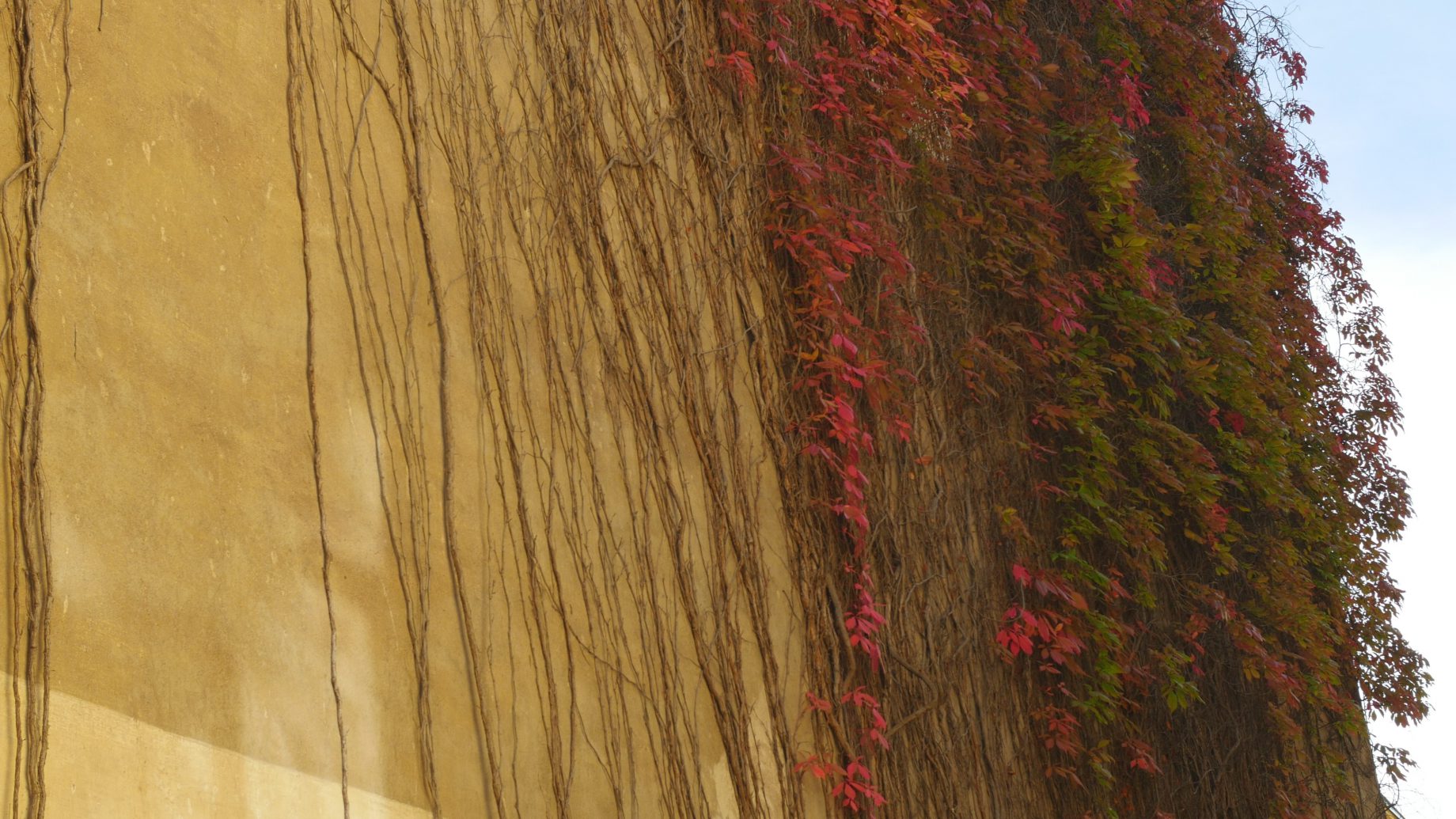
My first attempt was unsuccessful, I did not even manage to enter the image. The leaves of the vine are concentrated rather high up on the wall, and the stems closer to the ground are bare. A further complication is the narrow space between the two walls. After some experimenting I found an angle for the camera, where I would be visible in the lower right hand corner, if I stood on top of the bicycle supports. By rotating the camera for a vertical image, I could get the whole wall with the vine, or most of it, into the image frame. I knew from before that trying to create vertical video resulted in numerous problems, although it was so easy with still photos, but it was not impossible. You simply had to use a monitor or flat screen instead of a projector, and rotate the screen for the display. So I decided to forget about Annala garden and spend some time clinging to the wall. The final video is brief, 5 min and 15 seconds, (see Vine in September), but that is sufficient for the tree calendar.
Back in town and busy
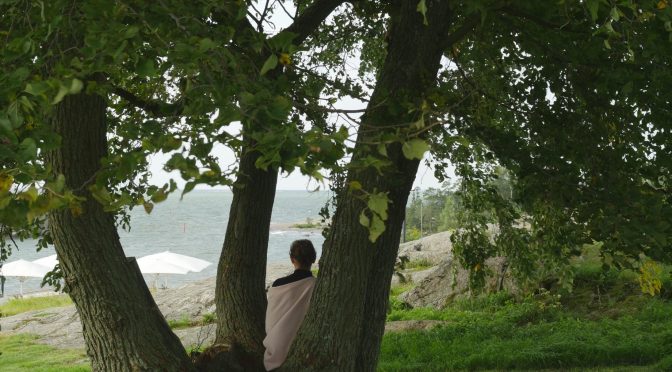
Only two visits to the trees in Helsinki this week, on Tuesday and Wednesday morning. My plan was to include Thursday, too, but I chose to go to CARPA 5 – colloquium on artistic research in performings arts, where I have a small installation running nonstop for the duration of the event. One reason was the rainy weather, I have to admit. And I had to make preparations for a trip to Odense in Denmark, where I am participating in an event organised by Nordic Performance Art, facilitating a participatory performance with swinging and also speaking at the seminar. So my thoughts were everywhere else except wih the trees. On Tuesday I was preparing for a busy day, but the weather was calm. On Wednesday the wind was strong, but the direction was such that the camera on the tripod was not under direct attack. The only incident I remember was an alder leaf falling gently down on my head while sitting on the stub, a surprise and a strange feeling, a sign of autumn.
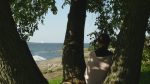

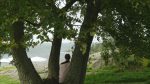
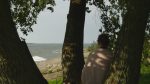
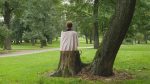
It seems like everything is happening at the same time this weekend. Besides Carpa 5 there is the Art in the Environment Nordic symposium 2017 in Vartiosaari. I managed to see the end of one performance by Anna Rubio at HIAP in Suomenlinna, which is part of the symposium, that is all. Then there is the event I am performing at in Odense, organised by Nordic Performance Art (a slightly misleading name, I guess). Moreover, one of my videos is shown as part of a screening curated by Leena Kela at an event called Meetings – Video and performance art festival in Mid- and western Jutland in Denmark on the same day. And then there is probably many other interesting things going on, but as one cannot be everywhere at once, one has to trust that anywhere is the right place for that moment…
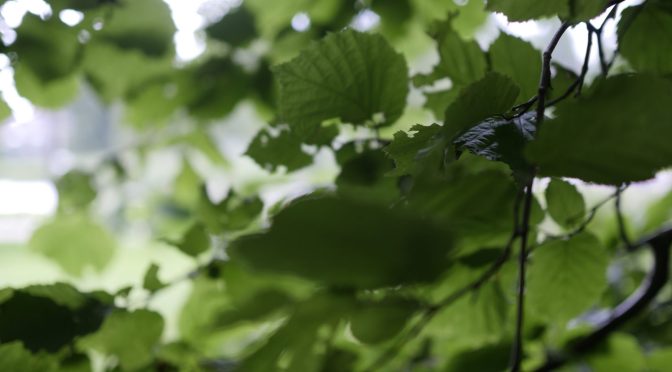
August – Month of the Hazel
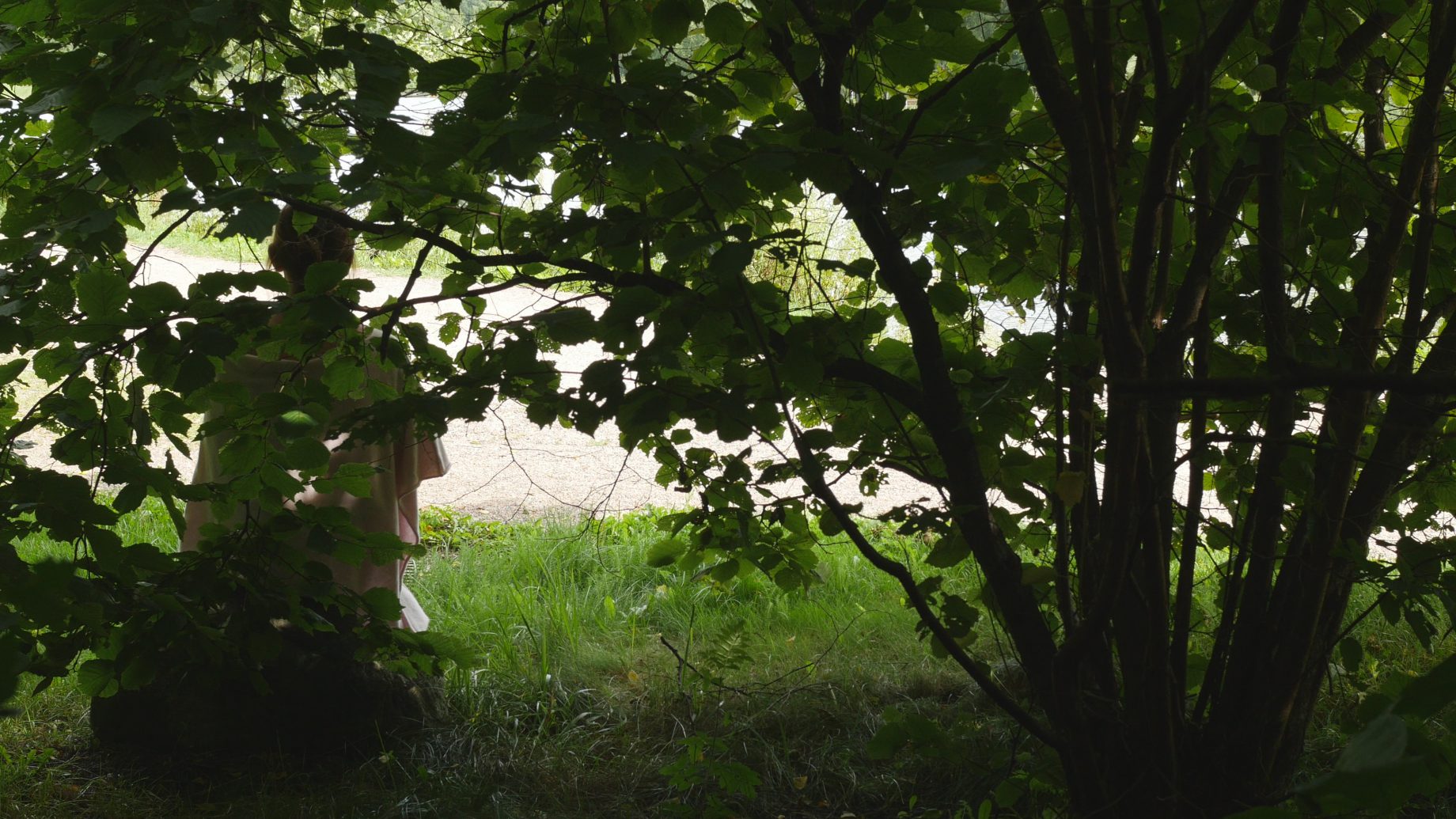
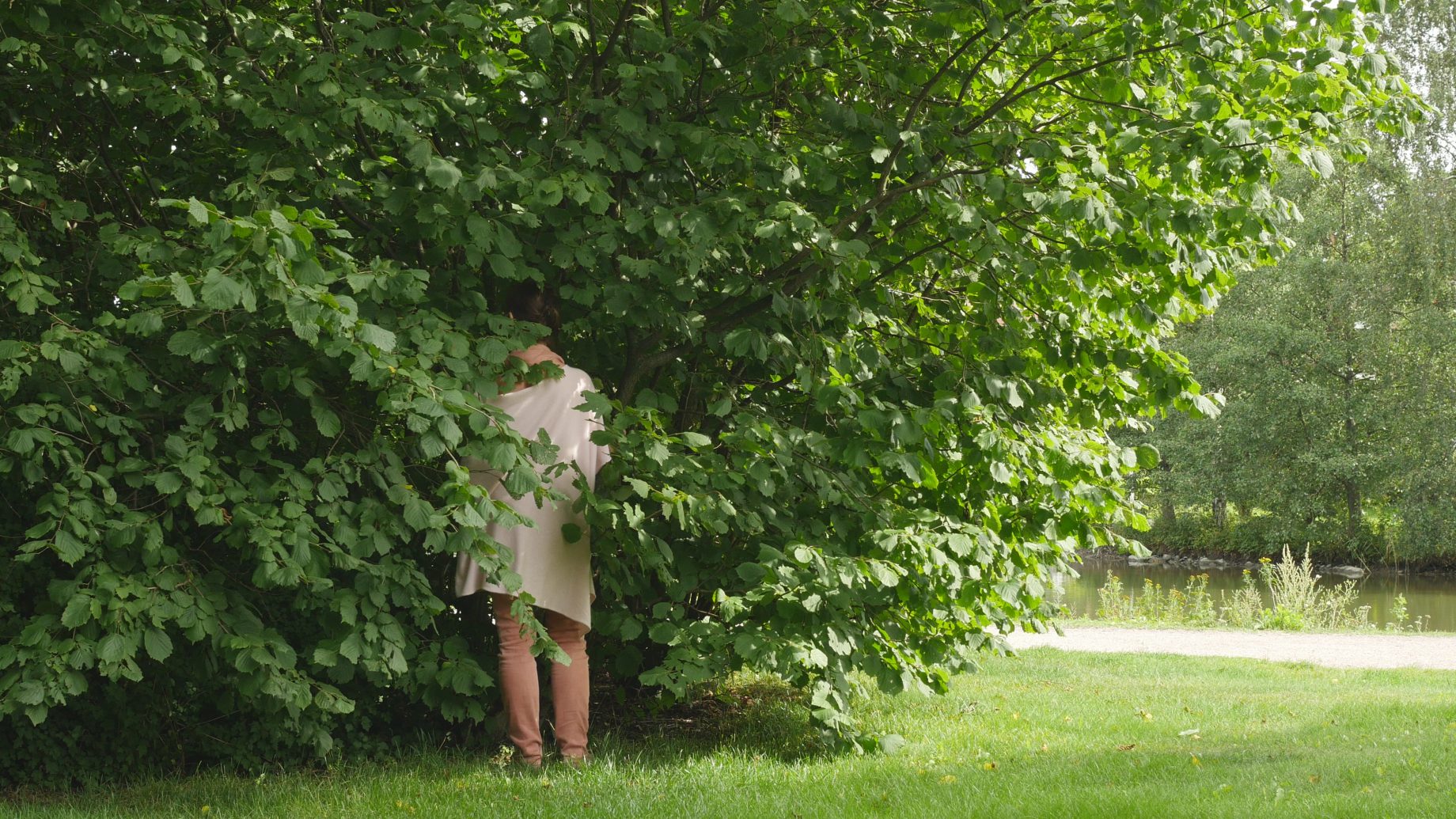
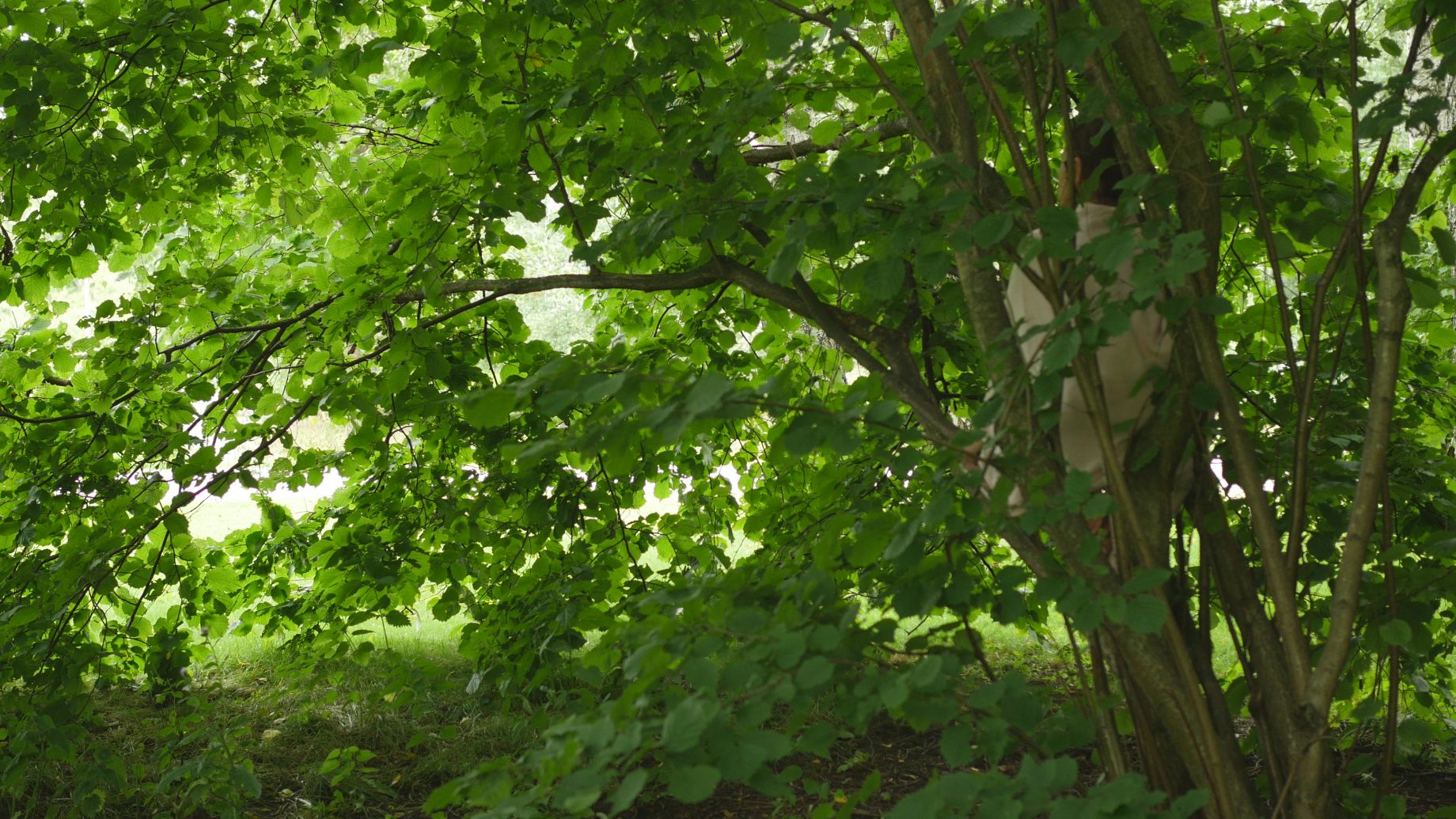
For once it was easy to find the tree of the month for my tree calendar – based on the ancient celtic tree calendar – namely the hazel, whose month (according to one version of the calendar) is from 5 August to 1 September. I found a nice group of hazels growing next to the path following the shore near Herttoniemi Manor from a map on the internet that listed fruit trees and bushes with berries in Helsinki. These hazels did not have any nuts, though, or hardly any traces of them, really. But they looked thriving and there was no doubt they were representatives of the common hazel, Corylus Avellana. I walked among them and tried to find a suitable framing for the image, including some water but not the houses. At first I sat on a rock next to one of the hazels near the path, and placed my camera in the middle of the bushes. Then I tried to find animate with more space and placed the camera on the lawn, standing in or amongst the branches holding on to one of the thicker stems. In Finnish there is a satin “kolmas kerta toden sanoo”, meaning something like “the third time is the real one”. And that proved correct this time. For the third image I found a bush with several stems bowed in a way that I could venture to sit on them, actually sitting in the small tree, and that version seemed like the nicest one, despite the darkening of the sky towards the end. Only when I left the park and walked back towards the metro station, returning to the city centre, did the rain start.
The material is now edited into three videos, Hazel in August 1 (10 min. 40 sec.), Hazel in August 2 (10 min. 10 sec.) and Hazel in August 3 (9 min. 35 sec.) and I still think the third version is the “real” one.
 Performing Landscape